
About This Book
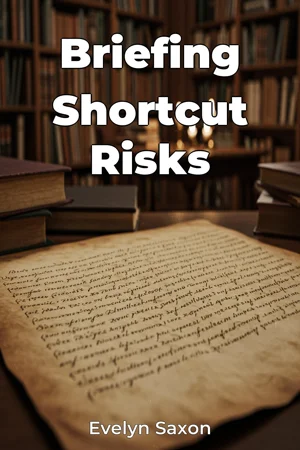
In the high-stakes world of legal education and practice, are we sacrificing depth for speed by increasingly relying on case briefs and summaries rather than engaging with the full texts of judicial opinions? This book, "Briefing Shortcut Risks," delves into the potentially detrimental effects of this growing trend on the cultivation of true legal understanding. The primary focus of this work centers on three core areas: the erosion of critical reading abilities, the diminished capacity for nuanced legal reasoning, and the potential for misinterpretations arising from incomplete information. These topics are significant, as the ability to dissect complex legal arguments, discern subtle differences in legal doctrines, and formulate well-supported positions is paramount to effective legal advocacy and informed jurisprudence. Understanding the context requires acknowledging the pressures faced by law students and legal professionals alike – the sheer volume of case law, the demands of billable hours, and the allure of readily accessible digital summaries. This book examines how these factors contribute to the widespread adoption of briefing shortcuts, often at the expense of rigorous textual analysis. Prior knowledge of basic legal terminology and the structure of legal opinions will be beneficial, though not strictly required. The central argument of "Briefing Shortcut Risks" is that while case briefs serve a valuable purpose, over-reliance on them cultivates a superficial understanding of the law, ultimately hindering the development of skilled legal thinkers and practitioners. This argument is crucial because it challenges the prevailing efficiency-driven mindset within the legal field, advocating for a return to deeper engagement with primary legal sources. The book's structure unfolds as follows: First, we introduce the foundational concepts of legal reading and analysis, emphasizing the importance of textual interpretation and contextual understanding. Next, we delve into the drawbacks of relying solely on case briefs, exploring how they can lead to a fragmented and incomplete grasp of legal principles. This section is divided into major points: the compromise of critical reading skills, the impediment to independent legal reasoning, and the increased likelihood of errors in legal application. The book culminates by presenting strategies for balanced case engagement, suggesting methods to integrate thorough reading with efficient briefing. We conclude with practical implications for legal educators, students, and practicing attorneys, offering actionable recommendations for fostering deeper legal comprehension. To support its claims, the book draws upon a combination of empirical research, cognitive psychology studies concerning reading comprehension, and analysis of legal pedagogy. We examine comparative studies assessing the performance of students who rely heavily on briefs versus those who prioritize full-text engagement. Additionally, the book utilizes case studies to illustrate how misinterpretations can arise from insufficient attention to the details of judicial opinions. "Briefing Shortcut Risks" connects to several other fields of study. It intersects with cognitive science in its examination of reading comprehension and information retention, with education theory in its analysis of effective pedagogical practices, and with professional ethics in its consideration of the responsibilities of legal professionals to develop and maintain competence. A unique aspect of this book lies in its blend of theoretical analysis and practical guidance. While exploring the cognitive and educational implications of briefing shortcuts, it also offers concrete strategies for improving legal reading skills and striking a balance between efficiency and thoroughness. Presented in an academic yet accessible tone, "Briefing Shortcut Risks" aims to engage a broad readership, including law students, legal educators, practicing attorneys, and anyone interested in the intersection of law, education, and cognitive science. This book would prove invaluable to law students seeking to enhance their analytical abilities, law professors looking to refine their teaching methods, and legal professionals striving to maintain a high level of expertise. As an academic essay collection, the book adheres to the conventions of scholarly rigor, providing clear citations, logical arguments, and evidence-based conclusions. While the book comprehensively explores the risks associated with over-reliance on case briefs, it acknowledges the time constraints faced by legal professionals and students, offering practical solutions rather than advocating for an unrealistic return to exclusively full-text reading. Ultimately, the information presented in "Briefing Shortcut Risks" has real-world applications for improving legal education, enhancing legal practice, and promoting a deeper understanding of the law. While the book does not shy away from addressing the ongoing debate regarding the best approach to legal education, it seeks to offer a balanced perspective that acknowledges both the benefits and drawbacks of different strategies.
In the high-stakes world of legal education and practice, are we sacrificing depth for speed by increasingly relying on case briefs and summaries rather than engaging with the full texts of judicial opinions? This book, "Briefing Shortcut Risks," delves into the potentially detrimental effects of this growing trend on the cultivation of true legal understanding. The primary focus of this work centers on three core areas: the erosion of critical reading abilities, the diminished capacity for nuanced legal reasoning, and the potential for misinterpretations arising from incomplete information. These topics are significant, as the ability to dissect complex legal arguments, discern subtle differences in legal doctrines, and formulate well-supported positions is paramount to effective legal advocacy and informed jurisprudence. Understanding the context requires acknowledging the pressures faced by law students and legal professionals alike – the sheer volume of case law, the demands of billable hours, and the allure of readily accessible digital summaries. This book examines how these factors contribute to the widespread adoption of briefing shortcuts, often at the expense of rigorous textual analysis. Prior knowledge of basic legal terminology and the structure of legal opinions will be beneficial, though not strictly required. The central argument of "Briefing Shortcut Risks" is that while case briefs serve a valuable purpose, over-reliance on them cultivates a superficial understanding of the law, ultimately hindering the development of skilled legal thinkers and practitioners. This argument is crucial because it challenges the prevailing efficiency-driven mindset within the legal field, advocating for a return to deeper engagement with primary legal sources. The book's structure unfolds as follows: First, we introduce the foundational concepts of legal reading and analysis, emphasizing the importance of textual interpretation and contextual understanding. Next, we delve into the drawbacks of relying solely on case briefs, exploring how they can lead to a fragmented and incomplete grasp of legal principles. This section is divided into major points: the compromise of critical reading skills, the impediment to independent legal reasoning, and the increased likelihood of errors in legal application. The book culminates by presenting strategies for balanced case engagement, suggesting methods to integrate thorough reading with efficient briefing. We conclude with practical implications for legal educators, students, and practicing attorneys, offering actionable recommendations for fostering deeper legal comprehension. To support its claims, the book draws upon a combination of empirical research, cognitive psychology studies concerning reading comprehension, and analysis of legal pedagogy. We examine comparative studies assessing the performance of students who rely heavily on briefs versus those who prioritize full-text engagement. Additionally, the book utilizes case studies to illustrate how misinterpretations can arise from insufficient attention to the details of judicial opinions. "Briefing Shortcut Risks" connects to several other fields of study. It intersects with cognitive science in its examination of reading comprehension and information retention, with education theory in its analysis of effective pedagogical practices, and with professional ethics in its consideration of the responsibilities of legal professionals to develop and maintain competence. A unique aspect of this book lies in its blend of theoretical analysis and practical guidance. While exploring the cognitive and educational implications of briefing shortcuts, it also offers concrete strategies for improving legal reading skills and striking a balance between efficiency and thoroughness. Presented in an academic yet accessible tone, "Briefing Shortcut Risks" aims to engage a broad readership, including law students, legal educators, practicing attorneys, and anyone interested in the intersection of law, education, and cognitive science. This book would prove invaluable to law students seeking to enhance their analytical abilities, law professors looking to refine their teaching methods, and legal professionals striving to maintain a high level of expertise. As an academic essay collection, the book adheres to the conventions of scholarly rigor, providing clear citations, logical arguments, and evidence-based conclusions. While the book comprehensively explores the risks associated with over-reliance on case briefs, it acknowledges the time constraints faced by legal professionals and students, offering practical solutions rather than advocating for an unrealistic return to exclusively full-text reading. Ultimately, the information presented in "Briefing Shortcut Risks" has real-world applications for improving legal education, enhancing legal practice, and promoting a deeper understanding of the law. While the book does not shy away from addressing the ongoing debate regarding the best approach to legal education, it seeks to offer a balanced perspective that acknowledges both the benefits and drawbacks of different strategies.
"Briefing Shortcut Risks" examines the increasing reliance on case briefs in legal education and practice, questioning whether this trend sacrifices depth for speed and impacts the development of essential legal skills. The book argues that over-dependence on these shortcuts can erode critical reading abilities, diminish nuanced legal reasoning, and lead to misinterpretations due to incomplete information. It highlights that the sheer volume of case law and the pressure of billable hours contribute to this reliance. The book explores the drawbacks of relying solely on case briefs, specifically how they can fragment understanding and compromise critical reading skills. Drawing upon empirical research and cognitive psychology, it presents strategies for balanced case engagement, suggesting methods to integrate thorough reading with efficient briefing. It emphasizes textual interpretation and contextual understanding while providing practical implications for legal educators, students, and practicing attorneys.
Book Details
ISBN
9788235299956
Publisher
Publifye AS
Your Licenses
You don't own any licenses for this book
Purchase a license below to unlock this book and download the EPUB.
Purchase License
Select a tier to unlock this book
Need bulk licensing?
Contact us for enterprise agreements.