
About This Book
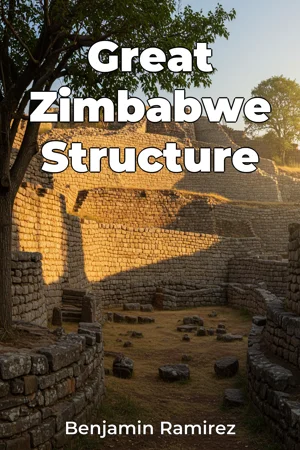
How did a pre-colonial civilization in southern Africa construct a lasting legacy in stone, and what can its monumental architecture reveal about its society, economy, and political organization? This book, *Great Zimbabwe Structure*, delves into the intricacies of Great Zimbabwe, exploring the layout and function of its stone constructions, from economic centers to elite housing spaces, to understand the civilization that built it. This inquiry into the physical structures is more than an architectural study; it is a gateway to understanding the social structures and the daily lives of the people who inhabited this vast complex. The book addresses the long-standing fascination with Great Zimbabwe by providing a comprehensive analysis of the site’s architecture. It examines the different construction techniques employed and the purposes these structures served, moving beyond superficial descriptions to uncover their deeper significance as reflections of economic power and social hierarchy. Understanding the architecture of Great Zimbabwe is crucial for reconstructing a more accurate history of pre-colonial Africa and challenging Eurocentric narratives that often overlook the accomplishments of African civilizations. Central to this book is the argument that the architectural design of Great Zimbabwe directly reflects the socio-political organization of its society. The book will unveil how the monumental stone structures were not merely aesthetic achievements but were deliberately designed to reinforce the authority of the ruling elite, manage economic activities, and facilitate religious practices. The construction techniques, spatial arrangements, and decorative elements all communicate aspects of Great Zimbabwe's societal structure. The book begins by introducing the historical context of Great Zimbabwe, including its rise, peak, and eventual decline, and then transitions into a detailed look at the site's major components: the Hill Complex, the Great Enclosure, and the Valley Enclosures. Each section provides a thorough description of the architectural features, construction methods, and spatial organization, followed by an interpretation of their functions within the broader social and economic framework. The book synthesizes archaeological data, historical accounts, and architectural analysis to arrive at a nuanced understanding of Great Zimbabwe. To support this argument, the book draws from a wide range of evidence, including archaeological excavations, architectural surveys, and analyses of material culture found at the site. It incorporates insights from oral histories and ethnographic studies of contemporary Shona-speaking communities, to provide a holistic perspective on the cultural significance of Great Zimbabwe. The book critically evaluates conflicting interpretations of the site’s history and offers new perspectives based on recent archaeological findings. This analysis of Great Zimbabwe's architecture connects to the fields of archaeology, anthropology, and art history. By exploring the spatial layout and material culture of the site, the book contributes to broader discussions about urban development, social stratification, and cultural expression in pre-colonial societies. It challenges conventional understandings of African history and promotes a more nuanced appreciation of the continent's architectural heritage. The approach in this book combines architectural analysis with social and economic history, providing a unique perspective that goes beyond conventional archaeological reports. The book’s scope is limited to the architectural aspects of Great Zimbabwe and their socio-economic implications, with less focus on detailed political histories or broader regional contexts. This focus allows for an in-depth examination of the site's stone structures and their immediate relevance to the society that built them. Aimed at students, researchers, and anyone with an interest in African history and architecture, *Great Zimbabwe Structure* provides valuable insights into the complexities of pre-colonial African societies. It offers a framework for understanding how architecture can provide tangible evidence of social structures, economic systems, and cultural values. For readers interested in non-Western architectural traditions or pre-colonial African civilizations, this book offers both a detailed exploration of the physical structures and a wider discussion of the civilization’s history and culture.
How did a pre-colonial civilization in southern Africa construct a lasting legacy in stone, and what can its monumental architecture reveal about its society, economy, and political organization? This book, *Great Zimbabwe Structure*, delves into the intricacies of Great Zimbabwe, exploring the layout and function of its stone constructions, from economic centers to elite housing spaces, to understand the civilization that built it. This inquiry into the physical structures is more than an architectural study; it is a gateway to understanding the social structures and the daily lives of the people who inhabited this vast complex. The book addresses the long-standing fascination with Great Zimbabwe by providing a comprehensive analysis of the site’s architecture. It examines the different construction techniques employed and the purposes these structures served, moving beyond superficial descriptions to uncover their deeper significance as reflections of economic power and social hierarchy. Understanding the architecture of Great Zimbabwe is crucial for reconstructing a more accurate history of pre-colonial Africa and challenging Eurocentric narratives that often overlook the accomplishments of African civilizations. Central to this book is the argument that the architectural design of Great Zimbabwe directly reflects the socio-political organization of its society. The book will unveil how the monumental stone structures were not merely aesthetic achievements but were deliberately designed to reinforce the authority of the ruling elite, manage economic activities, and facilitate religious practices. The construction techniques, spatial arrangements, and decorative elements all communicate aspects of Great Zimbabwe's societal structure. The book begins by introducing the historical context of Great Zimbabwe, including its rise, peak, and eventual decline, and then transitions into a detailed look at the site's major components: the Hill Complex, the Great Enclosure, and the Valley Enclosures. Each section provides a thorough description of the architectural features, construction methods, and spatial organization, followed by an interpretation of their functions within the broader social and economic framework. The book synthesizes archaeological data, historical accounts, and architectural analysis to arrive at a nuanced understanding of Great Zimbabwe. To support this argument, the book draws from a wide range of evidence, including archaeological excavations, architectural surveys, and analyses of material culture found at the site. It incorporates insights from oral histories and ethnographic studies of contemporary Shona-speaking communities, to provide a holistic perspective on the cultural significance of Great Zimbabwe. The book critically evaluates conflicting interpretations of the site’s history and offers new perspectives based on recent archaeological findings. This analysis of Great Zimbabwe's architecture connects to the fields of archaeology, anthropology, and art history. By exploring the spatial layout and material culture of the site, the book contributes to broader discussions about urban development, social stratification, and cultural expression in pre-colonial societies. It challenges conventional understandings of African history and promotes a more nuanced appreciation of the continent's architectural heritage. The approach in this book combines architectural analysis with social and economic history, providing a unique perspective that goes beyond conventional archaeological reports. The book’s scope is limited to the architectural aspects of Great Zimbabwe and their socio-economic implications, with less focus on detailed political histories or broader regional contexts. This focus allows for an in-depth examination of the site's stone structures and their immediate relevance to the society that built them. Aimed at students, researchers, and anyone with an interest in African history and architecture, *Great Zimbabwe Structure* provides valuable insights into the complexities of pre-colonial African societies. It offers a framework for understanding how architecture can provide tangible evidence of social structures, economic systems, and cultural values. For readers interested in non-Western architectural traditions or pre-colonial African civilizations, this book offers both a detailed exploration of the physical structures and a wider discussion of the civilization’s history and culture.
*Great Zimbabwe Structure* explores the remarkable architecture of Great Zimbabwe, a pre-colonial civilization in southern Africa, to reveal insights into its society, economy, and political organization. The book examines the site's layout and function, from the Hill Complex to the Great Enclosure and Valley Enclosures, demonstrating how these stone structures reflect social hierarchies and economic power. The study of Great Zimbabwe challenges Eurocentric narratives by highlighting pre-colonial African achievements. The book uniquely combines architectural analysis with social and economic history, moving beyond simple descriptions to uncover the deeper significance of the site's architecture. For example, monumental stone structures reinforced the authority of the ruling elite, managed economic activities, and facilitated religious practices. Drawing upon archaeological data, historical accounts, and analyses of material culture, the book provides a comprehensive understanding of Great Zimbabwe. The book progresses by first introducing the historical context of Great Zimbabwe’s rise and decline, then transitions into a detailed look at the site's major architectural components. By exploring the spatial layout and material culture, this study contributes to discussions about urban development and cultural expression in pre-colonial societies, offering valuable insights for students, researchers, and anyone interested in African history and architecture.
Book Details
ISBN
9788235299925
Publisher
Publifye AS
Your Licenses
You don't own any licenses for this book
Purchase a license below to unlock this book and download the EPUB.
Purchase License
Select a tier to unlock this book
Need bulk licensing?
Contact us for enterprise agreements.