
About This Book
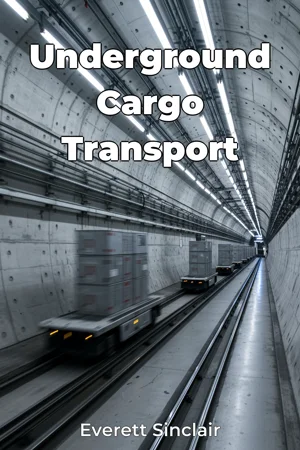
How can cities move increasing volumes of goods without exacerbating surface congestion and environmental impact? "Underground Cargo Transport" explores this crucial question, delving into the design, technology, and architectural considerations of subterranean transport networks as a viable solution for efficient urban logistics, with Architecture General, Technology, Architecture forming the cornerstones of its exploration. This book addresses urban congestion and sustainable solutions. It examines the core principles of underground logistics systems, the engineering challenges involved in their construction, and the integration of these networks into existing urban environments. These topics are vital due to the escalating demands on urban infrastructure and the growing need for sustainable transportation options that minimize disruption and environmental harm. The book considers the architectural implications of such systems, moving beyond pure engineering to view them as integral elements of the urban fabric. The historical context of underground infrastructure, from ancient aqueducts to modern subway systems, will be examined, providing a foundation for understanding the evolution of subsurface construction techniques. Readers will gain an understanding of basic geological principles, tunnel boring methods, and traffic flow analysis, setting the stage for a deeper exploration of the subject matter. “Underground Cargo Transport” proposes that strategically designed and technologically advanced subterranean transport networks represent a crucial pathway to achieving sustainable and efficient urban freight distribution. It argues that integrating these systems requires a holistic approach, considering not only engineering feasibility but also economic viability, social impact, and architectural harmony. The book begins by introducing the fundamental concepts of underground logistics, including network design, vehicle technology, and automated control systems. It then develops these ideas through several key chapters. First, geological surveys and structural engineering requirements for tunnel construction in diverse urban environments will be discussed. Second, case studies of existing and proposed underground freight systems worldwide will be analyzed, highlighting their successes and challenges. Third, the book will explore the integration of these systems with surface transportation networks, focusing on intermodal transfer points and last-mile delivery solutions. Finally, the culmination of the argument is presented through a discussion of the economic, social, and environmental benefits of underground cargo transport, along with policy recommendations for its implementation. This will also consider the architectural impact of integrating these networks into urban spaces. The evidence presented in the book will encompass a range of sources, including engineering reports, economic analyses, environmental impact assessments, and architectural plans. Data from operational underground transportation systems, simulations of traffic flow, and cost-benefit analyses will be included. This book draws connections with several other fields. Urban planning is vital for integrating underground logistics into the overall urban development strategy. Environmental science informs the assessment of environmental impacts and the development of sustainable construction practices. Economics provides the framework for evaluating the financial viability of underground transport projects. These connections enhance the book's argument by demonstrating the interdisciplinary nature of urban logistics solutions. "Underground Cargo Transport" takes a comprehensive view, considering not only the technical aspects of underground transport but also its economic, social, and environmental implications. This holistic perspective distinguishes it from other books that may focus solely on engineering or logistics. The book's tone will be professional and informative, presenting complex information in an accessible manner. While technical details will be included, they will be explained clearly and concisely, avoiding excessive jargon. The target audience includes urban planners, civil engineers, architects, policymakers, logistics professionals, and students in related fields. This book will be valuable to them by providing a comprehensive overview of underground cargo transport, its potential benefits, and the challenges involved in its implementation. As a work in the 'Architecture General, Technology, Architecture' genres, this book will adhere to conventions of clear structure, use of visual aids (diagrams, maps, architectural renderings), and citation of sources. It will also incorporate perspectives from architectural design to ensure underground systems are conceived as integral parts of the urban environment. The scope of the book encompasses various types of underground cargo transport systems, including dedicated freight tunnels, automated guided vehicle networks, and pneumatic tube systems. However, it's important to note that the book primarily focuses on the transport of physical goods, with limited discussion of underground passenger transport. The information can be applied in practical ways by urban planners seeking to alleviate traffic congestion, engineers designing underground infrastructure, and policymakers developing sustainable transportation policies. For example, the case studies of existing systems can provide valuable insights for the design and implementation of new projects. While underground cargo transport offers significant potential benefits, there are ongoing debates regarding its cost-effectiveness, environmental impact, and social acceptability. The book aims to address these controversies by presenting a balanced and evidence-based assessment of the technology.
How can cities move increasing volumes of goods without exacerbating surface congestion and environmental impact? "Underground Cargo Transport" explores this crucial question, delving into the design, technology, and architectural considerations of subterranean transport networks as a viable solution for efficient urban logistics, with Architecture General, Technology, Architecture forming the cornerstones of its exploration. This book addresses urban congestion and sustainable solutions. It examines the core principles of underground logistics systems, the engineering challenges involved in their construction, and the integration of these networks into existing urban environments. These topics are vital due to the escalating demands on urban infrastructure and the growing need for sustainable transportation options that minimize disruption and environmental harm. The book considers the architectural implications of such systems, moving beyond pure engineering to view them as integral elements of the urban fabric. The historical context of underground infrastructure, from ancient aqueducts to modern subway systems, will be examined, providing a foundation for understanding the evolution of subsurface construction techniques. Readers will gain an understanding of basic geological principles, tunnel boring methods, and traffic flow analysis, setting the stage for a deeper exploration of the subject matter. “Underground Cargo Transport” proposes that strategically designed and technologically advanced subterranean transport networks represent a crucial pathway to achieving sustainable and efficient urban freight distribution. It argues that integrating these systems requires a holistic approach, considering not only engineering feasibility but also economic viability, social impact, and architectural harmony. The book begins by introducing the fundamental concepts of underground logistics, including network design, vehicle technology, and automated control systems. It then develops these ideas through several key chapters. First, geological surveys and structural engineering requirements for tunnel construction in diverse urban environments will be discussed. Second, case studies of existing and proposed underground freight systems worldwide will be analyzed, highlighting their successes and challenges. Third, the book will explore the integration of these systems with surface transportation networks, focusing on intermodal transfer points and last-mile delivery solutions. Finally, the culmination of the argument is presented through a discussion of the economic, social, and environmental benefits of underground cargo transport, along with policy recommendations for its implementation. This will also consider the architectural impact of integrating these networks into urban spaces. The evidence presented in the book will encompass a range of sources, including engineering reports, economic analyses, environmental impact assessments, and architectural plans. Data from operational underground transportation systems, simulations of traffic flow, and cost-benefit analyses will be included. This book draws connections with several other fields. Urban planning is vital for integrating underground logistics into the overall urban development strategy. Environmental science informs the assessment of environmental impacts and the development of sustainable construction practices. Economics provides the framework for evaluating the financial viability of underground transport projects. These connections enhance the book's argument by demonstrating the interdisciplinary nature of urban logistics solutions. "Underground Cargo Transport" takes a comprehensive view, considering not only the technical aspects of underground transport but also its economic, social, and environmental implications. This holistic perspective distinguishes it from other books that may focus solely on engineering or logistics. The book's tone will be professional and informative, presenting complex information in an accessible manner. While technical details will be included, they will be explained clearly and concisely, avoiding excessive jargon. The target audience includes urban planners, civil engineers, architects, policymakers, logistics professionals, and students in related fields. This book will be valuable to them by providing a comprehensive overview of underground cargo transport, its potential benefits, and the challenges involved in its implementation. As a work in the 'Architecture General, Technology, Architecture' genres, this book will adhere to conventions of clear structure, use of visual aids (diagrams, maps, architectural renderings), and citation of sources. It will also incorporate perspectives from architectural design to ensure underground systems are conceived as integral parts of the urban environment. The scope of the book encompasses various types of underground cargo transport systems, including dedicated freight tunnels, automated guided vehicle networks, and pneumatic tube systems. However, it's important to note that the book primarily focuses on the transport of physical goods, with limited discussion of underground passenger transport. The information can be applied in practical ways by urban planners seeking to alleviate traffic congestion, engineers designing underground infrastructure, and policymakers developing sustainable transportation policies. For example, the case studies of existing systems can provide valuable insights for the design and implementation of new projects. While underground cargo transport offers significant potential benefits, there are ongoing debates regarding its cost-effectiveness, environmental impact, and social acceptability. The book aims to address these controversies by presenting a balanced and evidence-based assessment of the technology.
"Underground Cargo Transport" examines subterranean networks as a solution to increasing urban congestion and environmental concerns. It addresses the architectural, technological, and design considerations for implementing underground logistics systems, highlighting their potential to revolutionize urban freight distribution. These systems are vital considering escalating demands on urban infrastructure and the need for sustainable transport options. The book emphasizes integrating such systems with surface transportation networks and considers their architectural impact on the urban environment. The book explores the historical context of underground infrastructure and delves into essential geological principles, tunnel boring methods, and traffic flow analysis. It presents case studies of existing and proposed underground freight systems worldwide, analyzing their successes and challenges. Did you know that strategically designed underground transport networks could substantially contribute to sustainable and efficient urban freight distribution? The book progresses from fundamental concepts of underground logistics to discussions of geological surveys, case studies, and integration with surface networks, culminating in an analysis of economic, social, and environmental benefits. This book uniquely adopts a holistic approach by considering the technical, economic, social, and environmental implications of underground cargo transport. It is professionally written and informative, making complex details accessible to urban planners, engineers, architects, policymakers, and students alike. The book offers practical insights for alleviating traffic congestion and developing sustainable transportation policies.
Book Details
ISBN
9788235299727
Publisher
Publifye AS
Your Licenses
You don't own any licenses for this book
Purchase a license below to unlock this book and download the EPUB.
Purchase License
Select a tier to unlock this book
Need bulk licensing?
Contact us for enterprise agreements.