
About This Book
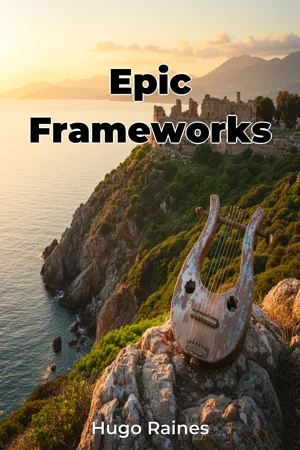
How were the monumental narratives of antiquity, the epics that shaped cultures, not only composed but also transmitted across generations? "Epic Frameworks" delves into the formal compositional techniques and transmission methods of long-form epic poetry, offering a comprehensive examination of these foundational works. This book is essential for understanding not just the literary significance of epics like the "Iliad," the "Odyssey," and the "Aeneid," but also their profound impact on history, language, and cultural identity. The book focuses on two primary areas: firstly, the structural elements and compositional devices employed by epic poets, and secondly, the diverse methods by which these poems were disseminated and preserved, ranging from oral traditions to manuscript culture. Understanding these facets reveals the sophisticated artistry inherent in epic poetry and highlights the active role communities played in shaping and perpetuating these narratives. Epic poetry flourished in societies where oral tradition held significant sway. Consequently, the book begins by analyzing the oral-formulaic theory, exploring how repeated phrases, typical scenes, and stock epithets facilitated both composition and memorization. The transition from oral performance to written text is a critical point of investigation, examining how the inherent characteristics of oral epics influenced their eventual written form. A central argument of "Epic Frameworks" is that the formal structures observed within long-form epic poetry are inextricably linked to the mechanisms of their transmission, and that understanding this relationship provides critical insights into the cultural values these epics reflect. The book is structured to provide a detailed exploration of these intertwined aspects. The first section introduces the key concepts of epic form, meter, and the oral-formulaic tradition. It then proceeds to explore the significant differences between oral and literary epics, clarifying the challenges and adaptations involved in transitioning from performance to text. The following sections examine specific transmission methods, including the role of bards and rhapsodes, the establishment of canonical versions, and the impact of scribal practices on the evolution of epic texts. Finally, the book studies the lasting legacy of epic poetry and its continued relevance in contemporary literature and film. The arguments presented are supported by a thorough analysis of textual evidence from a wide range of epics across diverse cultures, as well as insights from anthropological studies of oral traditions. The book also draws upon recent scholarship in classical studies, linguistics, and comparative literature. "Epic Frameworks" connects to other fields such as anthropology, sociology, and musicology. The study of oral traditions involves anthropological methods, while the impact of epics on societal values relates to sociological inquiry. The musical aspects of epic performance, particularly in oral traditions, further enrich the argument. This book distinguishes itself through its integrated approach, showing how composition and transmission are not separate processes but rather two aspects of a single, unified cultural phenomenon. Written in a clear, academic style accessible to a wide audience, "Epic Frameworks" will appeal to scholars and students of literature, classics, history, and language arts. It offers a valuable resource for anyone seeking a deeper appreciation of epic poetry and its enduring influence. While the book focuses primarily on Western epic traditions, it also considers examples from other cultures to provide a broader comparative perspective. The scope is intentionally limited to long-form narrative epics, excluding shorter poetic forms or dramatic works. The insights offered by "Epic Frameworks" can be applied in various ways, from informing critical analyses of epic texts to enhancing teaching methodologies in literature and history courses. The book also sheds light on the broader dynamics of cultural transmission and the role of storytelling in shaping human societies. Finally, the book addresses ongoing scholarly debates regarding the historicity of epic narratives and the extent to which they reflect actual events or social structures. By engaging with these controversies, "Epic Frameworks" offers a nuanced and thought-provoking contribution to the field.
How were the monumental narratives of antiquity, the epics that shaped cultures, not only composed but also transmitted across generations? "Epic Frameworks" delves into the formal compositional techniques and transmission methods of long-form epic poetry, offering a comprehensive examination of these foundational works. This book is essential for understanding not just the literary significance of epics like the "Iliad," the "Odyssey," and the "Aeneid," but also their profound impact on history, language, and cultural identity. The book focuses on two primary areas: firstly, the structural elements and compositional devices employed by epic poets, and secondly, the diverse methods by which these poems were disseminated and preserved, ranging from oral traditions to manuscript culture. Understanding these facets reveals the sophisticated artistry inherent in epic poetry and highlights the active role communities played in shaping and perpetuating these narratives. Epic poetry flourished in societies where oral tradition held significant sway. Consequently, the book begins by analyzing the oral-formulaic theory, exploring how repeated phrases, typical scenes, and stock epithets facilitated both composition and memorization. The transition from oral performance to written text is a critical point of investigation, examining how the inherent characteristics of oral epics influenced their eventual written form. A central argument of "Epic Frameworks" is that the formal structures observed within long-form epic poetry are inextricably linked to the mechanisms of their transmission, and that understanding this relationship provides critical insights into the cultural values these epics reflect. The book is structured to provide a detailed exploration of these intertwined aspects. The first section introduces the key concepts of epic form, meter, and the oral-formulaic tradition. It then proceeds to explore the significant differences between oral and literary epics, clarifying the challenges and adaptations involved in transitioning from performance to text. The following sections examine specific transmission methods, including the role of bards and rhapsodes, the establishment of canonical versions, and the impact of scribal practices on the evolution of epic texts. Finally, the book studies the lasting legacy of epic poetry and its continued relevance in contemporary literature and film. The arguments presented are supported by a thorough analysis of textual evidence from a wide range of epics across diverse cultures, as well as insights from anthropological studies of oral traditions. The book also draws upon recent scholarship in classical studies, linguistics, and comparative literature. "Epic Frameworks" connects to other fields such as anthropology, sociology, and musicology. The study of oral traditions involves anthropological methods, while the impact of epics on societal values relates to sociological inquiry. The musical aspects of epic performance, particularly in oral traditions, further enrich the argument. This book distinguishes itself through its integrated approach, showing how composition and transmission are not separate processes but rather two aspects of a single, unified cultural phenomenon. Written in a clear, academic style accessible to a wide audience, "Epic Frameworks" will appeal to scholars and students of literature, classics, history, and language arts. It offers a valuable resource for anyone seeking a deeper appreciation of epic poetry and its enduring influence. While the book focuses primarily on Western epic traditions, it also considers examples from other cultures to provide a broader comparative perspective. The scope is intentionally limited to long-form narrative epics, excluding shorter poetic forms or dramatic works. The insights offered by "Epic Frameworks" can be applied in various ways, from informing critical analyses of epic texts to enhancing teaching methodologies in literature and history courses. The book also sheds light on the broader dynamics of cultural transmission and the role of storytelling in shaping human societies. Finally, the book addresses ongoing scholarly debates regarding the historicity of epic narratives and the extent to which they reflect actual events or social structures. By engaging with these controversies, "Epic Frameworks" offers a nuanced and thought-provoking contribution to the field.
"Epic Frameworks" explores how ancient epic poems, like the "Iliad" and the "Odyssey," were both composed and passed down through generations. It examines the formal techniques poets used, such as repeated phrases and typical scenes, and the various methods of transmission, from oral tradition to written manuscripts. This approach reveals the sophisticated artistry of epic poetry and highlights the active role communities played in shaping these narratives. The book delves into the oral-formulaic theory, illustrating how these devices aided in both the creation and memorization of lengthy poems. It also investigates the shift from oral performance to written text, noting how oral epics influenced their written forms. By connecting composition and transmission, "Epic Frameworks" offers fresh insights into the cultural values reflected in these epic narratives. The book begins by introducing key concepts like epic form and meter, then explores the differences between oral and literary epics. Later sections examine specific transmission methods and the lasting legacy of epic poetry in contemporary literature and film, providing a comprehensive understanding of these foundational works.
Book Details
ISBN
9788235299444
Publisher
Publifye AS
Your Licenses
You don't own any licenses for this book
Purchase a license below to unlock this book and download the EPUB.
Purchase License
Select a tier to unlock this book
Need bulk licensing?
Contact us for enterprise agreements.