
About This Book
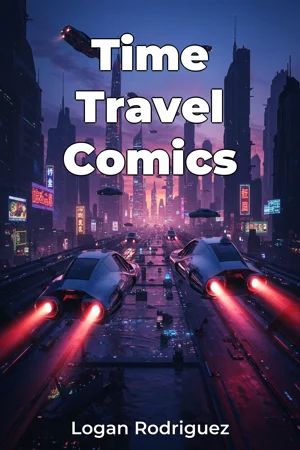
What if you could witness history unfold, correct past mistakes, or glimpse the future? Comic books have long grappled with this tantalizing possibility, offering a unique lens through which to explore the complexities of time travel, paradoxes, and alternate realities. *Time Travel Comics* delves into the evolution of these themes within the medium, examining how artists and writers have visualized and conceptualized temporal manipulation across decades of illustrated storytelling, appealing to fans of Film & Television and Art alike. This book examines the multifaceted ways in which comic books have engaged with time travel, focusing on three key areas: the mechanics of time travel as depicted in comics, the logical and philosophical paradoxes that arise from it, and the exploration of alternate realities created by temporal shifts. These topics are significant because they reflect not only scientific and philosophical inquiries but also broader anxieties and aspirations about our relationship with time and the potential to alter our destinies. To fully appreciate the nuanced portrayals of time travel in comics, a basic understanding of time travel theories (such as those presented by Einstein) and the philosophical implications of causality is helpful. Similarly, understanding the historical context of comic book publishing, including shifts in style, audience, and social concerns, informs our analysis. The central argument of *Time Travel Comics* is that comic books, despite often being dismissed as mere entertainment, offer sophisticated and insightful explorations of time travel, often anticipating or paralleling scientific and philosophical thought experiments. This is important because it elevates the cultural significance of the medium, demonstrating its capacity for intellectual engagement and its contribution to broader cultural conversations. *Time Travel Comics* begins by introducing the main concepts of time travel, paradoxes, and alternate realities as they appear in the comics medium. It then develops these ideas through three major sections. The first section examines the various methods of time travel employed in comics, from technologically advanced devices to mystical powers, analyzing how these methods shape the narratives. The second section delves into the paradoxes inherent in time travel stories, such as the grandfather paradox and bootstrap paradox, exploring how creators grapple with these logical inconsistencies. The third section investigates the creation and exploration of alternate realities resulting from time travel, analyzing the social, political, and ethical implications of these diverging timelines. The book culminates by considering the broader implications of these narratives, reflecting on what they reveal about our understanding of time, history, and free will. The analysis presented in *Time Travel Comics* draws upon a wide range of comic books from various eras and genres, including superhero comics, science fiction comics, and independent works. It also integrates critical analyses of narrative structure, visual representation and character development, and references academic scholarship on time travel in wider media. Direct quotes and visual examples from the comics themselves serve as primary evidence to support the book's arguments. This book connects to several other fields of study, including physics, philosophy, and media studies. Physics provides the theoretical framework for understanding time travel; philosophy offers tools for analyzing paradoxes and causality; and media studies provides insights into the cultural impact of comic books. These connections enhance the book's argument by demonstrating the interdisciplinary nature of time travel narratives and their relevance to diverse intellectual traditions. *Time Travel Comics* adopts a unique perspective by focusing specifically on the comic book medium, which has received less scholarly attention than film or literature in discussions of time travel. It also offers a comprehensive typology of time travel tropes and paradoxes as depicted in comics, providing a valuable resource for scholars and enthusiasts alike. The tone of the book is scholarly yet accessible, aiming to engage both academic readers and general comic book enthusiasts. The writing style is clear and concise, avoiding jargon while maintaining intellectual rigor. The target audience includes scholars of comic books, media studies, and science fiction, as well as avid comic book readers interested in the themes of time travel, paradoxes, and alternate realities. The book would be valuable to them because it provides a comprehensive and insightful analysis of these themes within a popular and influential medium. As a work of non-fiction focused on media studies and specifically on an art form, the book provides detailed examples and interpretations, maintaining a balance between description and analysis. The scope of *Time Travel Comics* is limited to depictions of time travel, paradoxes, and alternate realities within the comic book medium, with only brief references to other media for comparative purposes. The information presented in *Time Travel Comics* can be applied practically by readers to enhance their understanding and appreciation of time travel narratives in other media, and to critically evaluate the scientific and philosophical implications of these narratives. While this book does not focus heavily on controversies, it does acknowledge the ongoing debates surrounding the feasibility of time travel and the ethical implications of altering the past. The book analyzes how comic books engage with these debates, offering diverse perspectives and thought-provoking scenarios.
What if you could witness history unfold, correct past mistakes, or glimpse the future? Comic books have long grappled with this tantalizing possibility, offering a unique lens through which to explore the complexities of time travel, paradoxes, and alternate realities. *Time Travel Comics* delves into the evolution of these themes within the medium, examining how artists and writers have visualized and conceptualized temporal manipulation across decades of illustrated storytelling, appealing to fans of Film & Television and Art alike. This book examines the multifaceted ways in which comic books have engaged with time travel, focusing on three key areas: the mechanics of time travel as depicted in comics, the logical and philosophical paradoxes that arise from it, and the exploration of alternate realities created by temporal shifts. These topics are significant because they reflect not only scientific and philosophical inquiries but also broader anxieties and aspirations about our relationship with time and the potential to alter our destinies. To fully appreciate the nuanced portrayals of time travel in comics, a basic understanding of time travel theories (such as those presented by Einstein) and the philosophical implications of causality is helpful. Similarly, understanding the historical context of comic book publishing, including shifts in style, audience, and social concerns, informs our analysis. The central argument of *Time Travel Comics* is that comic books, despite often being dismissed as mere entertainment, offer sophisticated and insightful explorations of time travel, often anticipating or paralleling scientific and philosophical thought experiments. This is important because it elevates the cultural significance of the medium, demonstrating its capacity for intellectual engagement and its contribution to broader cultural conversations. *Time Travel Comics* begins by introducing the main concepts of time travel, paradoxes, and alternate realities as they appear in the comics medium. It then develops these ideas through three major sections. The first section examines the various methods of time travel employed in comics, from technologically advanced devices to mystical powers, analyzing how these methods shape the narratives. The second section delves into the paradoxes inherent in time travel stories, such as the grandfather paradox and bootstrap paradox, exploring how creators grapple with these logical inconsistencies. The third section investigates the creation and exploration of alternate realities resulting from time travel, analyzing the social, political, and ethical implications of these diverging timelines. The book culminates by considering the broader implications of these narratives, reflecting on what they reveal about our understanding of time, history, and free will. The analysis presented in *Time Travel Comics* draws upon a wide range of comic books from various eras and genres, including superhero comics, science fiction comics, and independent works. It also integrates critical analyses of narrative structure, visual representation and character development, and references academic scholarship on time travel in wider media. Direct quotes and visual examples from the comics themselves serve as primary evidence to support the book's arguments. This book connects to several other fields of study, including physics, philosophy, and media studies. Physics provides the theoretical framework for understanding time travel; philosophy offers tools for analyzing paradoxes and causality; and media studies provides insights into the cultural impact of comic books. These connections enhance the book's argument by demonstrating the interdisciplinary nature of time travel narratives and their relevance to diverse intellectual traditions. *Time Travel Comics* adopts a unique perspective by focusing specifically on the comic book medium, which has received less scholarly attention than film or literature in discussions of time travel. It also offers a comprehensive typology of time travel tropes and paradoxes as depicted in comics, providing a valuable resource for scholars and enthusiasts alike. The tone of the book is scholarly yet accessible, aiming to engage both academic readers and general comic book enthusiasts. The writing style is clear and concise, avoiding jargon while maintaining intellectual rigor. The target audience includes scholars of comic books, media studies, and science fiction, as well as avid comic book readers interested in the themes of time travel, paradoxes, and alternate realities. The book would be valuable to them because it provides a comprehensive and insightful analysis of these themes within a popular and influential medium. As a work of non-fiction focused on media studies and specifically on an art form, the book provides detailed examples and interpretations, maintaining a balance between description and analysis. The scope of *Time Travel Comics* is limited to depictions of time travel, paradoxes, and alternate realities within the comic book medium, with only brief references to other media for comparative purposes. The information presented in *Time Travel Comics* can be applied practically by readers to enhance their understanding and appreciation of time travel narratives in other media, and to critically evaluate the scientific and philosophical implications of these narratives. While this book does not focus heavily on controversies, it does acknowledge the ongoing debates surrounding the feasibility of time travel and the ethical implications of altering the past. The book analyzes how comic books engage with these debates, offering diverse perspectives and thought-provoking scenarios.
"Time Travel Comics" explores the evolution of time travel, paradoxes, and alternate realities within comic books, appealing to enthusiasts of Film & Television and Art. The book uniquely examines how artists and writers have visualized temporal manipulation, often paralleling scientific and philosophical thought experiments. Intriguingly, comics delve into the mechanics of time travel, from advanced technology to mystical powers, shaping narratives in unexpected ways. The book analyzes how comic books engage with time travel, focusing on the depicted mechanics, logical paradoxes, and created alternate realities. Starting with an introduction to key concepts, the book progresses through sections examining methods of time travel, inherent paradoxes, and the consequences of diverging timelines. By focusing specifically on the comic book medium, the book provides a comprehensive resource for scholars and enthusiasts alike.
Book Details
ISBN
9788235299284
Publisher
Publifye AS
Your Licenses
You don't own any licenses for this book
Purchase a license below to unlock this book and download the EPUB.
Purchase License
Select a tier to unlock this book
Need bulk licensing?
Contact us for enterprise agreements.