
About This Book
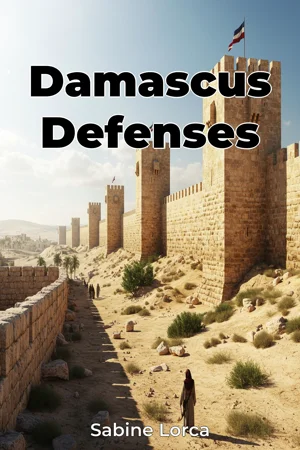
How did Damascus, one of the oldest continuously inhabited cities in the world, manage to survive and thrive through millennia of warfare and conquest? "Damascus Defenses" explores the multifaceted strategies employed by the city's inhabitants and rulers to protect it from countless invasions, offering a compelling study of military history, world history, and the enduring power of strategic defense. This book delves into the fortifications, military tactics, and resilience that allowed Damascus to withstand numerous sieges and remain a vital center of power and culture. This book examines three crucial elements that contributed to Damascus's remarkable survival: its physical fortifications, the evolution of its military strategies, and the socio-political dynamics that fostered resistance. Understanding these elements is not just about recounting battles; it is about recognizing the complex interplay of human ingenuity, political maneuvering, and environmental factors that shaped the city's destiny. A basic understanding of ancient and medieval warfare, as well as the geographical importance of the Levant, will enhance the reader’s appreciation of the challenges Damascus faced. The central argument of "Damascus Defenses" is that the city’s survival was not solely dependent on its physical defenses or military prowess, but on a dynamic combination of adaptable strategies, resilient leadership, and its significance as a cultural and economic hub. This holistic approach allowed Damascus to consistently recover and rebuild, maintaining its strategic importance throughout history. The book begins by introducing the geographical context of Damascus, emphasizing its location as a critical crossroads for trade and military campaigns. It then explores the evolution of the city’s fortifications, from ancient walls to medieval citadels, detailing their construction, adaptations, and effectiveness against various siege technologies. Central chapters analyze specific historical periods, such as the Roman, Islamic, and Crusader eras, dissecting the military strategies employed by both defenders and attackers. Each case study highlights the unique challenges posed during these conflicts and the innovative responses developed by Damascus’s military leaders. The book culminates by assessing the long-term impact of these defensive strategies on the city’s development and cultural identity, drawing parallels to other historically fortified cities, and offering insights into the enduring relevance of strategic defense in the modern world. The evidence presented in this book draws upon a range of primary sources, including archaeological findings, historical chronicles, and military treatises. Secondary sources from both Western and Middle Eastern scholarship are also utilized to provide a balanced and comprehensive analysis. Unique data sources, such as detailed maps of the city's fortifications and architectural surveys of surviving structures, offer tangible insights into the defensive capabilities of Damascus. "Damascus Defenses" connects to several interdisciplinary fields, including archaeology, urban planning, and political science. Archaeology provides physical evidence of past conflicts and defensive structures. Urban planning principles illuminate how the city’s design contributed to its defense. Political science offers frameworks for understanding the motivations and strategies of the various powers vying for control of Damascus. By integrating these perspectives, the book offers a richer and more nuanced understanding of the city’s history. This book offers a fresh perspective by examining the interconnectedness of physical defenses, military tactics, and socio-political factors in ensuring the survival of a major urban center. It goes beyond a simple chronicle of battles to explore the human element behind the defenses. Written in a clear and accessible style, "Damascus Defenses" is intended for a broad audience, including military history enthusiasts, students of world history, and anyone interested in the strategic dynamics of urban warfare. The book will appeal to readers seeking a deeper understanding of the Middle East and the historical forces that have shaped the region. As a work of military history and world history, this book adheres to the genre's expectations by providing detailed accounts of battles, sieges, and military technologies. However, it also incorporates elements of social and cultural history to provide a more holistic perspective. The scope of the book is limited to the defensive strategies of Damascus throughout its history, and does not delve into the broader political or economic histories of the empires that controlled it. The lessons learned from Damascus’s defensive strategies have real-world applications for contemporary urban planning and security. Understanding how cities have historically defended themselves against attack can inform modern approaches to urban resilience and crisis management. The book addresses the ongoing debate among historians regarding the relative importance of different factors in determining the outcome of sieges and military conflicts. By examining the case of Damascus, it contributes to a more nuanced understanding of these complex interactions.
How did Damascus, one of the oldest continuously inhabited cities in the world, manage to survive and thrive through millennia of warfare and conquest? "Damascus Defenses" explores the multifaceted strategies employed by the city's inhabitants and rulers to protect it from countless invasions, offering a compelling study of military history, world history, and the enduring power of strategic defense. This book delves into the fortifications, military tactics, and resilience that allowed Damascus to withstand numerous sieges and remain a vital center of power and culture. This book examines three crucial elements that contributed to Damascus's remarkable survival: its physical fortifications, the evolution of its military strategies, and the socio-political dynamics that fostered resistance. Understanding these elements is not just about recounting battles; it is about recognizing the complex interplay of human ingenuity, political maneuvering, and environmental factors that shaped the city's destiny. A basic understanding of ancient and medieval warfare, as well as the geographical importance of the Levant, will enhance the reader’s appreciation of the challenges Damascus faced. The central argument of "Damascus Defenses" is that the city’s survival was not solely dependent on its physical defenses or military prowess, but on a dynamic combination of adaptable strategies, resilient leadership, and its significance as a cultural and economic hub. This holistic approach allowed Damascus to consistently recover and rebuild, maintaining its strategic importance throughout history. The book begins by introducing the geographical context of Damascus, emphasizing its location as a critical crossroads for trade and military campaigns. It then explores the evolution of the city’s fortifications, from ancient walls to medieval citadels, detailing their construction, adaptations, and effectiveness against various siege technologies. Central chapters analyze specific historical periods, such as the Roman, Islamic, and Crusader eras, dissecting the military strategies employed by both defenders and attackers. Each case study highlights the unique challenges posed during these conflicts and the innovative responses developed by Damascus’s military leaders. The book culminates by assessing the long-term impact of these defensive strategies on the city’s development and cultural identity, drawing parallels to other historically fortified cities, and offering insights into the enduring relevance of strategic defense in the modern world. The evidence presented in this book draws upon a range of primary sources, including archaeological findings, historical chronicles, and military treatises. Secondary sources from both Western and Middle Eastern scholarship are also utilized to provide a balanced and comprehensive analysis. Unique data sources, such as detailed maps of the city's fortifications and architectural surveys of surviving structures, offer tangible insights into the defensive capabilities of Damascus. "Damascus Defenses" connects to several interdisciplinary fields, including archaeology, urban planning, and political science. Archaeology provides physical evidence of past conflicts and defensive structures. Urban planning principles illuminate how the city’s design contributed to its defense. Political science offers frameworks for understanding the motivations and strategies of the various powers vying for control of Damascus. By integrating these perspectives, the book offers a richer and more nuanced understanding of the city’s history. This book offers a fresh perspective by examining the interconnectedness of physical defenses, military tactics, and socio-political factors in ensuring the survival of a major urban center. It goes beyond a simple chronicle of battles to explore the human element behind the defenses. Written in a clear and accessible style, "Damascus Defenses" is intended for a broad audience, including military history enthusiasts, students of world history, and anyone interested in the strategic dynamics of urban warfare. The book will appeal to readers seeking a deeper understanding of the Middle East and the historical forces that have shaped the region. As a work of military history and world history, this book adheres to the genre's expectations by providing detailed accounts of battles, sieges, and military technologies. However, it also incorporates elements of social and cultural history to provide a more holistic perspective. The scope of the book is limited to the defensive strategies of Damascus throughout its history, and does not delve into the broader political or economic histories of the empires that controlled it. The lessons learned from Damascus’s defensive strategies have real-world applications for contemporary urban planning and security. Understanding how cities have historically defended themselves against attack can inform modern approaches to urban resilience and crisis management. The book addresses the ongoing debate among historians regarding the relative importance of different factors in determining the outcome of sieges and military conflicts. By examining the case of Damascus, it contributes to a more nuanced understanding of these complex interactions.
"Damascus Defenses" explores how Damascus, a pivotal city in the Levant and one of the world's oldest, survived countless military conflicts throughout history. The book argues that Damascus's resilience wasn't just about strong fortifications but a dynamic combination of adaptable military strategies, resilient leadership, and its importance as a cultural and economic center. For example, the city's strategic location made it a critical crossroads which meant defenses had to adapt to changes in siege technology, influencing urban planning. The study examines three key elements: physical fortifications, evolving military tactics, and socio-political dynamics. Starting with the city's geography and the evolution of its defenses from ancient walls to medieval citadels, the book then dissects specific historical periods like the Roman, Islamic, and Crusader eras. These case studies reveal the unique challenges faced and the innovative responses developed by Damascus’s military leaders. By integrating perspectives from archaeology, urban planning, and political science, the book offers a nuanced understanding of the city’s history. The book emphasizes the interconnectedness of defense, military tactics, and socio-political factors, offering a fresh perspective beyond a simple chronicle of battles. The final chapters assess the long-term impact of these strategies on the city’s development and cultural identity, drawing parallels to other fortified cities and highlighting the relevance of strategic defense even today.
Book Details
ISBN
9788235299253
Publisher
Publifye AS
Your Licenses
You don't own any licenses for this book
Purchase a license below to unlock this book and download the EPUB.
Purchase License
Select a tier to unlock this book
Need bulk licensing?
Contact us for enterprise agreements.