
About This Book
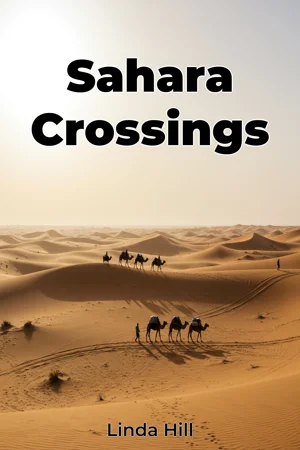
How did camel caravans traversing seemingly impassable sands forge empires and bind disparate peoples? "Sahara Crossings" delves into the intricate network of trade routes that crisscrossed the Sahara Desert, revealing their profound impact on the economic, cultural, and political development of African civilizations for centuries. This book examines the rise and fall of these vital arteries of exchange, the goods and ideas that flowed along them, and the enduring legacy they left on the African continent and beyond. This work focuses primarily on three key areas: the establishment and evolution of trans-Saharan trade routes; the cultural and religious exchanges facilitated by these routes; and the political and economic ramifications for the empires and societies that controlled or participated in this trade. These topics are significant because they illuminate a crucial period in African history often overlooked or misrepresented, emphasizing the agency and ingenuity of African peoples in shaping their own destinies. Understanding these dynamics is essential for a comprehensive view of world history, challenging Eurocentric narratives and showcasing the interconnectedness of global societies long before the age of European exploration. Set against the backdrop of the vast and unforgiving Sahara, this book explores the historical context that made trans-Saharan trade possible. It addresses topics such as the domestication of the camel, the development of navigational techniques, and the adaptation of desert societies to the harsh environment. Prior knowledge of basic African geography and an understanding of pre-colonial African history will enhance the reader's appreciation, but are not essential, as foundational elements are built into the narrative. The central argument of "Sahara Crossings" is that trans-Saharan trade was not merely an economic activity but a transformative force that shaped the political landscape, religious beliefs, and cultural identities of the societies involved. By controlling trade routes and resources, empires like Ghana, Mali, and Songhai rose to prominence, while the exchange of ideas and religious practices, particularly Islam, fostered a shared cultural heritage across vast distances. This argument is important because it challenges simplistic views of African history as isolated or static, highlighting the continent's active role in global exchange and its contributions to world civilization. The book unfolds by first introducing the geographical and environmental challenges of crossing the Sahara, detailing the technological innovations that made it possible, and outlining the main trade routes that emerged over time. It then examines the commodities traded, including gold, salt, textiles, and slaves, exploring their economic significance and their impact on the lives of ordinary people. The core of the book consists of case studies of major empires and societies that participated in trans-Saharan trade, such as the Almoravids, the Kingdom of Kanem-Bornu, and the Tuareg. The narrative culminates with an analysis of the decline of trans-Saharan trade due to European maritime expansion and its subsequent effects on African societies. Finally, it will address the enduring legacy of these routes, considering their influence on modern-day cultural identities and economic patterns. The evidence presented in this book is based on a wide range of primary and secondary sources, including Arabic chronicles, European travel accounts, archaeological findings, and anthropological studies. Unique data sources include recently translated Arabic texts and previously unpublished archaeological reports from excavations in the Sahara. "Sahara Crossings" connects to a diverse range of fields, including economics (analyzing trade dynamics), religious studies (examining the spread of Islam in Africa), and anthropology (understanding cultural exchange and adaptation). These interdisciplinary connections enrich the book's analysis, providing a comprehensive and nuanced understanding of trans-Saharan trade. This book offers a fresh perspective by examining trans-Saharan trade not just as a commercial enterprise, but as a complex web of interactions that profoundly shaped African societies. It adopts a nuanced approach, acknowledging the positive and negative consequences of this trade, and avoids simplistic narratives of exploitation or resistance. Written in a clear and accessible style, "Sahara Crossings" is aimed at students, scholars, and general readers interested in African history, world history, and the history of trade. It will be particularly valuable to those seeking a deeper understanding of the interconnectedness of global societies and the role of Africa in shaping world history. As a work of non-fiction, this book adheres to the highest standards of historical accuracy and relies on verifiable evidence to support its claims. While the book covers a broad sweep of history, its scope is limited to the trans-Saharan trade routes and their impact on African societies. It does not delve into the details of internal African trade networks or the later European colonial period, except where directly relevant to the main theme. The lessons learned from "Sahara Crossings" are relevant today as we grapple with issues of globalization, cultural exchange, and the legacies of historical trade networks. Understanding the complexities of trans-Saharan trade can inform our understanding of contemporary challenges and opportunities in Africa and beyond. One ongoing debate in the field concerns the extent to which trans-Saharan trade contributed to the development of slavery in Africa. This book will address this controversy by presenting a balanced analysis of the evidence, acknowledging the role of trans-Saharan trade in the slave trade while also emphasizing the complexities of slavery in African societies.
How did camel caravans traversing seemingly impassable sands forge empires and bind disparate peoples? "Sahara Crossings" delves into the intricate network of trade routes that crisscrossed the Sahara Desert, revealing their profound impact on the economic, cultural, and political development of African civilizations for centuries. This book examines the rise and fall of these vital arteries of exchange, the goods and ideas that flowed along them, and the enduring legacy they left on the African continent and beyond. This work focuses primarily on three key areas: the establishment and evolution of trans-Saharan trade routes; the cultural and religious exchanges facilitated by these routes; and the political and economic ramifications for the empires and societies that controlled or participated in this trade. These topics are significant because they illuminate a crucial period in African history often overlooked or misrepresented, emphasizing the agency and ingenuity of African peoples in shaping their own destinies. Understanding these dynamics is essential for a comprehensive view of world history, challenging Eurocentric narratives and showcasing the interconnectedness of global societies long before the age of European exploration. Set against the backdrop of the vast and unforgiving Sahara, this book explores the historical context that made trans-Saharan trade possible. It addresses topics such as the domestication of the camel, the development of navigational techniques, and the adaptation of desert societies to the harsh environment. Prior knowledge of basic African geography and an understanding of pre-colonial African history will enhance the reader's appreciation, but are not essential, as foundational elements are built into the narrative. The central argument of "Sahara Crossings" is that trans-Saharan trade was not merely an economic activity but a transformative force that shaped the political landscape, religious beliefs, and cultural identities of the societies involved. By controlling trade routes and resources, empires like Ghana, Mali, and Songhai rose to prominence, while the exchange of ideas and religious practices, particularly Islam, fostered a shared cultural heritage across vast distances. This argument is important because it challenges simplistic views of African history as isolated or static, highlighting the continent's active role in global exchange and its contributions to world civilization. The book unfolds by first introducing the geographical and environmental challenges of crossing the Sahara, detailing the technological innovations that made it possible, and outlining the main trade routes that emerged over time. It then examines the commodities traded, including gold, salt, textiles, and slaves, exploring their economic significance and their impact on the lives of ordinary people. The core of the book consists of case studies of major empires and societies that participated in trans-Saharan trade, such as the Almoravids, the Kingdom of Kanem-Bornu, and the Tuareg. The narrative culminates with an analysis of the decline of trans-Saharan trade due to European maritime expansion and its subsequent effects on African societies. Finally, it will address the enduring legacy of these routes, considering their influence on modern-day cultural identities and economic patterns. The evidence presented in this book is based on a wide range of primary and secondary sources, including Arabic chronicles, European travel accounts, archaeological findings, and anthropological studies. Unique data sources include recently translated Arabic texts and previously unpublished archaeological reports from excavations in the Sahara. "Sahara Crossings" connects to a diverse range of fields, including economics (analyzing trade dynamics), religious studies (examining the spread of Islam in Africa), and anthropology (understanding cultural exchange and adaptation). These interdisciplinary connections enrich the book's analysis, providing a comprehensive and nuanced understanding of trans-Saharan trade. This book offers a fresh perspective by examining trans-Saharan trade not just as a commercial enterprise, but as a complex web of interactions that profoundly shaped African societies. It adopts a nuanced approach, acknowledging the positive and negative consequences of this trade, and avoids simplistic narratives of exploitation or resistance. Written in a clear and accessible style, "Sahara Crossings" is aimed at students, scholars, and general readers interested in African history, world history, and the history of trade. It will be particularly valuable to those seeking a deeper understanding of the interconnectedness of global societies and the role of Africa in shaping world history. As a work of non-fiction, this book adheres to the highest standards of historical accuracy and relies on verifiable evidence to support its claims. While the book covers a broad sweep of history, its scope is limited to the trans-Saharan trade routes and their impact on African societies. It does not delve into the details of internal African trade networks or the later European colonial period, except where directly relevant to the main theme. The lessons learned from "Sahara Crossings" are relevant today as we grapple with issues of globalization, cultural exchange, and the legacies of historical trade networks. Understanding the complexities of trans-Saharan trade can inform our understanding of contemporary challenges and opportunities in Africa and beyond. One ongoing debate in the field concerns the extent to which trans-Saharan trade contributed to the development of slavery in Africa. This book will address this controversy by presenting a balanced analysis of the evidence, acknowledging the role of trans-Saharan trade in the slave trade while also emphasizing the complexities of slavery in African societies.
"Sahara Crossings" explores the transformative history of trans-Saharan trade routes and their profound impact on African societies. It reveals how these desert arteries fostered not only economic exchange but also cultural and political development, shaping empires like Ghana, Mali, and Songhai. The book highlights the ingenuity of desert societies in adapting to harsh conditions, enabling the movement of valuable commodities such as gold, salt, and textiles across vast distances. The book examines the spread of Islam and the rise of powerful empires, emphasizing that the trade routes were more than just commercial pathways; they were vital conduits for cultural exchange and political influence. By analyzing Arabic chronicles, archaeological findings, and other sources, "Sahara Crossings" challenges Eurocentric views of history, demonstrating Africa's significant role in global interconnectedness throughout the pre-colonial era. The book unfolds by first detailing the geographical challenges and technological innovations, then explores the traded commodities and their impact, followed by case studies of major empires, and culminates with an analysis of the trade's decline and its enduring legacy.
Book Details
ISBN
9788235299215
Publisher
Publifye AS
Your Licenses
You don't own any licenses for this book
Purchase a license below to unlock this book and download the EPUB.
Purchase License
Select a tier to unlock this book
Need bulk licensing?
Contact us for enterprise agreements.