
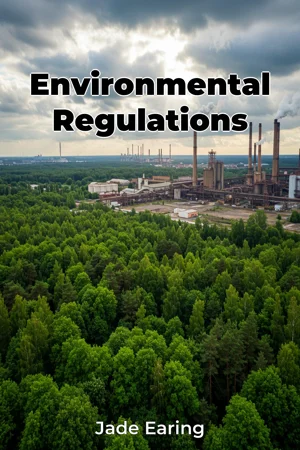
About This Book
In a world grappling with the escalating consequences of environmental degradation, how effective are our legal systems in safeguarding the planet? "Environmental Regulations" delves into the intricate web of laws, policies, and enforcement mechanisms designed to control pollution, manage natural resources, and foster sustainability. This book examines the practical application and efficacy of environmental regulations, providing a comprehensive overview of their role in shaping our environmental future. At its core, this book explores three key topics: pollution control, resource management, and the pursuit of sustainability through legal frameworks. Pollution control encompasses laws aimed at limiting emissions into air and water, regulating hazardous waste disposal, and mitigating the impact of pollutants on ecosystems and human health. Resource management focuses on the legal frameworks for governing the extraction, use, and conservation of natural resources such as water, forests, minerals, and biodiversity. Sustainability, as a legal concept, examines how laws can be structured to promote long-term ecological balance and intergenerational equity. These topics are vital because they directly affect the health of our planet, the availability of essential resources, and the well-being of future generations. Understanding the evolution of environmental law requires a brief look at its historical context. Early environmental regulations often responded to specific crises, such as industrial pollution events. Over time, environmental law has evolved to incorporate more holistic and preventative approaches, reflecting a growing understanding of complex ecological systems. Readers should have a basic understanding of legal principles and administrative law to fully appreciate the nuances of environmental regulations, but the book provides clear explanations of key legal concepts. The central argument of "Environmental Regulations" is that effective environmental protection hinges on a robust and adaptive legal framework, coupled with diligent enforcement and continuous evaluation. While laws provide the foundation for environmental stewardship, their effectiveness is contingent on their implementation, enforcement, and adaptability to emerging environmental challenges. This argument is important because it emphasizes that laws are not static solutions but rather dynamic tools that must evolve to address the ever-changing environmental landscape. The book begins by introducing the main concepts of environmental law, outlining the basic principles of pollution control, resource management, and sustainability. It then explores the development of environmental regulations through case studies and analyzes key legislation. Major points include a detailed examination of air and water quality regulations, an exploration of endangered species protection laws, and an analysis of regulations governing the use of public lands and natural resources. The book culminates by considering the challenges of enforcing environmental laws in a globalized world and proposes strategies for strengthening international environmental governance. Practical applications and implications are discussed, including how businesses can comply with environmental regulations and how citizens can advocate for stronger environmental protection. The arguments presented in the book are supported by a range of evidence, including legal precedents, scientific studies, and economic analyses. Real-world examples, case studies, and statistical data illustrate the impact of environmental regulations on ecosystems, human health, and economic development. Furthermore, the book draws on primary legal documents, such as statutes and court decisions, to provide a transparent and verifiable foundation for its claims. "Environmental Regulations" also draws connections to other fields, such as economics, public health, and political science. Economic analysis is crucial for evaluating the costs and benefits of environmental regulations. Considerations of public health are central to understanding the impacts of pollution on human well-being. The book adopts an academic yet accessible tone, explaining complex legal concepts in a clear and concise manner. The intended audience includes students of environmental law and policy, policymakers, environmental professionals, and anyone seeking a deeper understanding of the legal mechanisms that govern our relationship with the environment. This book will enable readers to evaluate the effectiveness of existing environmental regulations, identify areas for improvement, and contribute to informed discussions about environmental policy. As a work of non-fiction in the fields of politics and environment, this book adheres to the conventions of accuracy, objectivity, and transparency. It presents a balanced perspective on the complexities of environmental regulation, acknowledging both its successes and its limitations. The scope of the book is limited to an analysis of existing environmental regulations and does not delve into philosophical debates about environmental ethics or propose radical alternatives to the current legal framework. The information presented in this book has real-world applications for businesses seeking to comply with environmental regulations, for policymakers developing new environmental laws, and for citizens advocating for stronger environmental protection. The book addresses ongoing debates about the appropriate balance between economic development and environmental protection. By exploring the legal dimensions of these debates, it aims to provide a more nuanced and informed understanding of the challenges and opportunities facing environmental regulation today.
In a world grappling with the escalating consequences of environmental degradation, how effective are our legal systems in safeguarding the planet? "Environmental Regulations" delves into the intricate web of laws, policies, and enforcement mechanisms designed to control pollution, manage natural resources, and foster sustainability. This book examines the practical application and efficacy of environmental regulations, providing a comprehensive overview of their role in shaping our environmental future. At its core, this book explores three key topics: pollution control, resource management, and the pursuit of sustainability through legal frameworks. Pollution control encompasses laws aimed at limiting emissions into air and water, regulating hazardous waste disposal, and mitigating the impact of pollutants on ecosystems and human health. Resource management focuses on the legal frameworks for governing the extraction, use, and conservation of natural resources such as water, forests, minerals, and biodiversity. Sustainability, as a legal concept, examines how laws can be structured to promote long-term ecological balance and intergenerational equity. These topics are vital because they directly affect the health of our planet, the availability of essential resources, and the well-being of future generations. Understanding the evolution of environmental law requires a brief look at its historical context. Early environmental regulations often responded to specific crises, such as industrial pollution events. Over time, environmental law has evolved to incorporate more holistic and preventative approaches, reflecting a growing understanding of complex ecological systems. Readers should have a basic understanding of legal principles and administrative law to fully appreciate the nuances of environmental regulations, but the book provides clear explanations of key legal concepts. The central argument of "Environmental Regulations" is that effective environmental protection hinges on a robust and adaptive legal framework, coupled with diligent enforcement and continuous evaluation. While laws provide the foundation for environmental stewardship, their effectiveness is contingent on their implementation, enforcement, and adaptability to emerging environmental challenges. This argument is important because it emphasizes that laws are not static solutions but rather dynamic tools that must evolve to address the ever-changing environmental landscape. The book begins by introducing the main concepts of environmental law, outlining the basic principles of pollution control, resource management, and sustainability. It then explores the development of environmental regulations through case studies and analyzes key legislation. Major points include a detailed examination of air and water quality regulations, an exploration of endangered species protection laws, and an analysis of regulations governing the use of public lands and natural resources. The book culminates by considering the challenges of enforcing environmental laws in a globalized world and proposes strategies for strengthening international environmental governance. Practical applications and implications are discussed, including how businesses can comply with environmental regulations and how citizens can advocate for stronger environmental protection. The arguments presented in the book are supported by a range of evidence, including legal precedents, scientific studies, and economic analyses. Real-world examples, case studies, and statistical data illustrate the impact of environmental regulations on ecosystems, human health, and economic development. Furthermore, the book draws on primary legal documents, such as statutes and court decisions, to provide a transparent and verifiable foundation for its claims. "Environmental Regulations" also draws connections to other fields, such as economics, public health, and political science. Economic analysis is crucial for evaluating the costs and benefits of environmental regulations. Considerations of public health are central to understanding the impacts of pollution on human well-being. The book adopts an academic yet accessible tone, explaining complex legal concepts in a clear and concise manner. The intended audience includes students of environmental law and policy, policymakers, environmental professionals, and anyone seeking a deeper understanding of the legal mechanisms that govern our relationship with the environment. This book will enable readers to evaluate the effectiveness of existing environmental regulations, identify areas for improvement, and contribute to informed discussions about environmental policy. As a work of non-fiction in the fields of politics and environment, this book adheres to the conventions of accuracy, objectivity, and transparency. It presents a balanced perspective on the complexities of environmental regulation, acknowledging both its successes and its limitations. The scope of the book is limited to an analysis of existing environmental regulations and does not delve into philosophical debates about environmental ethics or propose radical alternatives to the current legal framework. The information presented in this book has real-world applications for businesses seeking to comply with environmental regulations, for policymakers developing new environmental laws, and for citizens advocating for stronger environmental protection. The book addresses ongoing debates about the appropriate balance between economic development and environmental protection. By exploring the legal dimensions of these debates, it aims to provide a more nuanced and informed understanding of the challenges and opportunities facing environmental regulation today.
"Environmental Regulations" explores the complex legal frameworks designed to protect our planet, focusing on pollution control, resource management, and sustainability. It examines how laws influence air and water quality, manage natural resources, and protect endangered species, highlighting the critical role of effective environmental policy in shaping our future. The book reveals that early environmental regulations often emerged in response to specific environmental crises, evolving over time to embrace more preventative, holistic approaches. The book emphasizes that effective environmental protection relies on robust, adaptable legal frameworks coupled with consistent enforcement. Examining key legislation and case studies, it delves into the challenges of enforcing environmental laws in a globalized world, proposing strategies for strengthening international environmental governance. For example, the detailed analysis of air quality regulations demonstrates their impact on public health. Beginning with an introduction to core concepts, the book progresses through the development of environmental regulations, culminating in a discussion of global challenges and strategies. This approach enables readers to understand the evolution and practical implications of environmental law, making it valuable for students, policymakers, and anyone interested in environmental governance.
Book Details
ISBN
9788235299062
Publisher
Publifye AS
Your Licenses
You don't own any licenses for this book
Purchase a license below to unlock this book and download the EPUB.
Purchase License
Select a tier to unlock this book
Need bulk licensing?
Contact us for enterprise agreements.