
About This Book
Can artificial intelligence truly navigate the world's oceans without human intervention? This book, "Autonomous Ship Navigation," delves into the rapidly evolving field of unmanned ships, exploring how AI technologies are being developed and implemented to ensure their safe and efficient operation. We examine not only the technological advancements but also the critical safety considerations and regulatory frameworks that underpin this maritime revolution. Two key topics form the core of our exploration: the development of sophisticated AI-driven navigation systems and the integration of these systems within the existing maritime infrastructure. The ability of AI to process vast amounts of sensor data, learn from experience, and make real-time decisions is paramount to autonomous navigation. Furthermore, the seamless interaction of autonomous ships with traditional vessels, port facilities, and global shipping networks is crucial for their successful deployment. These topics are relevant because they address fundamental challenges and opportunities in modernizing maritime transport and enhancing its safety and sustainability. The development of autonomous ships builds upon decades of research in robotics, computer vision, and machine learning. Simultaneously, it requires a deep understanding of maritime regulations, nautical practices, and the complex dynamics of ocean environments. A basic familiarity with these areas will enhance the reader's understanding of the challenges and solutions discussed. Our central argument is that while fully autonomous shipping presents considerable technical and regulatory hurdles, the integration of AI into ship navigation offers significant potential to improve safety, reduce operational costs, and enhance the efficiency of maritime transport. This argument is important because it highlights the need for a balanced approach, focusing on both the potential benefits and the inherent risks of autonomous technology in a critical global industry. The book is structured to progressively build understanding, beginning with an introduction to the core concepts of autonomous navigation, including sensor fusion, path planning, and collision avoidance. We then delve into the development of these ideas, dedicating chapters to specific aspects such as computer vision for object detection, machine learning for predictive maintenance, and cybersecurity for protecting autonomous systems. The culmination of the argument lies in analyzing real-world case studies and simulations, assessing the performance of autonomous ships in various operational scenarios. Finally, we explore the practical applications and implications of autonomous shipping, including its impact on seafarers, port operations, and international trade. The evidence presented throughout the book draws upon a variety of sources, including data from real-world trials of autonomous ships, simulations based on maritime traffic patterns, and expert opinions from industry professionals and academic researchers. We utilize unique datasets related to ship sensor data, weather patterns, and maritime traffic flows to provide a comprehensive and data-driven analysis. This study connects to several other fields, including artificial intelligence, maritime law, and environmental science. AI provides the core technological foundation, maritime law shapes the regulatory landscape, and environmental science informs the development of sustainable shipping practices. These interdisciplinary connections enrich the analysis and provide a more holistic understanding of the challenges and opportunities associated with autonomous shipping. A unique aspect of this book is its focus on the practical challenges of integrating autonomous ships into the existing maritime ecosystem. We analyze not only the technical capabilities of AI but also the human factors, regulatory constraints, and ethical considerations that must be addressed for successful implementation. The book adopts a professional and analytical tone, presenting information in a clear, concise, and fact-based manner. We aim to provide a balanced perspective, acknowledging both the potential benefits and the inherent risks of autonomous shipping. The target audience includes maritime professionals, engineers, policymakers, and researchers interested in the development and implementation of autonomous ship technology. This book would be valuable to them by providing a comprehensive overview of the current state of the art, the challenges and opportunities ahead, and the potential impact of autonomous shipping on the maritime industry. As a work of technology and AI, this book adheres to the conventions of providing detailed technical explanations, supported by empirical data and rigorous analysis. We also address the semantic aspects of AI, particularly the challenges of interpreting and processing natural language for effective communication between autonomous ships and human operators. The scope of the book is limited to the technical and operational aspects of autonomous ship navigation, with a focus on safety, efficiency, and regulatory compliance. We do not delve into the broader social or economic implications of autonomous shipping beyond their direct impact on the maritime industry. The information presented in this book can be applied practically by readers in a variety of ways, including informing the development of new autonomous ship technologies, shaping maritime regulations, and guiding investment decisions in the maritime industry. One ongoing debate in the field of autonomous shipping revolves around the role of human oversight and the potential for job displacement among seafarers. This book addresses these concerns by exploring the potential for collaboration between humans and AI, emphasizing the need for training and education to prepare the maritime workforce for the future of autonomous shipping.
Can artificial intelligence truly navigate the world's oceans without human intervention? This book, "Autonomous Ship Navigation," delves into the rapidly evolving field of unmanned ships, exploring how AI technologies are being developed and implemented to ensure their safe and efficient operation. We examine not only the technological advancements but also the critical safety considerations and regulatory frameworks that underpin this maritime revolution. Two key topics form the core of our exploration: the development of sophisticated AI-driven navigation systems and the integration of these systems within the existing maritime infrastructure. The ability of AI to process vast amounts of sensor data, learn from experience, and make real-time decisions is paramount to autonomous navigation. Furthermore, the seamless interaction of autonomous ships with traditional vessels, port facilities, and global shipping networks is crucial for their successful deployment. These topics are relevant because they address fundamental challenges and opportunities in modernizing maritime transport and enhancing its safety and sustainability. The development of autonomous ships builds upon decades of research in robotics, computer vision, and machine learning. Simultaneously, it requires a deep understanding of maritime regulations, nautical practices, and the complex dynamics of ocean environments. A basic familiarity with these areas will enhance the reader's understanding of the challenges and solutions discussed. Our central argument is that while fully autonomous shipping presents considerable technical and regulatory hurdles, the integration of AI into ship navigation offers significant potential to improve safety, reduce operational costs, and enhance the efficiency of maritime transport. This argument is important because it highlights the need for a balanced approach, focusing on both the potential benefits and the inherent risks of autonomous technology in a critical global industry. The book is structured to progressively build understanding, beginning with an introduction to the core concepts of autonomous navigation, including sensor fusion, path planning, and collision avoidance. We then delve into the development of these ideas, dedicating chapters to specific aspects such as computer vision for object detection, machine learning for predictive maintenance, and cybersecurity for protecting autonomous systems. The culmination of the argument lies in analyzing real-world case studies and simulations, assessing the performance of autonomous ships in various operational scenarios. Finally, we explore the practical applications and implications of autonomous shipping, including its impact on seafarers, port operations, and international trade. The evidence presented throughout the book draws upon a variety of sources, including data from real-world trials of autonomous ships, simulations based on maritime traffic patterns, and expert opinions from industry professionals and academic researchers. We utilize unique datasets related to ship sensor data, weather patterns, and maritime traffic flows to provide a comprehensive and data-driven analysis. This study connects to several other fields, including artificial intelligence, maritime law, and environmental science. AI provides the core technological foundation, maritime law shapes the regulatory landscape, and environmental science informs the development of sustainable shipping practices. These interdisciplinary connections enrich the analysis and provide a more holistic understanding of the challenges and opportunities associated with autonomous shipping. A unique aspect of this book is its focus on the practical challenges of integrating autonomous ships into the existing maritime ecosystem. We analyze not only the technical capabilities of AI but also the human factors, regulatory constraints, and ethical considerations that must be addressed for successful implementation. The book adopts a professional and analytical tone, presenting information in a clear, concise, and fact-based manner. We aim to provide a balanced perspective, acknowledging both the potential benefits and the inherent risks of autonomous shipping. The target audience includes maritime professionals, engineers, policymakers, and researchers interested in the development and implementation of autonomous ship technology. This book would be valuable to them by providing a comprehensive overview of the current state of the art, the challenges and opportunities ahead, and the potential impact of autonomous shipping on the maritime industry. As a work of technology and AI, this book adheres to the conventions of providing detailed technical explanations, supported by empirical data and rigorous analysis. We also address the semantic aspects of AI, particularly the challenges of interpreting and processing natural language for effective communication between autonomous ships and human operators. The scope of the book is limited to the technical and operational aspects of autonomous ship navigation, with a focus on safety, efficiency, and regulatory compliance. We do not delve into the broader social or economic implications of autonomous shipping beyond their direct impact on the maritime industry. The information presented in this book can be applied practically by readers in a variety of ways, including informing the development of new autonomous ship technologies, shaping maritime regulations, and guiding investment decisions in the maritime industry. One ongoing debate in the field of autonomous shipping revolves around the role of human oversight and the potential for job displacement among seafarers. This book addresses these concerns by exploring the potential for collaboration between humans and AI, emphasizing the need for training and education to prepare the maritime workforce for the future of autonomous shipping.
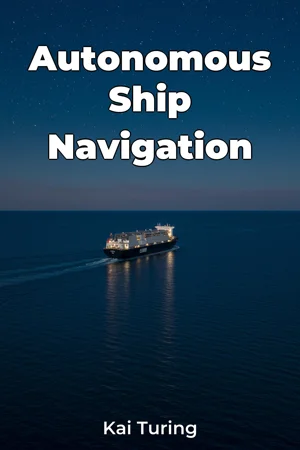
"Autonomous Ship Navigation" explores the groundbreaking advancements in AI and autonomous technology aimed at revolutionizing maritime transport. This book examines how unmanned ships are being developed, focusing on sophisticated AI-driven navigation systems that process vast sensor data for real-time decision-making. A key insight is how these autonomous systems will integrate into existing maritime infrastructure, ensuring seamless interaction with traditional vessels and ports. The book emphasizes the critical balance between technological advancement and adherence to maritime regulations, highlighting the challenges and opportunities in this evolving field. The book progresses systematically, beginning with core concepts like sensor fusion and collision avoidance, then delves into specific AI applications such as computer vision and machine learning. It provides a data-driven analysis using real-world case studies to assess autonomous ship performance. A unique aspect is its focus on the practical challenges of integrating AI into the maritime ecosystem, including human factors and cybersecurity, presenting a balanced perspective on the benefits and risks of AI in shipping.
Book Details
ISBN
9788235298997
Publisher
Publifye AS
Your Licenses
You don't own any licenses for this book
Purchase a license below to unlock this book and download the EPUB.
Purchase License
Select a tier to unlock this book
Need bulk licensing?
Contact us for enterprise agreements.