
About This Book
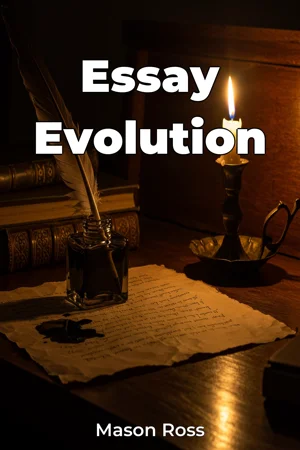
How has the art of the essay transformed from the structured pronouncements of classical rhetoric to the diverse and often deeply personal forms we see today? "Essay Evolution" delves into this fascinating journey, tracing the development of essay writing styles from their ancient roots to their modern manifestations. This exploration is crucial for understanding not only the evolution of literary expression but also the shifting intellectual and cultural landscapes that have shaped our thinking. This book primarily focuses on three key areas: the historical progression of essayistic forms, the impact of influential essayists and their works, and the socio-cultural contexts that fostered these changes. Understanding these topics is vital for anyone seeking to grasp the power and adaptability of the essay as a vehicle for intellectual exploration and personal reflection. Historically, the essay emerged from a landscape dominated by formal oratory and philosophical treatises. The book provides a contextual backdrop by examining the rhetorical traditions of ancient Greece and Rome, highlighting how these early forms influenced the development of prose argumentation and persuasive communication. No prior deep knowledge is required, as the book builds from foundational concepts. The central argument of "Essay Evolution" is that the essay, far from being a static form, has continuously adapted to reflect evolving societal values, intellectual currents, and individual expressive needs. This adaptability is what has ensured the essay's enduring relevance and its capacity to serve as a vital tool for critical thinking and self-discovery. The book unfolds in a structured manner, beginning with an introduction to the classical essay, characterized by its adherence to rhetorical principles and its focus on objective analysis. It then moves to explore the emergence of more personal and subjective essay forms during the Renaissance, influenced by writers like Montaigne. The core of the book examines the rise of the modern essay, tracing its development through the Enlightenment, the Romantic era, and the 20th and 21st centuries. Major points include detailed analyses of key essayists and their contributions, examinations of the socio-cultural contexts that shaped essay writing, and discussions of the evolving relationship between the essay and other literary forms. The book culminates in an examination of contemporary essay writing, exploring its diverse forms and its potential for future development. To support its arguments, "Essay Evolution" draws upon a range of evidence, including close readings of canonical essays, analyses of historical documents and literary criticism, and examinations of the socio-cultural contexts in which essays were written. The book also incorporates insights from literary theory, rhetoric, and cultural studies to provide a comprehensive and nuanced understanding of the essay's evolution. The book also has interdisciplinary connections to fields such as history, sociology, and philosophy. For example, understanding the historical context of an essay can shed light on its social and political implications, while a sociological analysis can reveal the ways in which essays reflect and shape cultural norms. Philosophical perspectives can help readers engage with the underlying ideas and arguments presented in essays. These connections enhance the book's argument by demonstrating the multifaceted nature of the essay and its relevance to a wide range of intellectual pursuits. What sets "Essay Evolution" apart is its comprehensive approach to the subject. It provides a detailed historical overview while also engaging with contemporary debates about the nature and purpose of the essay. The tone is academic but accessible, aiming to engage both seasoned scholars and general readers interested in literature and cultural history. The target audience for this book includes students and scholars of literature, writing, and rhetoric, as well as general readers interested in the history of ideas and the evolution of literary forms. It will be valuable to them because it provides a comprehensive and engaging overview of the essay's development, offering new perspectives on a familiar literary form. As a work of literary and academic essays, "Essay Evolution" adheres to the conventions of scholarly rigor and critical analysis. It also embraces the essayistic spirit of intellectual exploration and personal reflection, creating a text that is both informative and engaging. The book's scope is broad, covering a wide range of essayists and essay forms, but it also acknowledges its limitations. For example, it focuses primarily on the Western essay tradition, recognizing that other cultures have their own distinct traditions of prose writing. The information in "Essay Evolution" can be applied practically by readers in a number of ways. For example, aspiring essayists can learn from the techniques and strategies employed by master essayists throughout history. Educators can use the book to design courses on essay writing and literary history. And anyone interested in improving their critical thinking and communication skills can benefit from the book's exploration of the essay as a tool for intellectual inquiry. The book addresses ongoing debates about the role of the essay in contemporary society, exploring questions such as whether the traditional essay is still relevant in the age of social media and whether new forms of digital writing can be considered essays.
How has the art of the essay transformed from the structured pronouncements of classical rhetoric to the diverse and often deeply personal forms we see today? "Essay Evolution" delves into this fascinating journey, tracing the development of essay writing styles from their ancient roots to their modern manifestations. This exploration is crucial for understanding not only the evolution of literary expression but also the shifting intellectual and cultural landscapes that have shaped our thinking. This book primarily focuses on three key areas: the historical progression of essayistic forms, the impact of influential essayists and their works, and the socio-cultural contexts that fostered these changes. Understanding these topics is vital for anyone seeking to grasp the power and adaptability of the essay as a vehicle for intellectual exploration and personal reflection. Historically, the essay emerged from a landscape dominated by formal oratory and philosophical treatises. The book provides a contextual backdrop by examining the rhetorical traditions of ancient Greece and Rome, highlighting how these early forms influenced the development of prose argumentation and persuasive communication. No prior deep knowledge is required, as the book builds from foundational concepts. The central argument of "Essay Evolution" is that the essay, far from being a static form, has continuously adapted to reflect evolving societal values, intellectual currents, and individual expressive needs. This adaptability is what has ensured the essay's enduring relevance and its capacity to serve as a vital tool for critical thinking and self-discovery. The book unfolds in a structured manner, beginning with an introduction to the classical essay, characterized by its adherence to rhetorical principles and its focus on objective analysis. It then moves to explore the emergence of more personal and subjective essay forms during the Renaissance, influenced by writers like Montaigne. The core of the book examines the rise of the modern essay, tracing its development through the Enlightenment, the Romantic era, and the 20th and 21st centuries. Major points include detailed analyses of key essayists and their contributions, examinations of the socio-cultural contexts that shaped essay writing, and discussions of the evolving relationship between the essay and other literary forms. The book culminates in an examination of contemporary essay writing, exploring its diverse forms and its potential for future development. To support its arguments, "Essay Evolution" draws upon a range of evidence, including close readings of canonical essays, analyses of historical documents and literary criticism, and examinations of the socio-cultural contexts in which essays were written. The book also incorporates insights from literary theory, rhetoric, and cultural studies to provide a comprehensive and nuanced understanding of the essay's evolution. The book also has interdisciplinary connections to fields such as history, sociology, and philosophy. For example, understanding the historical context of an essay can shed light on its social and political implications, while a sociological analysis can reveal the ways in which essays reflect and shape cultural norms. Philosophical perspectives can help readers engage with the underlying ideas and arguments presented in essays. These connections enhance the book's argument by demonstrating the multifaceted nature of the essay and its relevance to a wide range of intellectual pursuits. What sets "Essay Evolution" apart is its comprehensive approach to the subject. It provides a detailed historical overview while also engaging with contemporary debates about the nature and purpose of the essay. The tone is academic but accessible, aiming to engage both seasoned scholars and general readers interested in literature and cultural history. The target audience for this book includes students and scholars of literature, writing, and rhetoric, as well as general readers interested in the history of ideas and the evolution of literary forms. It will be valuable to them because it provides a comprehensive and engaging overview of the essay's development, offering new perspectives on a familiar literary form. As a work of literary and academic essays, "Essay Evolution" adheres to the conventions of scholarly rigor and critical analysis. It also embraces the essayistic spirit of intellectual exploration and personal reflection, creating a text that is both informative and engaging. The book's scope is broad, covering a wide range of essayists and essay forms, but it also acknowledges its limitations. For example, it focuses primarily on the Western essay tradition, recognizing that other cultures have their own distinct traditions of prose writing. The information in "Essay Evolution" can be applied practically by readers in a number of ways. For example, aspiring essayists can learn from the techniques and strategies employed by master essayists throughout history. Educators can use the book to design courses on essay writing and literary history. And anyone interested in improving their critical thinking and communication skills can benefit from the book's exploration of the essay as a tool for intellectual inquiry. The book addresses ongoing debates about the role of the essay in contemporary society, exploring questions such as whether the traditional essay is still relevant in the age of social media and whether new forms of digital writing can be considered essays.
"Essay Evolution" explores the rich history of the essay, charting its course from classical rhetoric to modern, personal forms. This journey reveals how the essay has continuously adapted, reflecting evolving societal values and intellectual currents. Intriguingly, the book highlights the initial dominance of structured pronouncements and how the Renaissance saw the emergence of more subjective expressions, marking a significant shift in essay writing. Readers will gain insights into how cultural history and intellectual exploration have shaped this literary form. The book progresses chronologically, beginning with an examination of classical essays rooted in rhetorical principles. It then transitions to the Renaissance, highlighting the influence of essayists like Montaigne, before diving into the heart of the modern essay across the Enlightenment, Romantic era, and the 20th and 21st centuries. Through detailed analyses of key essayists and their works, "Essay Evolution" demonstrates the enduring relevance of the essay as a vital tool for critical thinking and self-discovery. This comprehensive approach makes it valuable for anyone interested in literary essays and academic essays.
Book Details
ISBN
9788235298966
Publisher
Publifye AS
Your Licenses
You don't own any licenses for this book
Purchase a license below to unlock this book and download the EPUB.
Purchase License
Select a tier to unlock this book
Need bulk licensing?
Contact us for enterprise agreements.