
About This Book
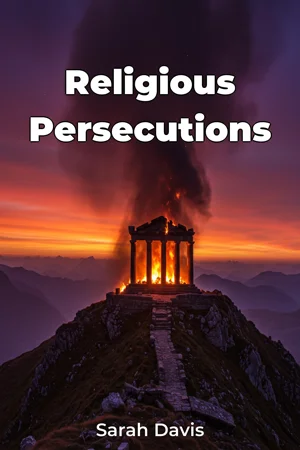
How has religious conviction, intended to foster unity and meaning, so often become a catalyst for division and violence throughout history? "Religious Persecutions" delves into the complex and often brutal history of religiously motivated persecution, examining its enduring impact on societies worldwide. This book explores the multifaceted nature of religious intolerance, its causes, and its consequences, offering a comprehensive overview of this pervasive phenomenon. This study is vital because understanding religious persecution is crucial for analyzing contemporary conflicts, promoting tolerance, and safeguarding religious freedom. We will investigate how religious persecution has shaped political landscapes, influenced social structures, and fueled mass migrations across continents and centuries. "Religious Persecutions" provides a detailed examination of specific historical instances, ranging from the Roman Empire’s treatment of early Christians to the Spanish Inquisition, the European Wars of Religion, and the more recent persecution of minority religious groups in various parts of the world. The book contextualizes these events within their unique historical, social, and political circumstances, highlighting the roles of power, ideology, and economic factors in instigating and perpetuating religious violence. The central argument posits that religious persecution is not solely a product of religious differences but is often intertwined with socio-political power struggles. The book argues that understanding these power dynamics is essential for preventing future atrocities. The book's structure begins with an introduction to the core concepts of religious persecution, defining key terms and establishing a theoretical framework for analysis. We then proceed with detailed case studies, each chapter focusing on a different period or region. These case studies illustrate various forms of persecution and their immediate and long-term effects. The book culminates with an analysis of the recurring patterns and underlying causes of religious persecution, followed by a discussion of the implications for contemporary society and the ongoing challenges of promoting religious tolerance. This book offers a synthesis of historical accounts, sociological analyses, and theological perspectives. Primary sources, such as eyewitness accounts, official decrees, and religious texts, are analyzed alongside secondary scholarship to provide a nuanced understanding of each event. The research draws upon a broad range of historical archives and academic studies, offering a comprehensive and rigorous analysis. "Religious Persecutions" also connects to fields such as political science, sociology, and anthropology, enriching the analysis by considering the interplay between religious beliefs, political power, and social structures. The examination of the psychological effects of persecution connects to the field of psychology, offering insights into the trauma and resilience of persecuted communities. This book offers a unique framework for understanding religious persecution by focusing on the intersection of religious ideology, political power, and social dynamics. It moves beyond simplistic explanations of religious intolerance to provide a more comprehensive analysis of the underlying causes and consequences. The writing style is an academic, fact-based approach to presenting information, ensuring the book is well-researched and thoroughly documented. The target audience includes students of history, religion, and political science, as well as anyone interested in understanding the roots of religious conflict and the importance of religious freedom. This book will be valuable to those seeking a deeper understanding of the complex interplay between religion, power, and society. As a work of history, this book adheres to the principles of historical accuracy and objectivity. While exploring sensitive and often controversial topics, it strives to present a balanced and nuanced perspective, avoiding sensationalism or bias. The scope of "Religious Persecutions" is global, encompassing examples from various regions and historical periods. However, given the vastness of the subject, it does not delve into every instance of religious persecution in detail. Instead, it focuses on select case studies that illustrate key themes and patterns. The lessons learned from this book can be applied to contemporary efforts to promote religious tolerance and prevent religious violence. By understanding the dynamics of religious persecution, readers can become more informed advocates for religious freedom and human rights. Ongoing debates in the field, such as the role of religious extremism versus socio-political factors in instigating violence, are addressed, with the book offering its own perspective based on a multidisciplinary analysis of historical evidence.
How has religious conviction, intended to foster unity and meaning, so often become a catalyst for division and violence throughout history? "Religious Persecutions" delves into the complex and often brutal history of religiously motivated persecution, examining its enduring impact on societies worldwide. This book explores the multifaceted nature of religious intolerance, its causes, and its consequences, offering a comprehensive overview of this pervasive phenomenon. This study is vital because understanding religious persecution is crucial for analyzing contemporary conflicts, promoting tolerance, and safeguarding religious freedom. We will investigate how religious persecution has shaped political landscapes, influenced social structures, and fueled mass migrations across continents and centuries. "Religious Persecutions" provides a detailed examination of specific historical instances, ranging from the Roman Empire’s treatment of early Christians to the Spanish Inquisition, the European Wars of Religion, and the more recent persecution of minority religious groups in various parts of the world. The book contextualizes these events within their unique historical, social, and political circumstances, highlighting the roles of power, ideology, and economic factors in instigating and perpetuating religious violence. The central argument posits that religious persecution is not solely a product of religious differences but is often intertwined with socio-political power struggles. The book argues that understanding these power dynamics is essential for preventing future atrocities. The book's structure begins with an introduction to the core concepts of religious persecution, defining key terms and establishing a theoretical framework for analysis. We then proceed with detailed case studies, each chapter focusing on a different period or region. These case studies illustrate various forms of persecution and their immediate and long-term effects. The book culminates with an analysis of the recurring patterns and underlying causes of religious persecution, followed by a discussion of the implications for contemporary society and the ongoing challenges of promoting religious tolerance. This book offers a synthesis of historical accounts, sociological analyses, and theological perspectives. Primary sources, such as eyewitness accounts, official decrees, and religious texts, are analyzed alongside secondary scholarship to provide a nuanced understanding of each event. The research draws upon a broad range of historical archives and academic studies, offering a comprehensive and rigorous analysis. "Religious Persecutions" also connects to fields such as political science, sociology, and anthropology, enriching the analysis by considering the interplay between religious beliefs, political power, and social structures. The examination of the psychological effects of persecution connects to the field of psychology, offering insights into the trauma and resilience of persecuted communities. This book offers a unique framework for understanding religious persecution by focusing on the intersection of religious ideology, political power, and social dynamics. It moves beyond simplistic explanations of religious intolerance to provide a more comprehensive analysis of the underlying causes and consequences. The writing style is an academic, fact-based approach to presenting information, ensuring the book is well-researched and thoroughly documented. The target audience includes students of history, religion, and political science, as well as anyone interested in understanding the roots of religious conflict and the importance of religious freedom. This book will be valuable to those seeking a deeper understanding of the complex interplay between religion, power, and society. As a work of history, this book adheres to the principles of historical accuracy and objectivity. While exploring sensitive and often controversial topics, it strives to present a balanced and nuanced perspective, avoiding sensationalism or bias. The scope of "Religious Persecutions" is global, encompassing examples from various regions and historical periods. However, given the vastness of the subject, it does not delve into every instance of religious persecution in detail. Instead, it focuses on select case studies that illustrate key themes and patterns. The lessons learned from this book can be applied to contemporary efforts to promote religious tolerance and prevent religious violence. By understanding the dynamics of religious persecution, readers can become more informed advocates for religious freedom and human rights. Ongoing debates in the field, such as the role of religious extremism versus socio-political factors in instigating violence, are addressed, with the book offering its own perspective based on a multidisciplinary analysis of historical evidence.
"Religious Persecutions" explores the pervasive history of religiously motivated intolerance and violence, examining its lasting impact on societies across the globe. The book argues that religious persecution is not solely rooted in religious differences but is significantly intertwined with socio-political power struggles. Intriguingly, religious conviction, intended to unite and give meaning, has paradoxically often become a catalyst for division. From the Roman Empire’s treatment of early Christians to the Spanish Inquisition, the study contextualizes these events within their historical, social, and political circumstances. The book provides a detailed examination of specific historical instances, offering a synthesis of historical accounts, sociological analyses, and theological perspectives. It posits that understanding the dynamics of power is essential for preventing future atrocities. Beginning with core concepts and a theoretical framework, "Religious Persecutions" progresses through detailed case studies, each chapter focusing on a different period or region, culminating in an analysis of recurring patterns and implications for contemporary society.
Book Details
ISBN
9788235298904
Publisher
Publifye AS
Your Licenses
You don't own any licenses for this book
Purchase a license below to unlock this book and download the EPUB.
Purchase License
Select a tier to unlock this book
Need bulk licensing?
Contact us for enterprise agreements.