
About This Book
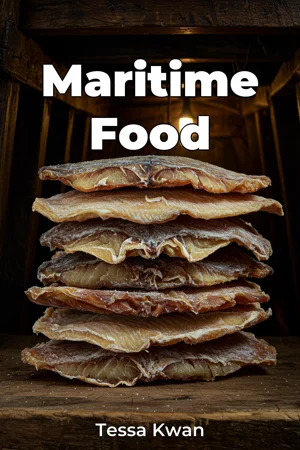
How did sailors throughout history combat starvation and scurvy while crossing vast oceans? "Maritime Food" delves into the intricate history of preserving and transporting food on long sea voyages, exploring the methods that sustained explorers, traders, and naval forces for centuries. This book examines the critical role food played in maritime history, connecting culinary practices with exploration, trade, and naval power. This book argues that innovative food preservation techniques were not merely a practical necessity, but a driving force behind maritime exploration and global trade. Without effective methods to keep food edible for months or even years, long-distance voyages would have been impossible, fundamentally altering the course of history. We will explore how the need to feed sailors fueled experimentation and ingenuity, leading to advancements in food science and technology. The book provides a historical context, outlining the limitations of pre-industrial food preservation. This includes the understanding of spoilage, the lack of refrigeration, and the challenges of maintaining food quality under harsh maritime conditions. Readers will learn about the daily lives of sailors, their nutritional needs, and the impact of diet on their health and morale. "Maritime Food" is structured to provide a comprehensive overview of this topic. First, we will introduce the fundamental challenges of maritime food preservation, including the factors that contribute to spoilage and the nutritional requirements of sailors. Next, we will examine several key preservation methods, such as salting, drying, pickling, and the use of alcohol, detailing the processes involved and their effectiveness. The book then investigates the impact of these methods on the health of sailors, particularly the issues of scurvy and nutritional deficiencies, and how these problems were eventually addressed. Finally, we will cover 19th and 20th-century advancements, including canning and refrigeration, and their transformative effect on maritime food provision. The arguments in "Maritime Food" are supported by extensive research, drawing from historical records, ship logs, culinary texts, and scientific studies. The book analyzes primary source accounts of voyages, examining descriptions of food preparation, storage, and consumption. It also incorporates modern scientific analysis of historical food preservation techniques to assess their effectiveness and nutritional impact. This book connects to fields such as history, nutrition, and food science. The historical context provides insights into the social and economic factors that influenced maritime food practices. The nutritional analysis sheds light on the health challenges faced by sailors and the impact of diet on their well-being. The exploration of food science reveals the technological advancements that enabled long-distance voyages. "Maritime Food" differentiates itself by taking a holistic approach, combining historical analysis with scientific understanding. It examines not only the 'what' and 'how' of maritime food preservation, but also the 'why' behind these practices, considering the cultural, economic, and nutritional implications. The writing style is accessible and engaging, designed to appeal to a broad audience. While grounded in rigorous research, the book avoids overly technical jargon, making it suitable for general readers interested in history, food, or maritime affairs. The target audience includes historians, food enthusiasts, maritime history buffs, and anyone interested in the intersection of food, culture, and exploration. The book offers a unique perspective on maritime history, highlighting the overlooked but crucial role of food in shaping global events. As a history book with elements of cooking, "Maritime Food" explores the historical context of preservation methods. It reveals the recipes, techniques, and cultural significance of food aboard ships. While "Maritime Food" offers a broad overview of maritime food preservation, it focuses primarily on European and North American practices. It would be impossible to cover all maritime cultures in detail within a single volume. Thus, the book aims to offer an in-depth exploration of the most well-documented and influential maritime food traditions. The knowledge gained from "Maritime Food" can be applied to understand modern food preservation techniques and their historical roots. It also provides insights into the challenges of providing food in extreme environments, such as space travel or disaster relief. The book also discusses controversies surrounding maritime food, such as the debates over the causes of scurvy and the effectiveness of different preservation methods. It addresses the challenges of ensuring food safety and quality on long voyages, and the ethical considerations involved in feeding large crews under difficult conditions.
How did sailors throughout history combat starvation and scurvy while crossing vast oceans? "Maritime Food" delves into the intricate history of preserving and transporting food on long sea voyages, exploring the methods that sustained explorers, traders, and naval forces for centuries. This book examines the critical role food played in maritime history, connecting culinary practices with exploration, trade, and naval power. This book argues that innovative food preservation techniques were not merely a practical necessity, but a driving force behind maritime exploration and global trade. Without effective methods to keep food edible for months or even years, long-distance voyages would have been impossible, fundamentally altering the course of history. We will explore how the need to feed sailors fueled experimentation and ingenuity, leading to advancements in food science and technology. The book provides a historical context, outlining the limitations of pre-industrial food preservation. This includes the understanding of spoilage, the lack of refrigeration, and the challenges of maintaining food quality under harsh maritime conditions. Readers will learn about the daily lives of sailors, their nutritional needs, and the impact of diet on their health and morale. "Maritime Food" is structured to provide a comprehensive overview of this topic. First, we will introduce the fundamental challenges of maritime food preservation, including the factors that contribute to spoilage and the nutritional requirements of sailors. Next, we will examine several key preservation methods, such as salting, drying, pickling, and the use of alcohol, detailing the processes involved and their effectiveness. The book then investigates the impact of these methods on the health of sailors, particularly the issues of scurvy and nutritional deficiencies, and how these problems were eventually addressed. Finally, we will cover 19th and 20th-century advancements, including canning and refrigeration, and their transformative effect on maritime food provision. The arguments in "Maritime Food" are supported by extensive research, drawing from historical records, ship logs, culinary texts, and scientific studies. The book analyzes primary source accounts of voyages, examining descriptions of food preparation, storage, and consumption. It also incorporates modern scientific analysis of historical food preservation techniques to assess their effectiveness and nutritional impact. This book connects to fields such as history, nutrition, and food science. The historical context provides insights into the social and economic factors that influenced maritime food practices. The nutritional analysis sheds light on the health challenges faced by sailors and the impact of diet on their well-being. The exploration of food science reveals the technological advancements that enabled long-distance voyages. "Maritime Food" differentiates itself by taking a holistic approach, combining historical analysis with scientific understanding. It examines not only the 'what' and 'how' of maritime food preservation, but also the 'why' behind these practices, considering the cultural, economic, and nutritional implications. The writing style is accessible and engaging, designed to appeal to a broad audience. While grounded in rigorous research, the book avoids overly technical jargon, making it suitable for general readers interested in history, food, or maritime affairs. The target audience includes historians, food enthusiasts, maritime history buffs, and anyone interested in the intersection of food, culture, and exploration. The book offers a unique perspective on maritime history, highlighting the overlooked but crucial role of food in shaping global events. As a history book with elements of cooking, "Maritime Food" explores the historical context of preservation methods. It reveals the recipes, techniques, and cultural significance of food aboard ships. While "Maritime Food" offers a broad overview of maritime food preservation, it focuses primarily on European and North American practices. It would be impossible to cover all maritime cultures in detail within a single volume. Thus, the book aims to offer an in-depth exploration of the most well-documented and influential maritime food traditions. The knowledge gained from "Maritime Food" can be applied to understand modern food preservation techniques and their historical roots. It also provides insights into the challenges of providing food in extreme environments, such as space travel or disaster relief. The book also discusses controversies surrounding maritime food, such as the debates over the causes of scurvy and the effectiveness of different preservation methods. It addresses the challenges of ensuring food safety and quality on long voyages, and the ethical considerations involved in feeding large crews under difficult conditions.
"Maritime Food" explores the vital role of food preservation in enabling centuries of maritime exploration, trade, and naval dominance. Without effective ways to keep food edible, long sea voyages would have been impossible. The book reveals how the need to feed sailors spurred innovation in food science and technology. Readers will discover the daily life of sailors, their nutritional needs, and the impact of diet on their health. The book details traditional methods like salting, drying, and pickling, explaining their processes and effectiveness. The book investigates the impact of these methods on the health of sailors, particularly the issues of scurvy and nutritional deficiencies, and how these problems were eventually addressed. For example, sailors learned to use citrus fruits to combat scurvy, a disease caused by vitamin C deficiency, changing the course of naval history. The book then covers 19th and 20th-century advancements, including canning and refrigeration, and their transformative effect on maritime food provision. Structured to provide a comprehensive overview, the book progresses from the challenges of maritime food preservation to the impact of advancements like canning and refrigeration. "Maritime Food" connects history, nutrition, and food science, appealing to anyone interested in the intersection of food, culture, and exploration. While focusing primarily on European and North American practices, it offers an in-depth look at influential maritime food traditions.
Book Details
ISBN
9788235298874
Publisher
Publifye AS
Your Licenses
You don't own any licenses for this book
Purchase a license below to unlock this book and download the EPUB.
Purchase License
Select a tier to unlock this book
Need bulk licensing?
Contact us for enterprise agreements.