
About This Book
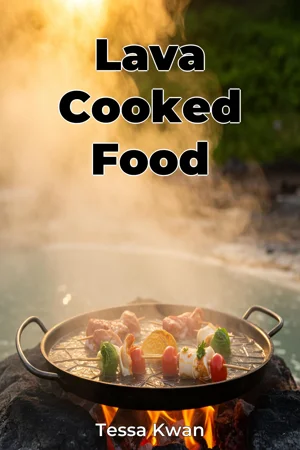
Imagine cooking a meal using the Earth's internal heat. "Lava Cooked Food" explores the fascinating and often overlooked practice of utilizing volcanic heat for culinary purposes in various regions around the world. This book delves into the intersection of Earth Sciences, Geography, and Cooking, revealing a unique cultural adaptation to geothermal environments. We will primarily examine two main topics: the geological processes that create accessible geothermal resources and the cultural practices surrounding their use in cooking. Understanding the formation and distribution of geothermal areas is crucial for comprehending where and how this cooking method is possible. The cultural practices highlight the ingenuity and resourcefulness of communities living near active volcanic zones. These topics are significant because they reveal a sustainable and localized food system that has been practiced for generations, offering insights into human resilience and adaptation to challenging environments. Historically, volcanic regions have presented both opportunities and challenges for human settlement. The fertile volcanic soil supports agriculture, but the constant threat of eruptions necessitates innovative strategies for survival. Geothermal energy, a readily available resource in these areas, has been harnessed for various purposes, including heating and cooking. This book builds upon existing knowledge in volcanology, geography, and anthropology, assuming the reader has a basic understanding of plate tectonics and different forms of geothermal activity. The central argument of "Lava Cooked Food" is that the utilization of volcanic heat for cooking represents a sustainable and culturally significant adaptation to life in geothermal regions, showcasing a deep understanding of natural resources and a commitment to environmental resourcefulness. This argument is vital because it challenges conventional notions of cooking and energy consumption, presenting a case study for localized, sustainable food practices. The book begins by introducing the geological processes that generate geothermal energy, focusing on the types of volcanic activity that provide accessible heat sources. We then transition into the cultural aspects, examining specific communities in Iceland, New Zealand, and Italy where volcanic cooking traditions are still practiced. Major points covered include: a) the scientific principles behind geothermal cooking, including heat transfer and temperature control; b) the diverse cooking techniques employed, ranging from burying food in hot earth to utilizing steam vents; and c) the social and economic impacts of geothermal cooking on local communities, including tourism and food production. The book culminates by assessing the potential for expanding geothermal cooking practices to other regions and promoting sustainable food systems. To support these arguments, the book will present evidence from geological surveys, ethnographic studies, and culinary experiments. Unique data sources include interviews with local chefs and residents, analyses of soil temperatures in geothermal areas, and comparisons of traditional recipes with modern cooking methods. "Lava Cooked Food" draws interdisciplinary connections by linking geological processes with human cultural practices. It also connects to fields such as environmental sustainability by demonstrating a low-impact energy source for cooking, and to tourism studies by exploring the potential of geothermal cooking to attract visitors and boost local economies. A unique aspect of this book is its focus on the intersection of scientific and cultural knowledge. It combines geological data with ethnographic research to provide a comprehensive understanding of geothermal cooking, offering perspectives from both scientists and practitioners. The writing style is informative and accessible, aiming to engage a broad audience without sacrificing accuracy or depth. Technical concepts are explained clearly, and anecdotal stories are used to illustrate the cultural significance of geothermal cooking. The target audience includes anyone interested in Earth Sciences, Geography, cooking, sustainable living, and cultural anthropology. It will be a valuable resource for students, researchers, and general readers seeking a deeper understanding of human adaptation to natural environments. As a non-fiction work, "Lava Cooked Food" adheres to the conventions of academic rigor, providing citations for all sources and presenting factual information in an objective manner. However, it also incorporates elements of narrative non-fiction, drawing on personal anecdotes and vivid descriptions to engage the reader. The scope of the book is limited to regions with readily accessible volcanic heat sources and documented traditions of geothermal cooking. It does not delve into the broader applications of geothermal energy, such as electricity generation, focusing specifically on its culinary uses. The information in the book can be applied practically by readers interested in sustainable cooking practices and exploring alternative energy sources. It also provides insights for communities seeking to develop tourism initiatives based on their unique geothermal resources. While geothermal energy is generally considered a clean energy source, the book will address ongoing debates about its potential environmental impacts, such as greenhouse gas emissions and land use. It will also explore the ethical considerations of promoting tourism in culturally sensitive areas.
Imagine cooking a meal using the Earth's internal heat. "Lava Cooked Food" explores the fascinating and often overlooked practice of utilizing volcanic heat for culinary purposes in various regions around the world. This book delves into the intersection of Earth Sciences, Geography, and Cooking, revealing a unique cultural adaptation to geothermal environments. We will primarily examine two main topics: the geological processes that create accessible geothermal resources and the cultural practices surrounding their use in cooking. Understanding the formation and distribution of geothermal areas is crucial for comprehending where and how this cooking method is possible. The cultural practices highlight the ingenuity and resourcefulness of communities living near active volcanic zones. These topics are significant because they reveal a sustainable and localized food system that has been practiced for generations, offering insights into human resilience and adaptation to challenging environments. Historically, volcanic regions have presented both opportunities and challenges for human settlement. The fertile volcanic soil supports agriculture, but the constant threat of eruptions necessitates innovative strategies for survival. Geothermal energy, a readily available resource in these areas, has been harnessed for various purposes, including heating and cooking. This book builds upon existing knowledge in volcanology, geography, and anthropology, assuming the reader has a basic understanding of plate tectonics and different forms of geothermal activity. The central argument of "Lava Cooked Food" is that the utilization of volcanic heat for cooking represents a sustainable and culturally significant adaptation to life in geothermal regions, showcasing a deep understanding of natural resources and a commitment to environmental resourcefulness. This argument is vital because it challenges conventional notions of cooking and energy consumption, presenting a case study for localized, sustainable food practices. The book begins by introducing the geological processes that generate geothermal energy, focusing on the types of volcanic activity that provide accessible heat sources. We then transition into the cultural aspects, examining specific communities in Iceland, New Zealand, and Italy where volcanic cooking traditions are still practiced. Major points covered include: a) the scientific principles behind geothermal cooking, including heat transfer and temperature control; b) the diverse cooking techniques employed, ranging from burying food in hot earth to utilizing steam vents; and c) the social and economic impacts of geothermal cooking on local communities, including tourism and food production. The book culminates by assessing the potential for expanding geothermal cooking practices to other regions and promoting sustainable food systems. To support these arguments, the book will present evidence from geological surveys, ethnographic studies, and culinary experiments. Unique data sources include interviews with local chefs and residents, analyses of soil temperatures in geothermal areas, and comparisons of traditional recipes with modern cooking methods. "Lava Cooked Food" draws interdisciplinary connections by linking geological processes with human cultural practices. It also connects to fields such as environmental sustainability by demonstrating a low-impact energy source for cooking, and to tourism studies by exploring the potential of geothermal cooking to attract visitors and boost local economies. A unique aspect of this book is its focus on the intersection of scientific and cultural knowledge. It combines geological data with ethnographic research to provide a comprehensive understanding of geothermal cooking, offering perspectives from both scientists and practitioners. The writing style is informative and accessible, aiming to engage a broad audience without sacrificing accuracy or depth. Technical concepts are explained clearly, and anecdotal stories are used to illustrate the cultural significance of geothermal cooking. The target audience includes anyone interested in Earth Sciences, Geography, cooking, sustainable living, and cultural anthropology. It will be a valuable resource for students, researchers, and general readers seeking a deeper understanding of human adaptation to natural environments. As a non-fiction work, "Lava Cooked Food" adheres to the conventions of academic rigor, providing citations for all sources and presenting factual information in an objective manner. However, it also incorporates elements of narrative non-fiction, drawing on personal anecdotes and vivid descriptions to engage the reader. The scope of the book is limited to regions with readily accessible volcanic heat sources and documented traditions of geothermal cooking. It does not delve into the broader applications of geothermal energy, such as electricity generation, focusing specifically on its culinary uses. The information in the book can be applied practically by readers interested in sustainable cooking practices and exploring alternative energy sources. It also provides insights for communities seeking to develop tourism initiatives based on their unique geothermal resources. While geothermal energy is generally considered a clean energy source, the book will address ongoing debates about its potential environmental impacts, such as greenhouse gas emissions and land use. It will also explore the ethical considerations of promoting tourism in culturally sensitive areas.
"Lava Cooked Food" explores the intriguing intersection of Earth Sciences, Geography, and Cooking, revealing how communities in volcanic regions utilize geothermal energy for culinary purposes. This practice demonstrates a unique cultural adaptation and a sustainable approach to food preparation. The book highlights how volcanic heat, a readily available resource, has been harnessed for generations, offering insights into human resilience. Imagine cooking food by burying it in the earth, using steam vents, or other ingenious methods developed in Iceland, New Zealand, and Italy. The book examines the geological processes that create accessible geothermal resources alongside the cultural traditions surrounding their use. By combining geological data with ethnographic research, "Lava Cooked Food" provides a comprehensive understanding, with perspectives from both scientists and local practitioners. It begins by introducing the science behind geothermal energy, then transitions to the cultural aspects, examining specific communities and their cooking techniques. The book progresses by assessing the potential for expanding geothermal cooking practices to other regions, promoting sustainable food systems, geothermal resources, and volcanic heat as viable alternatives.
Book Details
ISBN
9788235298713
Publisher
Publifye AS
Your Licenses
You don't own any licenses for this book
Purchase a license below to unlock this book and download the EPUB.
Purchase License
Select a tier to unlock this book
Need bulk licensing?
Contact us for enterprise agreements.