
About This Book
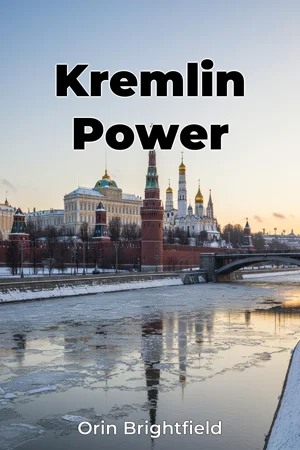
How has a single fortress shaped the trajectory of a nation and influenced global politics for centuries? "Kremlin Power: Shaping Russia from Medieval Times to the Present" delves into the heart of Russian power, exploring the Kremlin's pivotal role in the formation of Russian rulers, the evolution of its political landscape, and its enduring impact on the world stage. Understanding the Kremlin is essential to understanding Russia itself, its ambitions, and its complex relationship with the international community. This book examines how the Kremlin has served as more than just a physical structure; it's been a crucible of power, a stage for dramatic power struggles, and the birthplace of key historical decisions that have reverberated across the globe. This book argues that the Kremlin's influence is not merely symbolic but is fundamentally intertwined with the development of Russian political culture and its persistent pursuit of geopolitical influence. This argument's importance lies in deciphering the historical roots of contemporary Russian policies and actions, offering crucial insights for policymakers, historians, and anyone seeking to understand Russia's place in the modern world. The book begins by examining the Kremlin's origins, tracing its transformation from a medieval fortress to the center of Tsarist autocracy. It then explores the Soviet era, revealing how the Kremlin adapted to communist ideology while maintaining its position as the locus of control. Key chapters will focus on: 1) the establishment of the Kremlin as the supreme seat of power under Ivan the Great and the subsequent development of autocratic rule; 2) the tumultuous times of the Time of Troubles and the reforms of Peter the Great, and the Kremlin's role in these critical junctions; 3) the Soviet period, highlighting the Kremlin's function in consolidating communist control and projecting Soviet influence during the Cold War; 4) the post-Soviet era, detailing the challenges and opportunities faced by Russia and the Kremlin's adaptation to a multipolar world, including an analysis of its involvement in contemporary geopolitical conflicts. The book culminates in an assessment of the Kremlin's current role in shaping Russian foreign policy and its implications for global stability. To support its analysis, "Kremlin Power" draws upon a wide array of sources, including historical chronicles, diplomatic archives, political memoirs, and contemporary news reports. It will incorporate visual elements such as historical maps and photographs to enhance the reader's understanding. This book connects to several interdisciplinary fields, including political science, international relations, and cultural studies. By analyzing the Kremlin's architectural symbolism, its impact on political rhetoric, and its role in shaping national identity, the book provides a holistic understanding of Russian power. "Kremlin Power" adopts an analytical and historical approach, presenting information in a clear, concise manner suitable for a wide audience. The writing style is accessible yet rigorous, avoiding jargon while maintaining scholarly accuracy. The target audience includes students, researchers, policymakers, and general readers interested in Russian history, politics, and international relations. This book provides valuable insights for those seeking to understand the underlying forces driving Russian actions on the world stage. As a work of history and political science, this book adheres to the conventions of rigorous research, factual accuracy, and objective analysis. While the book aims to provide a comprehensive overview of the Kremlin's history and influence, it acknowledges certain limitations in scope, focusing primarily on the political and strategic dimensions of its role while acknowledging other cultural and social impacts. The information presented in "Kremlin Power" has practical applications for understanding current events, informing policy decisions, and fostering a deeper appreciation of the complexities of Russian politics and its global impact. The book also addresses ongoing debates surrounding Russia's historical trajectory, the nature of its political system, and its relationship with the West, offering a nuanced perspective based on historical evidence and analytical rigor.
How has a single fortress shaped the trajectory of a nation and influenced global politics for centuries? "Kremlin Power: Shaping Russia from Medieval Times to the Present" delves into the heart of Russian power, exploring the Kremlin's pivotal role in the formation of Russian rulers, the evolution of its political landscape, and its enduring impact on the world stage. Understanding the Kremlin is essential to understanding Russia itself, its ambitions, and its complex relationship with the international community. This book examines how the Kremlin has served as more than just a physical structure; it's been a crucible of power, a stage for dramatic power struggles, and the birthplace of key historical decisions that have reverberated across the globe. This book argues that the Kremlin's influence is not merely symbolic but is fundamentally intertwined with the development of Russian political culture and its persistent pursuit of geopolitical influence. This argument's importance lies in deciphering the historical roots of contemporary Russian policies and actions, offering crucial insights for policymakers, historians, and anyone seeking to understand Russia's place in the modern world. The book begins by examining the Kremlin's origins, tracing its transformation from a medieval fortress to the center of Tsarist autocracy. It then explores the Soviet era, revealing how the Kremlin adapted to communist ideology while maintaining its position as the locus of control. Key chapters will focus on: 1) the establishment of the Kremlin as the supreme seat of power under Ivan the Great and the subsequent development of autocratic rule; 2) the tumultuous times of the Time of Troubles and the reforms of Peter the Great, and the Kremlin's role in these critical junctions; 3) the Soviet period, highlighting the Kremlin's function in consolidating communist control and projecting Soviet influence during the Cold War; 4) the post-Soviet era, detailing the challenges and opportunities faced by Russia and the Kremlin's adaptation to a multipolar world, including an analysis of its involvement in contemporary geopolitical conflicts. The book culminates in an assessment of the Kremlin's current role in shaping Russian foreign policy and its implications for global stability. To support its analysis, "Kremlin Power" draws upon a wide array of sources, including historical chronicles, diplomatic archives, political memoirs, and contemporary news reports. It will incorporate visual elements such as historical maps and photographs to enhance the reader's understanding. This book connects to several interdisciplinary fields, including political science, international relations, and cultural studies. By analyzing the Kremlin's architectural symbolism, its impact on political rhetoric, and its role in shaping national identity, the book provides a holistic understanding of Russian power. "Kremlin Power" adopts an analytical and historical approach, presenting information in a clear, concise manner suitable for a wide audience. The writing style is accessible yet rigorous, avoiding jargon while maintaining scholarly accuracy. The target audience includes students, researchers, policymakers, and general readers interested in Russian history, politics, and international relations. This book provides valuable insights for those seeking to understand the underlying forces driving Russian actions on the world stage. As a work of history and political science, this book adheres to the conventions of rigorous research, factual accuracy, and objective analysis. While the book aims to provide a comprehensive overview of the Kremlin's history and influence, it acknowledges certain limitations in scope, focusing primarily on the political and strategic dimensions of its role while acknowledging other cultural and social impacts. The information presented in "Kremlin Power" has practical applications for understanding current events, informing policy decisions, and fostering a deeper appreciation of the complexities of Russian politics and its global impact. The book also addresses ongoing debates surrounding Russia's historical trajectory, the nature of its political system, and its relationship with the West, offering a nuanced perspective based on historical evidence and analytical rigor.
"Kremlin Power" explores the profound influence of the Kremlin on Russia's history, politics, and its role in international relations. More than just a building, the Kremlin has been central to shaping Russian political culture and its pursuit of geopolitical influence from Tsarist Autocracy, through the Soviet Era, and into Post-Soviet Russia. The book reveals how the Kremlin evolved from a medieval fortress under Ivan the Great to the epicenter of power, witnessing pivotal moments like the Time of Troubles and the Cold War, each transforming its significance. The book traces the Kremlin's journey across centuries, highlighting its adaptation to changing ideologies and its enduring role in consolidating power. It examines how the Kremlin served as a stage for dramatic power struggles and a birthplace for key historical decisions. Through an analytical and historical approach, drawing from chronicles, archives, and memoirs, "Kremlin Power" connects architectural symbolism with political rhetoric to give a holistic understanding of Russian power. The book progresses chronologically, from its medieval origins to its current role in shaping Russian foreign policy and global stability.
Book Details
ISBN
9788235298621
Publisher
Publifye AS
Your Licenses
You don't own any licenses for this book
Purchase a license below to unlock this book and download the EPUB.
Purchase License
Select a tier to unlock this book
Need bulk licensing?
Contact us for enterprise agreements.