
About This Book
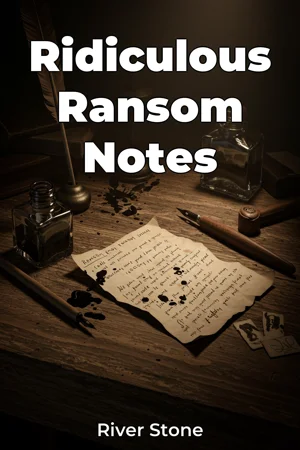
Have you ever wondered how seemingly intelligent criminals could be undone by simple spelling errors or outright absurd demands in their ransom notes? "Ridiculous Ransom Notes" delves into the surprisingly frequent phenomenon of inept criminals whose poorly written ransom demands led to their capture, offering a unique lens through which to examine both criminal psychology and the history of crime. This book explores the intersection of history and biography, examining specific cases where ransom attempts failed due to the sheer incompetence of the perpetrators. This book is important because it illuminates the human element in crime, revealing that even the most carefully planned schemes can be derailed by basic errors in judgment and execution. It demonstrates how forensic linguistics and careful examination of written evidence can play a pivotal role in solving crimes. Moreover, it presents a compelling narrative of human fallibility under pressure, providing insights into the minds of individuals driven to desperate measures. The historical and social context is crucial. The history of ransom notes is as old as crime itself, evolving with technology from handwritten letters to digital communications. Social factors, such as economic disparity and lack of education, often contribute to the conditions in which such crimes occur. Understanding these factors is essential for comprehending the motivations and shortcomings of the criminals involved. The central argument of "Ridiculous Ransom Notes" is that the very act of composing a ransom note, filled with pressure and the need for clear communication, exposes the perpetrator's weaknesses, revealing their educational level, psychological state, and ultimately, their vulnerability to detection. This argument emphasizes the importance of meticulous investigation and the often-overlooked power of written communication in criminal investigations. The book's structure will unfold as follows: First, we will introduce the basic elements of ransom note analysis, outlining the common errors and peculiarities that investigators look for. Second, we will dedicate chapters to specific, high-profile cases, detailing the background of the crime, the content of the ransom note, and the investigative techniques that led to the criminals' apprehension. These case studies will include analyses of spelling errors, grammatical mistakes, illogical demands, and other critical flaws. Third, the book will culminate with an examination of the psychological factors that contribute to these errors, exploring the cognitive biases and emotional pressures that influence criminals' decision-making. Finally, we discuss the modern implications of these historical cases, including how law enforcement agencies can learn from past mistakes and adapt their strategies to address new forms of digital communication. The evidence presented will consist of original ransom notes (where available), court documents, police reports, and biographical information gleaned from historical archives and news reports. The analysis will incorporate principles of forensic linguistics, demonstrating how linguistic patterns can reveal information about the author's background and mental state. This book integrates elements of criminology, linguistics, and psychology. Criminology provides the framework for understanding criminal behavior; linguistics offers tools for analyzing written communication; and psychology offers insights into the cognitive processes that underpin criminal actions. These interdisciplinary connections enhance the book’s argument by providing a more comprehensive understanding of the cases under examination. "Ridiculous Ransom Notes" offers a fresh perspective on the history of crime by focusing on the often-overlooked role of written communication. The book avoids sensationalism and instead adopts a fact-based, analytical approach, presenting the evidence in a clear and engaging manner. The target audience is anyone interested in true crime, forensic science, or the history of criminal investigation. It will also appeal to readers who enjoy biographies and psychological analyses. This book would be valuable to them because it offers a unique and insightful perspective on a fascinating aspect of criminal behavior. As a work of non-fiction, "Ridiculous Ransom Notes" adheres to the genre's conventions by presenting accurate information, citing sources, and constructing a well-supported argument. While the book covers a range of cases, it is not intended to be an exhaustive history of ransom kidnappings. Instead, the scope is limited to cases where the ransom note itself played a significant role in the criminal's apprehension. The information in this book can be practically applied to various fields, including law enforcement, forensic linguistics, and even education. Law enforcement can use these insights to improve their investigative techniques; linguists can further refine their methods of authorship attribution; and educators can use these examples to illustrate the importance of effective communication. While the book aims to present a balanced perspective, some cases may involve ongoing debates about the facts or the perpetrators' motivations. The book will acknowledge these controversies and present different viewpoints, allowing readers to draw their own conclusions.
Have you ever wondered how seemingly intelligent criminals could be undone by simple spelling errors or outright absurd demands in their ransom notes? "Ridiculous Ransom Notes" delves into the surprisingly frequent phenomenon of inept criminals whose poorly written ransom demands led to their capture, offering a unique lens through which to examine both criminal psychology and the history of crime. This book explores the intersection of history and biography, examining specific cases where ransom attempts failed due to the sheer incompetence of the perpetrators. This book is important because it illuminates the human element in crime, revealing that even the most carefully planned schemes can be derailed by basic errors in judgment and execution. It demonstrates how forensic linguistics and careful examination of written evidence can play a pivotal role in solving crimes. Moreover, it presents a compelling narrative of human fallibility under pressure, providing insights into the minds of individuals driven to desperate measures. The historical and social context is crucial. The history of ransom notes is as old as crime itself, evolving with technology from handwritten letters to digital communications. Social factors, such as economic disparity and lack of education, often contribute to the conditions in which such crimes occur. Understanding these factors is essential for comprehending the motivations and shortcomings of the criminals involved. The central argument of "Ridiculous Ransom Notes" is that the very act of composing a ransom note, filled with pressure and the need for clear communication, exposes the perpetrator's weaknesses, revealing their educational level, psychological state, and ultimately, their vulnerability to detection. This argument emphasizes the importance of meticulous investigation and the often-overlooked power of written communication in criminal investigations. The book's structure will unfold as follows: First, we will introduce the basic elements of ransom note analysis, outlining the common errors and peculiarities that investigators look for. Second, we will dedicate chapters to specific, high-profile cases, detailing the background of the crime, the content of the ransom note, and the investigative techniques that led to the criminals' apprehension. These case studies will include analyses of spelling errors, grammatical mistakes, illogical demands, and other critical flaws. Third, the book will culminate with an examination of the psychological factors that contribute to these errors, exploring the cognitive biases and emotional pressures that influence criminals' decision-making. Finally, we discuss the modern implications of these historical cases, including how law enforcement agencies can learn from past mistakes and adapt their strategies to address new forms of digital communication. The evidence presented will consist of original ransom notes (where available), court documents, police reports, and biographical information gleaned from historical archives and news reports. The analysis will incorporate principles of forensic linguistics, demonstrating how linguistic patterns can reveal information about the author's background and mental state. This book integrates elements of criminology, linguistics, and psychology. Criminology provides the framework for understanding criminal behavior; linguistics offers tools for analyzing written communication; and psychology offers insights into the cognitive processes that underpin criminal actions. These interdisciplinary connections enhance the book’s argument by providing a more comprehensive understanding of the cases under examination. "Ridiculous Ransom Notes" offers a fresh perspective on the history of crime by focusing on the often-overlooked role of written communication. The book avoids sensationalism and instead adopts a fact-based, analytical approach, presenting the evidence in a clear and engaging manner. The target audience is anyone interested in true crime, forensic science, or the history of criminal investigation. It will also appeal to readers who enjoy biographies and psychological analyses. This book would be valuable to them because it offers a unique and insightful perspective on a fascinating aspect of criminal behavior. As a work of non-fiction, "Ridiculous Ransom Notes" adheres to the genre's conventions by presenting accurate information, citing sources, and constructing a well-supported argument. While the book covers a range of cases, it is not intended to be an exhaustive history of ransom kidnappings. Instead, the scope is limited to cases where the ransom note itself played a significant role in the criminal's apprehension. The information in this book can be practically applied to various fields, including law enforcement, forensic linguistics, and even education. Law enforcement can use these insights to improve their investigative techniques; linguists can further refine their methods of authorship attribution; and educators can use these examples to illustrate the importance of effective communication. While the book aims to present a balanced perspective, some cases may involve ongoing debates about the facts or the perpetrators' motivations. The book will acknowledge these controversies and present different viewpoints, allowing readers to draw their own conclusions.
"Ridiculous Ransom Notes" explores the surprising number of criminals undone by their own ineptly written ransom demands. It examines how errors in spelling and absurd requests have led to their capture, offering insights into criminal psychology and the history of crime. The book highlights the fallibility of criminals under pressure, revealing how basic errors in judgment can derail even carefully planned schemes. Forensic linguistics plays a key role, demonstrating how the analysis of written evidence can be pivotal in solving crimes. For example, seemingly minor grammatical mistakes can expose a perpetrator's educational background and state of mind. The book progresses by first introducing the core elements of ransom note analysis, then delving into specific, high-profile cases. Each case study details the crime's background, the ransom note's content, and the investigative techniques used. The investigation emphasizes how psychological factors contribute to the errors found in ransom notes, exploring cognitive biases and emotional pressures. This approach provides a unique and insightful perspective on criminal behavior, valuable to those interested in true crime, forensic science, and the history of criminal investigation.
Book Details
ISBN
9788235298607
Publisher
Publifye AS
Your Licenses
You don't own any licenses for this book
Purchase a license below to unlock this book and download the EPUB.
Purchase License
Select a tier to unlock this book
Need bulk licensing?
Contact us for enterprise agreements.