
About This Book
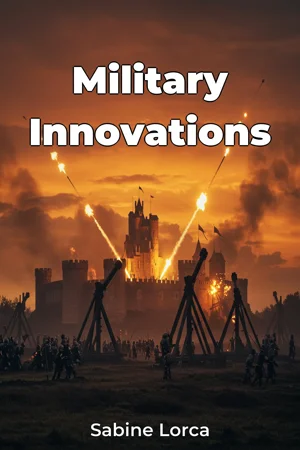
How has technological ingenuity reshaped the very nature of conflict throughout human history? "Military Innovations" explores the pivotal advancements and strategic shifts that have redefined warfare from antiquity to the modern era. It examines not only the evolution of weaponry and tactics but also the profound societal and geopolitical consequences that have resulted. This book delves into two primary areas: the symbiotic relationship between technological innovation and military strategy, and the cascade of effects these changes have had on political structures and civilian populations. Understanding these dynamics is crucial for grasping the complexities of modern global politics and anticipating future trends in international security. The reader should possess a basic understanding of world history to fully appreciate the context of the innovations discussed. The central argument posits that military innovation is not simply a linear progression of better weapons but rather a complex interplay of technological feasibility, strategic necessity, and societal adaptation. New technologies alone do not guarantee victory; their effective integration into existing military doctrines and their acceptance within the broader social and political landscape are equally critical. "Military Innovations" is structured to first introduce core concepts such as the military-technological ecosystem and the concept of asymmetric warfare. It then proceeds through distinct historical periods, focusing on key innovations and their impacts. Major sections include: a) Ancient Warfare: Examining the rise of iron weapons, siege technologies, and the development of early military organizations. b) The Medieval Period: Analyzing the impact of mounted warfare, the development of fortifications, and the emergence of gunpowder weapons. c) The Early Modern Era: Detailing the rise of professional armies, the evolution of naval warfare, and the standardization of firearms. d) The Industrial Revolution: Assessing the impact of mass production, mechanized warfare, and the development of new forms of communication and transportation. e) The Modern Era: Exploring the impact of nuclear weapons, the rise of air power, and the development of information warfare. The book draws upon a wide range of primary and secondary sources, including military treatises, archaeological findings, and historical accounts. It also incorporates quantitative data, such as military expenditure statistics and casualty figures, to support its arguments. A unique aspect of the research is the analysis of patent records and engineering documents to trace the development of specific military technologies. "Military Innovations" connects to other fields such as economics (the cost of warfare and technological development), political science (the impact of military power on international relations), and sociology (the social and cultural impact of war). These interdisciplinary connections enrich the book's analysis and provide a more nuanced understanding of the topic. What distinguishes this book is its focus on the systemic nature of military innovation. Rather than simply cataloging new weapons, it analyzes how these weapons are integrated into existing military systems and how they affect the overall balance of power. The book adopts a professional and accessible tone, aiming to inform and engage a broad audience. It avoids overly technical jargon and provides clear explanations of complex concepts. The target audience includes students of military history, policymakers involved in defense planning, and anyone interested in understanding the relationship between technology and conflict. This book is valuable because it provides a comprehensive and insightful overview of the key military innovations that have shaped the modern world. As a work of military history, "Military Innovations" adheres to the genre's conventions by providing detailed descriptions of battles, weapons, and military organizations. It also offers critical analyses of strategic decisions and their consequences. The scope of the book is limited to the study of military innovation from a Western perspective, with a primary focus on European and American developments. This limitation is acknowledged and addressed by suggesting avenues for future research into non-Western military traditions. The information in "Military Innovations" has practical applications for policymakers and military planners who need to understand the historical context of current technological trends. It also provides valuable insights for anyone interested in understanding the complex relationship between technology, strategy, and society. The book also addresses ongoing debates in the field of military history, such as the relative importance of technology versus strategy and the impact of military innovation on social progress. By engaging with these debates, the book offers a fresh and nuanced perspective on the topic.
How has technological ingenuity reshaped the very nature of conflict throughout human history? "Military Innovations" explores the pivotal advancements and strategic shifts that have redefined warfare from antiquity to the modern era. It examines not only the evolution of weaponry and tactics but also the profound societal and geopolitical consequences that have resulted. This book delves into two primary areas: the symbiotic relationship between technological innovation and military strategy, and the cascade of effects these changes have had on political structures and civilian populations. Understanding these dynamics is crucial for grasping the complexities of modern global politics and anticipating future trends in international security. The reader should possess a basic understanding of world history to fully appreciate the context of the innovations discussed. The central argument posits that military innovation is not simply a linear progression of better weapons but rather a complex interplay of technological feasibility, strategic necessity, and societal adaptation. New technologies alone do not guarantee victory; their effective integration into existing military doctrines and their acceptance within the broader social and political landscape are equally critical. "Military Innovations" is structured to first introduce core concepts such as the military-technological ecosystem and the concept of asymmetric warfare. It then proceeds through distinct historical periods, focusing on key innovations and their impacts. Major sections include: a) Ancient Warfare: Examining the rise of iron weapons, siege technologies, and the development of early military organizations. b) The Medieval Period: Analyzing the impact of mounted warfare, the development of fortifications, and the emergence of gunpowder weapons. c) The Early Modern Era: Detailing the rise of professional armies, the evolution of naval warfare, and the standardization of firearms. d) The Industrial Revolution: Assessing the impact of mass production, mechanized warfare, and the development of new forms of communication and transportation. e) The Modern Era: Exploring the impact of nuclear weapons, the rise of air power, and the development of information warfare. The book draws upon a wide range of primary and secondary sources, including military treatises, archaeological findings, and historical accounts. It also incorporates quantitative data, such as military expenditure statistics and casualty figures, to support its arguments. A unique aspect of the research is the analysis of patent records and engineering documents to trace the development of specific military technologies. "Military Innovations" connects to other fields such as economics (the cost of warfare and technological development), political science (the impact of military power on international relations), and sociology (the social and cultural impact of war). These interdisciplinary connections enrich the book's analysis and provide a more nuanced understanding of the topic. What distinguishes this book is its focus on the systemic nature of military innovation. Rather than simply cataloging new weapons, it analyzes how these weapons are integrated into existing military systems and how they affect the overall balance of power. The book adopts a professional and accessible tone, aiming to inform and engage a broad audience. It avoids overly technical jargon and provides clear explanations of complex concepts. The target audience includes students of military history, policymakers involved in defense planning, and anyone interested in understanding the relationship between technology and conflict. This book is valuable because it provides a comprehensive and insightful overview of the key military innovations that have shaped the modern world. As a work of military history, "Military Innovations" adheres to the genre's conventions by providing detailed descriptions of battles, weapons, and military organizations. It also offers critical analyses of strategic decisions and their consequences. The scope of the book is limited to the study of military innovation from a Western perspective, with a primary focus on European and American developments. This limitation is acknowledged and addressed by suggesting avenues for future research into non-Western military traditions. The information in "Military Innovations" has practical applications for policymakers and military planners who need to understand the historical context of current technological trends. It also provides valuable insights for anyone interested in understanding the complex relationship between technology, strategy, and society. The book also addresses ongoing debates in the field of military history, such as the relative importance of technology versus strategy and the impact of military innovation on social progress. By engaging with these debates, the book offers a fresh and nuanced perspective on the topic.
"Military Innovations" explores how technological advancements have reshaped warfare throughout history, impacting not only military strategy but also societal and geopolitical landscapes. The book argues that military innovation isn't just about better weapons; it's a complex interaction of technological feasibility, strategic necessity, and societal adaptation. For example, the effective integration of new technologies into military doctrines and their acceptance within the broader social and political landscape are critical for success. The book uniquely analyzes the systemic nature of military innovation, examining how new weapons integrate into existing military systems and affect the balance of power. The narrative progresses chronologically through distinct historical periods, starting with ancient warfare and concluding with the modern era, focusing on key innovations and their impacts. For example, it details the rise of iron weapons in ancient times and the impact of nuclear weapons in the modern era. The book is structured to first introduce core concepts such as the military-technological ecosystem and the concept of asymmetric warfare. It then proceeds through distinct historical periods, focusing on key innovations and their impacts. "Military Innovations" is valuable to students of military history, policymakers, and anyone interested in the relationship between technology and conflict because it provides a comprehensive overview of key military innovations that have shaped the modern world.
Book Details
ISBN
9788235297952
Publisher
Publifye AS
Your Licenses
You don't own any licenses for this book
Purchase a license below to unlock this book and download the EPUB.
Purchase License
Select a tier to unlock this book
Need bulk licensing?
Contact us for enterprise agreements.