
About This Book
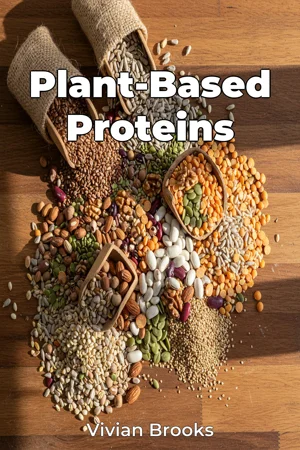
Are you seeking sustainable and nutritious alternatives to traditional animal proteins? This book, *Plant-Based Proteins*, delves into the world of legumes, nuts, seeds, fungi, and other plant-derived sources, offering a comprehensive comparison to conventional animal-based options. Understanding these alternatives is critical for navigating the evolving landscape of food production, addressing concerns about environmental impact, and optimizing personal health. The protein demands of a growing global population are placing immense strain on existing agricultural systems. This book provides essential context, examining the historical reliance on animal agriculture and the emerging scientific consensus advocating for more sustainable and plant-forward diets. While no specific prior knowledge is required, familiarity with basic nutritional concepts will enhance the reader's understanding. Our central argument is that a strategic incorporation of diverse plant-based proteins can effectively meet nutritional needs while mitigating the environmental and ethical concerns associated with intensive animal agriculture. We aim to demonstrate that plant-based proteins are not merely substitutes but valuable dietary components with unique benefits. This book is structured to systematically explore this argument. First, we introduce the fundamental concepts of protein structure, function, and dietary requirements and subsequently, the concept of protein quality. Second, we then classify and analyze various plant-based protein sources, dedicating chapters to legumes (beans, lentils, peas), nuts and seeds (almonds, chia, flax), pseudocereals (quinoa, amaranth), and the emerging field of mycoproteins (fungi-derived proteins). Each chapter includes a breakdown of the protein content, amino acid profiles, digestibility, and potential health benefits, as well as processing methods, and culinary applications. Third, we will directly compare these plant-based options to common animal proteins, like beef, chicken, fish, eggs and dairy, assessing their nutritional similarities and differences, including micronutrient composition. In this comparison, we will consider the environmental impacts of each source, from greenhouse gas emissions to land and water usage. Finally, the book culminates in a discussion of practical strategies for incorporating plant-based proteins into daily diets, including meal planning, recipe ideas, and guidance on addressing potential nutrient deficiencies. The book’s conclusions are supported by a review of hundreds of peer-reviewed scientific articles, meta-analyses, and reports from reputable organizations like the World Health Organization and the Food and Agriculture Organization of the United Nations. We present data on amino acid compositions, bioavailability studies, and life cycle assessments of various protein sources. This exploration naturally connects to several other fields. Firstly, environmental science, as we explore the ecological footprint of different protein production methods. Secondly, public health and nutrition, in examining the role of plant-based diets in preventing chronic diseases such as heart disease, type 2 diabetes, and certain cancers. Thirdly, agricultural economics, in assessing the economic viability and scalability of plant-based protein production. Our approach is unique in its comprehensive scope, bringing together nutritional science, environmental considerations, and practical dietary advice in a single volume. The book adopts a balanced, evidence-based tone, presenting information in a clear and accessible manner suitable for both health professionals and general readers. The target audience includes health-conscious individuals, nutritionists, dietitians, environmental advocates, and anyone interested in exploring sustainable and healthy eating patterns. This book will be valuable to those seeking to reduce their reliance on animal products, improve their overall health, or gain a deeper understanding of the science behind plant-based nutrition, aligning with the expectations of the health & fitness and biology genres. The scope of this book is intentionally broad, covering a diverse range of plant-based protein sources and their applications. However, it does not delve into the intricacies of food processing technologies or delve into the complexities of genetic engineering as it relates to protein modification. Readers will gain practical knowledge on how to optimize their protein intake from plant sources, create balanced meal plans, and address common concerns about plant-based diets. Finally, the book acknowledges the ongoing debates surrounding the optimal protein intake for different populations and the potential for nutrient deficiencies in poorly planned plant-based diets, addressing these controversies with evidence-based recommendations.
Are you seeking sustainable and nutritious alternatives to traditional animal proteins? This book, *Plant-Based Proteins*, delves into the world of legumes, nuts, seeds, fungi, and other plant-derived sources, offering a comprehensive comparison to conventional animal-based options. Understanding these alternatives is critical for navigating the evolving landscape of food production, addressing concerns about environmental impact, and optimizing personal health. The protein demands of a growing global population are placing immense strain on existing agricultural systems. This book provides essential context, examining the historical reliance on animal agriculture and the emerging scientific consensus advocating for more sustainable and plant-forward diets. While no specific prior knowledge is required, familiarity with basic nutritional concepts will enhance the reader's understanding. Our central argument is that a strategic incorporation of diverse plant-based proteins can effectively meet nutritional needs while mitigating the environmental and ethical concerns associated with intensive animal agriculture. We aim to demonstrate that plant-based proteins are not merely substitutes but valuable dietary components with unique benefits. This book is structured to systematically explore this argument. First, we introduce the fundamental concepts of protein structure, function, and dietary requirements and subsequently, the concept of protein quality. Second, we then classify and analyze various plant-based protein sources, dedicating chapters to legumes (beans, lentils, peas), nuts and seeds (almonds, chia, flax), pseudocereals (quinoa, amaranth), and the emerging field of mycoproteins (fungi-derived proteins). Each chapter includes a breakdown of the protein content, amino acid profiles, digestibility, and potential health benefits, as well as processing methods, and culinary applications. Third, we will directly compare these plant-based options to common animal proteins, like beef, chicken, fish, eggs and dairy, assessing their nutritional similarities and differences, including micronutrient composition. In this comparison, we will consider the environmental impacts of each source, from greenhouse gas emissions to land and water usage. Finally, the book culminates in a discussion of practical strategies for incorporating plant-based proteins into daily diets, including meal planning, recipe ideas, and guidance on addressing potential nutrient deficiencies. The book’s conclusions are supported by a review of hundreds of peer-reviewed scientific articles, meta-analyses, and reports from reputable organizations like the World Health Organization and the Food and Agriculture Organization of the United Nations. We present data on amino acid compositions, bioavailability studies, and life cycle assessments of various protein sources. This exploration naturally connects to several other fields. Firstly, environmental science, as we explore the ecological footprint of different protein production methods. Secondly, public health and nutrition, in examining the role of plant-based diets in preventing chronic diseases such as heart disease, type 2 diabetes, and certain cancers. Thirdly, agricultural economics, in assessing the economic viability and scalability of plant-based protein production. Our approach is unique in its comprehensive scope, bringing together nutritional science, environmental considerations, and practical dietary advice in a single volume. The book adopts a balanced, evidence-based tone, presenting information in a clear and accessible manner suitable for both health professionals and general readers. The target audience includes health-conscious individuals, nutritionists, dietitians, environmental advocates, and anyone interested in exploring sustainable and healthy eating patterns. This book will be valuable to those seeking to reduce their reliance on animal products, improve their overall health, or gain a deeper understanding of the science behind plant-based nutrition, aligning with the expectations of the health & fitness and biology genres. The scope of this book is intentionally broad, covering a diverse range of plant-based protein sources and their applications. However, it does not delve into the intricacies of food processing technologies or delve into the complexities of genetic engineering as it relates to protein modification. Readers will gain practical knowledge on how to optimize their protein intake from plant sources, create balanced meal plans, and address common concerns about plant-based diets. Finally, the book acknowledges the ongoing debates surrounding the optimal protein intake for different populations and the potential for nutrient deficiencies in poorly planned plant-based diets, addressing these controversies with evidence-based recommendations.
"Plant-Based Proteins" explores sustainable and nutritious alternatives to animal proteins, focusing on legumes, nuts, seeds, and mycoprotein. It addresses the growing strain on agricultural systems and advocates for plant-forward diets to mitigate environmental impact. Did you know that incorporating diverse plant-based proteins can effectively meet nutritional needs? The book highlights that plant-based proteins are not just substitutes, but valuable dietary components with unique benefits. The book systematically introduces protein fundamentals and then classifies various plant-based protein sources, dedicating chapters to legumes, nuts, seeds, pseudocereals, and mycoproteins. Each chapter breaks down protein content, amino acid profiles, digestibility, and potential health benefits. The book directly compares these options to common animal proteins, assessing nutritional similarities and environmental impacts. It culminates in practical strategies for incorporating plant-based proteins into daily diets. This makes the book uniquely valuable to health-conscious individuals by combining nutritional science, environmental considerations, and practical dietary advice.
Book Details
ISBN
9788235297877
Publisher
Publifye AS
Your Licenses
You don't own any licenses for this book
Purchase a license below to unlock this book and download the EPUB.
Purchase License
Select a tier to unlock this book
Need bulk licensing?
Contact us for enterprise agreements.