
About This Book
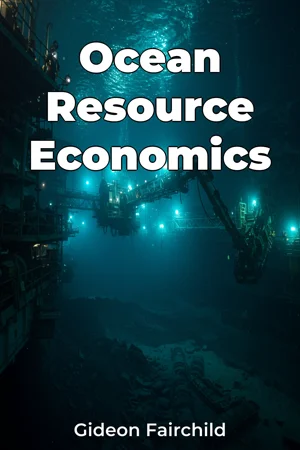
Can the vast resources of the seabed be tapped sustainably, balancing economic gains with environmental protection? "Ocean Resource Economics" delves into the complex interplay of benefits and costs associated with the extraction of oil, gas, and minerals from the ocean floor. This book examines these activities through the dual lenses of economics and environmental science, offering a comprehensive analysis vital for policymakers, industry professionals, and concerned citizens alike. This book focuses on three core areas: resource valuation, environmental impact assessment, and policy frameworks. Resource valuation explores the economic potential of seabed resources, employing techniques to quantify their worth and project future market dynamics. Environmental impact assessment critically analyzes the ecological consequences of extraction activities, considering both short-term disruptions and long-term effects on marine ecosystems. Finally, the book evaluates existing and proposed policy frameworks, assessing their effectiveness in promoting sustainable resource management and mitigating environmental damage. Understanding the economics of seabed resource extraction requires a grasp of fundamental economic principles, including supply and demand, market equilibrium, and cost-benefit analysis. Crucially, readers should be familiar with basic ecological concepts such as biodiversity, ecosystem function, and the interconnectedness of marine habitats. With this foundational knowledge, the book builds a framework for evaluating complex trade-offs inherent in exploiting ocean resources. The central argument of "Ocean Resource Economics" is that sustainable seabed resource extraction requires a holistic approach integrating rigorous economic analysis with comprehensive environmental safeguards. A failure to account for the full environmental costs associated with these activities can lead to unsustainable practices that deplete resources and degrade marine ecosystems, ultimately undermining long-term economic prosperity. The book's structure unfolds in several key stages. It begins with an introduction to the global distribution of seabed resources and an overview of current extraction technologies. Then, it delves into the economic valuation of these resources, considering factors such as market demand, extraction costs, and technological advancements. Subsequently, the focus shifts to environmental impact assessment, examining the effects of extraction on marine biodiversity, water quality, and ocean floor habitats. The book addresses the implications for fisheries, tourism, and other ocean-dependent industries. Finally, the book proposes policy recommendations aimed at fostering sustainable resource management, including regulatory frameworks, international agreements, and technological innovations. The analysis presented in "Ocean Resource Economics" relies on diverse sources, including economic models, environmental impact studies, and case studies of existing extraction projects. Data from government agencies, international organizations, and scientific research institutions are integrated to provide a comprehensive and evidence-based assessment. The book's interdisciplinary nature allows for the exploration of connections to fields such as international law, political science, and engineering. International law governs the rights and responsibilities of nations regarding seabed resource exploitation. Political science addresses the political factors influencing resource management decisions. Engineering informs the discussion of extraction technologies and their environmental impacts. "Ocean Resource Economics" stands out due to its integrated approach, combining rigorous economic analysis with comprehensive environmental considerations. This perspective offers a more nuanced and realistic assessment of the benefits and costs of seabed resource extraction than traditional analyses that focus solely on economic factors. The book's writing style is academic yet accessible, making it suitable for a broad audience. Complex economic and environmental concepts are explained clearly and concisely, with numerous examples and case studies to illustrate key points. The target audience includes advanced undergraduate and graduate students in economics, environmental science, and marine policy, alongside researchers, policymakers, and industry professionals involved in ocean resource management. It is a valuable resource for anyone seeking a comprehensive and unbiased analysis of this complex issue. As non-fiction, the book prioritizes factual accuracy, objectivity, and clear presentation of evidence. The book's scope encompasses a wide range of seabed resources. While aiming for broad coverage, it acknowledges the limitations of available data and research in certain regions or for specific resources. The information presented has practical applications for policymakers seeking to develop effective regulations, industry professionals striving to adopt sustainable practices, and citizens seeking to understand the complex trade-offs involved in ocean resource management. The book addresses ongoing debates surrounding the environmental impacts of seabed mining versus terrestrial mining, the effectiveness of current regulatory frameworks, and the role of international cooperation in promoting sustainable resource management.
Can the vast resources of the seabed be tapped sustainably, balancing economic gains with environmental protection? "Ocean Resource Economics" delves into the complex interplay of benefits and costs associated with the extraction of oil, gas, and minerals from the ocean floor. This book examines these activities through the dual lenses of economics and environmental science, offering a comprehensive analysis vital for policymakers, industry professionals, and concerned citizens alike. This book focuses on three core areas: resource valuation, environmental impact assessment, and policy frameworks. Resource valuation explores the economic potential of seabed resources, employing techniques to quantify their worth and project future market dynamics. Environmental impact assessment critically analyzes the ecological consequences of extraction activities, considering both short-term disruptions and long-term effects on marine ecosystems. Finally, the book evaluates existing and proposed policy frameworks, assessing their effectiveness in promoting sustainable resource management and mitigating environmental damage. Understanding the economics of seabed resource extraction requires a grasp of fundamental economic principles, including supply and demand, market equilibrium, and cost-benefit analysis. Crucially, readers should be familiar with basic ecological concepts such as biodiversity, ecosystem function, and the interconnectedness of marine habitats. With this foundational knowledge, the book builds a framework for evaluating complex trade-offs inherent in exploiting ocean resources. The central argument of "Ocean Resource Economics" is that sustainable seabed resource extraction requires a holistic approach integrating rigorous economic analysis with comprehensive environmental safeguards. A failure to account for the full environmental costs associated with these activities can lead to unsustainable practices that deplete resources and degrade marine ecosystems, ultimately undermining long-term economic prosperity. The book's structure unfolds in several key stages. It begins with an introduction to the global distribution of seabed resources and an overview of current extraction technologies. Then, it delves into the economic valuation of these resources, considering factors such as market demand, extraction costs, and technological advancements. Subsequently, the focus shifts to environmental impact assessment, examining the effects of extraction on marine biodiversity, water quality, and ocean floor habitats. The book addresses the implications for fisheries, tourism, and other ocean-dependent industries. Finally, the book proposes policy recommendations aimed at fostering sustainable resource management, including regulatory frameworks, international agreements, and technological innovations. The analysis presented in "Ocean Resource Economics" relies on diverse sources, including economic models, environmental impact studies, and case studies of existing extraction projects. Data from government agencies, international organizations, and scientific research institutions are integrated to provide a comprehensive and evidence-based assessment. The book's interdisciplinary nature allows for the exploration of connections to fields such as international law, political science, and engineering. International law governs the rights and responsibilities of nations regarding seabed resource exploitation. Political science addresses the political factors influencing resource management decisions. Engineering informs the discussion of extraction technologies and their environmental impacts. "Ocean Resource Economics" stands out due to its integrated approach, combining rigorous economic analysis with comprehensive environmental considerations. This perspective offers a more nuanced and realistic assessment of the benefits and costs of seabed resource extraction than traditional analyses that focus solely on economic factors. The book's writing style is academic yet accessible, making it suitable for a broad audience. Complex economic and environmental concepts are explained clearly and concisely, with numerous examples and case studies to illustrate key points. The target audience includes advanced undergraduate and graduate students in economics, environmental science, and marine policy, alongside researchers, policymakers, and industry professionals involved in ocean resource management. It is a valuable resource for anyone seeking a comprehensive and unbiased analysis of this complex issue. As non-fiction, the book prioritizes factual accuracy, objectivity, and clear presentation of evidence. The book's scope encompasses a wide range of seabed resources. While aiming for broad coverage, it acknowledges the limitations of available data and research in certain regions or for specific resources. The information presented has practical applications for policymakers seeking to develop effective regulations, industry professionals striving to adopt sustainable practices, and citizens seeking to understand the complex trade-offs involved in ocean resource management. The book addresses ongoing debates surrounding the environmental impacts of seabed mining versus terrestrial mining, the effectiveness of current regulatory frameworks, and the role of international cooperation in promoting sustainable resource management.
"Ocean Resource Economics" investigates the crucial balance between extracting seabed resources and protecting marine ecosystems. It tackles the complex economics and environmental science behind tapping into resources like oil, gas, and minerals from the ocean floor. Consider this: the book highlights how failing to account for environmental costs can undermine long-term economic prosperity. The text employs techniques to quantify the worth of seabed resources and projects future market dynamics, offering a comprehensive analysis for policymakers and industry professionals. The book uniquely integrates rigorous economic analysis with comprehensive environmental considerations, providing a nuanced assessment of the benefits and costs of seabed resource extraction. It progresses from an overview of global resource distribution and extraction technologies to the economic valuation of these resources. Then, the focus shifts, examining the effects on marine biodiversity, water quality, and habitats. "Ocean Resource Economics" concludes by proposing policy recommendations aimed at fostering sustainable resource management.
Book Details
ISBN
9788235297792
Publisher
Publifye AS
Your Licenses
You don't own any licenses for this book
Purchase a license below to unlock this book and download the EPUB.
Purchase License
Select a tier to unlock this book
Need bulk licensing?
Contact us for enterprise agreements.