
About This Book
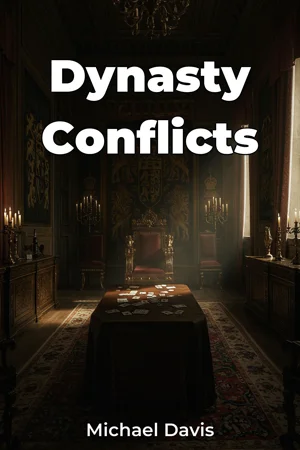
How did the pursuit of power within royal families shape the course of history, leading to devastating conflicts and the downfall of dynasties? "Dynasty Conflicts" delves into the intricate world of royal power struggles, analyzing succession crises and the political intrigue that fueled civil wars and assassinations across various historical periods. These internal conflicts are not merely isolated incidents; they represent pivotal moments that altered political landscapes, reshaped empires, and determined the fate of nations. This book examines two primary themes: the mechanisms of succession and the consequences of fractured power within royal courts. Succession, often governed by complex and contested rules, became a breeding ground for rivalries and conspiracies. The inherent instability of hereditary power, combined with the ambitions of competing claimants, regularly triggered violent confrontations. Simultaneously, the fragmentation of power caused by competing factions, ambitious advisors, and external influences within royal courts further destabilized regimes, paving the way for internal strife and external intervention. Understanding these dynamics requires a grasp of the social, economic, and political contexts in which these dynasties operated. Each chapter provides necessary historical background, exploring the cultural norms, religious beliefs, and economic pressures that influenced royal decision-making and shaped the ambitions of those vying for power. "Dynasty Conflicts" argues that internal power struggles represent a critical, often overlooked, driving force in historical change. By examining specific case studies, the book demonstrates that these internal conflicts were not simply palace dramas but significant determinants of long-term political stability and societal development. The book is structured chronologically and thematically. It begins with an introduction to the core concepts of succession, power dynamics, and political intrigue. The subsequent chapters explore specific dynasties and historical periods, including case studies such as the Romanovs of Russia, the Ming dynasty in China, and various European royal houses during the medieval and early modern periods. Each case study analyzes the specific factors that contributed to internal conflicts, evaluating the roles of key individuals, the impact of external forces, and the ultimate consequences for the dynasty and its territories. The book culminates by synthesizing these findings, offering a broader analysis of the patterns and commonalities that characterize royal power struggles across different cultures and time periods. It concludes by considering the lasting impact of these conflicts on modern political thought and international relations. This analysis will be supported by a wide range of primary and secondary sources, including royal chronicles, diplomatic correspondence, legal documents, and scholarly analyses. Emphasis will be placed on utilizing diverse perspectives to provide a nuanced and balanced account of each conflict. The book draws connections to other fields, including political science, sociology, and international relations. By applying concepts from these disciplines, such as game theory and social network analysis, it provides a more comprehensive understanding of the strategic calculations and social dynamics that underpinned royal power struggles. "Dynasty Conflicts" offers a unique perspective by focusing on the interconnectedness of internal power dynamics and broader historical events. It moves beyond traditional narratives of kings and queens to explore the complex web of relationships, ambitions, and betrayals that shaped the course of history. The writing style is factual, objective, and accessible to a broad audience. While grounded in rigorous historical research, the book aims to present the information in a clear and engaging manner, avoiding jargon and complex theoretical frameworks. The target audience includes readers interested in history, political science, and royal families. It will also appeal to those seeking a deeper understanding of the forces that have shaped political systems and international relations. As a work of historical analysis, "Dynasty Conflicts" adheres to the conventions of academic rigor and objectivity. While exploring potentially sensational events, the book remains committed to providing a balanced and evidence-based account. The scope of the book is global, but it does not attempt to cover every royal dynasty in history. Instead, it focuses on a selection of representative cases that illustrate the key themes and arguments. The insights presented in "Dynasty Conflicts" can be applied to contemporary political analysis, offering valuable lessons about the dangers of unchecked ambition, the importance of stable succession mechanisms, and the potential for internal conflicts to destabilize even the most powerful regimes. The book acknowledges and addresses ongoing debates among historians regarding the causes and consequences of royal power struggles, presenting different perspectives and offering its own interpretations based on the available evidence.
How did the pursuit of power within royal families shape the course of history, leading to devastating conflicts and the downfall of dynasties? "Dynasty Conflicts" delves into the intricate world of royal power struggles, analyzing succession crises and the political intrigue that fueled civil wars and assassinations across various historical periods. These internal conflicts are not merely isolated incidents; they represent pivotal moments that altered political landscapes, reshaped empires, and determined the fate of nations. This book examines two primary themes: the mechanisms of succession and the consequences of fractured power within royal courts. Succession, often governed by complex and contested rules, became a breeding ground for rivalries and conspiracies. The inherent instability of hereditary power, combined with the ambitions of competing claimants, regularly triggered violent confrontations. Simultaneously, the fragmentation of power caused by competing factions, ambitious advisors, and external influences within royal courts further destabilized regimes, paving the way for internal strife and external intervention. Understanding these dynamics requires a grasp of the social, economic, and political contexts in which these dynasties operated. Each chapter provides necessary historical background, exploring the cultural norms, religious beliefs, and economic pressures that influenced royal decision-making and shaped the ambitions of those vying for power. "Dynasty Conflicts" argues that internal power struggles represent a critical, often overlooked, driving force in historical change. By examining specific case studies, the book demonstrates that these internal conflicts were not simply palace dramas but significant determinants of long-term political stability and societal development. The book is structured chronologically and thematically. It begins with an introduction to the core concepts of succession, power dynamics, and political intrigue. The subsequent chapters explore specific dynasties and historical periods, including case studies such as the Romanovs of Russia, the Ming dynasty in China, and various European royal houses during the medieval and early modern periods. Each case study analyzes the specific factors that contributed to internal conflicts, evaluating the roles of key individuals, the impact of external forces, and the ultimate consequences for the dynasty and its territories. The book culminates by synthesizing these findings, offering a broader analysis of the patterns and commonalities that characterize royal power struggles across different cultures and time periods. It concludes by considering the lasting impact of these conflicts on modern political thought and international relations. This analysis will be supported by a wide range of primary and secondary sources, including royal chronicles, diplomatic correspondence, legal documents, and scholarly analyses. Emphasis will be placed on utilizing diverse perspectives to provide a nuanced and balanced account of each conflict. The book draws connections to other fields, including political science, sociology, and international relations. By applying concepts from these disciplines, such as game theory and social network analysis, it provides a more comprehensive understanding of the strategic calculations and social dynamics that underpinned royal power struggles. "Dynasty Conflicts" offers a unique perspective by focusing on the interconnectedness of internal power dynamics and broader historical events. It moves beyond traditional narratives of kings and queens to explore the complex web of relationships, ambitions, and betrayals that shaped the course of history. The writing style is factual, objective, and accessible to a broad audience. While grounded in rigorous historical research, the book aims to present the information in a clear and engaging manner, avoiding jargon and complex theoretical frameworks. The target audience includes readers interested in history, political science, and royal families. It will also appeal to those seeking a deeper understanding of the forces that have shaped political systems and international relations. As a work of historical analysis, "Dynasty Conflicts" adheres to the conventions of academic rigor and objectivity. While exploring potentially sensational events, the book remains committed to providing a balanced and evidence-based account. The scope of the book is global, but it does not attempt to cover every royal dynasty in history. Instead, it focuses on a selection of representative cases that illustrate the key themes and arguments. The insights presented in "Dynasty Conflicts" can be applied to contemporary political analysis, offering valuable lessons about the dangers of unchecked ambition, the importance of stable succession mechanisms, and the potential for internal conflicts to destabilize even the most powerful regimes. The book acknowledges and addresses ongoing debates among historians regarding the causes and consequences of royal power struggles, presenting different perspectives and offering its own interpretations based on the available evidence.
"Dynasty Conflicts" explores how internal power struggles within royal families have shaped history, leading to conflicts and the fall of dynasties. The book delves into succession crises and the political intrigue that fueled civil wars and assassinations. These internal conflicts are not merely isolated incidents; they represent pivotal moments that altered political landscapes, reshaped empires, and determined the fate of nations. Succession, often governed by complex and contested rules, became a breeding ground for rivalries and conspiracies. The book examines specific dynasties, such as the Romanovs and the Ming Dynasty, providing historical context and exploring the cultural norms, religious beliefs, and economic pressures that influenced royal decision-making. It argues that internal power struggles represent a critical, often overlooked, driving force in historical change, demonstrating that these conflicts were significant determinants of long-term political stability and societal development. The book progresses chronologically and thematically, offering a broader analysis of the patterns and commonalities that characterize royal power struggles across different cultures and time periods.
Book Details
ISBN
9788235297648
Publisher
Publifye AS
Your Licenses
You don't own any licenses for this book
Purchase a license below to unlock this book and download the EPUB.
Purchase License
Select a tier to unlock this book
Need bulk licensing?
Contact us for enterprise agreements.