
About This Book
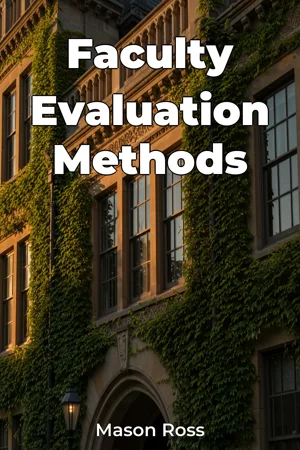
Are law professors truly effective educators, and how do we know? *Faculty Evaluation Methods* delves into the multifaceted world of faculty assessment in legal education, examining how law professors are evaluated by both students and administration. This book critically analyzes the current methodologies used to gauge teaching quality, accessibility, and overall course effectiveness within the unique context of law schools. These topics are significant because they directly impact the quality of legal education, student success, and the professional development of law faculty. Legal education operates within a complex ecosystem of academic rigor, professional standards, and evolving pedagogical approaches. Understanding the historical context of faculty evaluation, from early peer review systems to the rise of student evaluations, is crucial for appreciating the current landscape. Readers will benefit from a foundational understanding of educational assessment principles and legal education methodologies. The central argument of this book is that a holistic and comprehensive evaluation system, incorporating diverse data points and perspectives, is essential for fostering excellence in legal education. Moving beyond simplistic metrics and embracing nuanced feedback mechanisms is vital for improving teaching practices and ensuring student learning outcomes. *Faculty Evaluation Methods* begins by introducing the core principles of faculty evaluation and their application in legal education. It then explores the strengths and weaknesses of student evaluations, administrative reviews, peer observations, and self-assessments. A significant portion of the book is dedicated to analyzing the design and implementation of effective evaluation instruments, highlighting best practices and common pitfalls. The book then examines the role of evaluation in promotion and tenure decisions, as well as its impact on faculty development initiatives. Finally, the book culminates in a discussion of practical strategies for creating and maintaining a fair, transparent, and developmental evaluation system. This book relies on a combination of empirical research, case studies, and legal scholarship to support its arguments. It draws from surveys of law students and faculty, analyses of institutional policies, and meta-analyses of existing research on faculty evaluation in higher education. The book connects to fields such as educational psychology, organizational management, and higher education administration. These interdisciplinary connections provide a broader framework for understanding the complexities of faculty evaluation and its impact on the legal academy. This book offers a unique perspective by advocating for a shift from purely quantitative metrics to a more qualitative, holistic approach that values diverse forms of teaching and scholarship. It provides concrete recommendations for creating evaluation systems that are both rigorous and supportive of faculty growth. The tone is academic and analytical, yet accessible to a broad audience of legal educators, administrators, and policymakers. The writing style is clear, concise, and evidence-based. The target audience includes law school deans, associate deans, faculty members, assessment professionals, and anyone involved in the evaluation or development of legal educators. This book will be valuable to them because it provides practical guidance and evidence-based strategies for improving faculty evaluation systems. The book adheres to the conventions of academic writing, including clear citations, rigorous methodology, and objective analysis. The scope of this book is limited to faculty evaluation methods within U.S. law schools. It does not address evaluation practices in other disciplines or international contexts in detail, although relevant comparative examples may be noted. The information in this book can be applied directly to the design and implementation of faculty evaluation systems, the development of faculty training programs, and the improvement of teaching practices in law schools. The book addresses ongoing debates about the validity and reliability of student evaluations, the role of standardized testing in legal education, and the impact of institutional rankings on faculty evaluation practices.
Are law professors truly effective educators, and how do we know? *Faculty Evaluation Methods* delves into the multifaceted world of faculty assessment in legal education, examining how law professors are evaluated by both students and administration. This book critically analyzes the current methodologies used to gauge teaching quality, accessibility, and overall course effectiveness within the unique context of law schools. These topics are significant because they directly impact the quality of legal education, student success, and the professional development of law faculty. Legal education operates within a complex ecosystem of academic rigor, professional standards, and evolving pedagogical approaches. Understanding the historical context of faculty evaluation, from early peer review systems to the rise of student evaluations, is crucial for appreciating the current landscape. Readers will benefit from a foundational understanding of educational assessment principles and legal education methodologies. The central argument of this book is that a holistic and comprehensive evaluation system, incorporating diverse data points and perspectives, is essential for fostering excellence in legal education. Moving beyond simplistic metrics and embracing nuanced feedback mechanisms is vital for improving teaching practices and ensuring student learning outcomes. *Faculty Evaluation Methods* begins by introducing the core principles of faculty evaluation and their application in legal education. It then explores the strengths and weaknesses of student evaluations, administrative reviews, peer observations, and self-assessments. A significant portion of the book is dedicated to analyzing the design and implementation of effective evaluation instruments, highlighting best practices and common pitfalls. The book then examines the role of evaluation in promotion and tenure decisions, as well as its impact on faculty development initiatives. Finally, the book culminates in a discussion of practical strategies for creating and maintaining a fair, transparent, and developmental evaluation system. This book relies on a combination of empirical research, case studies, and legal scholarship to support its arguments. It draws from surveys of law students and faculty, analyses of institutional policies, and meta-analyses of existing research on faculty evaluation in higher education. The book connects to fields such as educational psychology, organizational management, and higher education administration. These interdisciplinary connections provide a broader framework for understanding the complexities of faculty evaluation and its impact on the legal academy. This book offers a unique perspective by advocating for a shift from purely quantitative metrics to a more qualitative, holistic approach that values diverse forms of teaching and scholarship. It provides concrete recommendations for creating evaluation systems that are both rigorous and supportive of faculty growth. The tone is academic and analytical, yet accessible to a broad audience of legal educators, administrators, and policymakers. The writing style is clear, concise, and evidence-based. The target audience includes law school deans, associate deans, faculty members, assessment professionals, and anyone involved in the evaluation or development of legal educators. This book will be valuable to them because it provides practical guidance and evidence-based strategies for improving faculty evaluation systems. The book adheres to the conventions of academic writing, including clear citations, rigorous methodology, and objective analysis. The scope of this book is limited to faculty evaluation methods within U.S. law schools. It does not address evaluation practices in other disciplines or international contexts in detail, although relevant comparative examples may be noted. The information in this book can be applied directly to the design and implementation of faculty evaluation systems, the development of faculty training programs, and the improvement of teaching practices in law schools. The book addresses ongoing debates about the validity and reliability of student evaluations, the role of standardized testing in legal education, and the impact of institutional rankings on faculty evaluation practices.
*Faculty Evaluation Methods* explores the complex process of assessing law professors, examining the various methods used to gauge teaching quality and overall effectiveness. This book addresses a critical need in legal education: ensuring that faculty evaluations are comprehensive and genuinely contribute to academic rigor and faculty development. Interestingly, while student evaluations are common, their reliability and validity are often debated, highlighting the need for more holistic approaches that incorporate peer review and administrative reviews. The book argues for a shift from purely quantitative metrics to a more qualitative approach, emphasizing the importance of diverse perspectives in evaluation. It meticulously analyzes the strengths and weaknesses of different evaluation tools, such as student feedback, peer observations, and self-assessments, while providing practical guidance for designing effective evaluation instruments. By drawing on empirical research and case studies, the book connects to fields like educational psychology and higher education administration to support arguments for improved evaluation practices. The book progresses logically, starting with core principles and moving through the analysis of different evaluation methods, their role in promotion and tenure, and culminating in strategies for creating fair and transparent systems. This approach offers a unique and valuable perspective for law school deans, faculty, and administrators seeking to enhance teaching quality and foster a supportive environment for faculty growth through comprehensive academic management.
Book Details
ISBN
9788235297570
Publisher
Publifye AS
Your Licenses
You don't own any licenses for this book
Purchase a license below to unlock this book and download the EPUB.
Purchase License
Select a tier to unlock this book
Need bulk licensing?
Contact us for enterprise agreements.