
About This Book
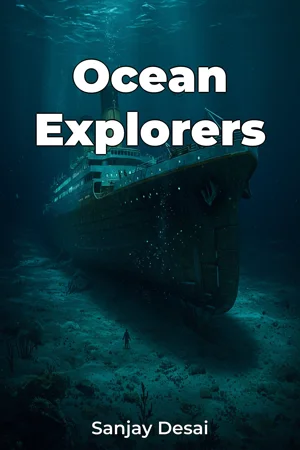
What secrets lie hidden beneath the ocean's surface, and who are the intrepid individuals driven to uncover them? "Ocean Explorers" chronicles the lives and groundbreaking achievements of those who dared to venture into the deep, revealing not only the mysteries of the underwater world but also the evolution of oceanographic exploration itself. This book explores the critical roles of technological innovation, scientific curiosity, and human resilience in our quest to understand the planet's last great frontier. The book focuses on three major themes: the discovery and investigation of significant shipwrecks, the progressive mapping of the ocean floor utilizing evolving technologies, and the biological studies of deep-sea creatures and their unique adaptations. These topics are vital because they represent fundamental aspects of ocean exploration, contributing significantly to our knowledge of maritime history, geological processes, and marine biology. "Ocean Explorers" provides the historical context necessary to understand the challenges and triumphs of early ocean exploration. From the rudimentary diving bells of the past to the sophisticated remotely operated vehicles (ROVs) of today, the book traces the development of tools and techniques that have expanded our reach into the abyss. The reader does not need prior knowledge of oceanography but a general interest in science, history, and exploration will enhance their appreciation of the subject matter. The central argument of "Ocean Explorers" is that ocean exploration is not merely a series of isolated discoveries but a continuous, interconnected narrative driven by human innovation and a relentless pursuit of knowledge. This argument underscores the importance of continued investment in oceanographic research and conservation efforts to safeguard the delicate ecosystems of the deep sea. The book begins by introducing the pioneers of ocean exploration and their initial forays into the underwater world. It develops its core ideas through three major sections. The first section examines the exploration of famous shipwrecks like the Titanic and the Bismarck, detailing the technological advancements required to locate and investigate these underwater time capsules. The second section charts the evolution of ocean floor mapping, from early sonar technology to modern multibeam echo sounders and satellite altimetry, revealing the complex topography of the seabed. The third section delves into the fascinating biology of deep-sea organisms, highlighting the adaptations that allow them to thrive in extreme environments and the ongoing research into their ecological roles. The book culminates by discussing the implications of ocean exploration for conservation, resource management, and our understanding of climate change, emphasizing the urgent need for responsible stewardship of the oceans. The evidence presented throughout "Ocean Explorers" is drawn from primary sources such as expedition logs, scientific publications, and historical archives, as well as data from contemporary oceanographic research. The book also incorporates visual elements, including photographs and illustrations, to enhance the reader's understanding of the technologies and environments being discussed. "Ocean Explorers" connects to several interdisciplinary fields. It intersects with maritime history by examining the stories behind shipwrecks and the cultures that created them. It links to geology by exploring the tectonic processes that shape the ocean floor. It connects to climate science by investigating deep-sea ecosystems and their role in carbon sequestration. These interdisciplinary connections enrich the book's argument and provide a more holistic understanding of ocean exploration. The book offers a unique perspective by focusing on the human stories behind the scientific discoveries, highlighting the motivations, challenges, and personal sacrifices of the explorers themselves. This approach makes the science more accessible and engaging for a broader audience. The tone of "Ocean Explorers" is informative and engaging, blending historical narrative with scientific explanation in a way that is both accessible and authoritative. The writing style is clear and concise, avoiding jargon and technical terms where possible while maintaining scientific accuracy. The intended audience is general readers interested in science, history, and exploration, as well as students and researchers in related fields. As a work of historical biography and science history, "Ocean Explorers" adheres to the conventions of thorough research, accurate representation of facts, and clear attribution of sources. The book’s scope is necessarily limited to specific case studies and examples to provide depth, focusing primarily on significant discoveries and technological advancements in the Atlantic and Pacific Oceans, while acknowledging that other regions also contribute vitally to the overall picture. The information presented in "Ocean Explorers" has several real-world applications. It informs our understanding of maritime heritage management, guides conservation efforts in vulnerable deep-sea ecosystems, and contributes to the development of new technologies for ocean exploration and resource management. While the book strives for objectivity, it will address ongoing debates within the scientific community regarding deep-sea mining, the impact of human activities on marine environments, and the ethics of exploring and exploiting the ocean's resources. By presenting different perspectives on these issues, "Ocean Explorers" encourages readers to critically evaluate the challenges and opportunities facing ocean exploration in the 21st century.
What secrets lie hidden beneath the ocean's surface, and who are the intrepid individuals driven to uncover them? "Ocean Explorers" chronicles the lives and groundbreaking achievements of those who dared to venture into the deep, revealing not only the mysteries of the underwater world but also the evolution of oceanographic exploration itself. This book explores the critical roles of technological innovation, scientific curiosity, and human resilience in our quest to understand the planet's last great frontier. The book focuses on three major themes: the discovery and investigation of significant shipwrecks, the progressive mapping of the ocean floor utilizing evolving technologies, and the biological studies of deep-sea creatures and their unique adaptations. These topics are vital because they represent fundamental aspects of ocean exploration, contributing significantly to our knowledge of maritime history, geological processes, and marine biology. "Ocean Explorers" provides the historical context necessary to understand the challenges and triumphs of early ocean exploration. From the rudimentary diving bells of the past to the sophisticated remotely operated vehicles (ROVs) of today, the book traces the development of tools and techniques that have expanded our reach into the abyss. The reader does not need prior knowledge of oceanography but a general interest in science, history, and exploration will enhance their appreciation of the subject matter. The central argument of "Ocean Explorers" is that ocean exploration is not merely a series of isolated discoveries but a continuous, interconnected narrative driven by human innovation and a relentless pursuit of knowledge. This argument underscores the importance of continued investment in oceanographic research and conservation efforts to safeguard the delicate ecosystems of the deep sea. The book begins by introducing the pioneers of ocean exploration and their initial forays into the underwater world. It develops its core ideas through three major sections. The first section examines the exploration of famous shipwrecks like the Titanic and the Bismarck, detailing the technological advancements required to locate and investigate these underwater time capsules. The second section charts the evolution of ocean floor mapping, from early sonar technology to modern multibeam echo sounders and satellite altimetry, revealing the complex topography of the seabed. The third section delves into the fascinating biology of deep-sea organisms, highlighting the adaptations that allow them to thrive in extreme environments and the ongoing research into their ecological roles. The book culminates by discussing the implications of ocean exploration for conservation, resource management, and our understanding of climate change, emphasizing the urgent need for responsible stewardship of the oceans. The evidence presented throughout "Ocean Explorers" is drawn from primary sources such as expedition logs, scientific publications, and historical archives, as well as data from contemporary oceanographic research. The book also incorporates visual elements, including photographs and illustrations, to enhance the reader's understanding of the technologies and environments being discussed. "Ocean Explorers" connects to several interdisciplinary fields. It intersects with maritime history by examining the stories behind shipwrecks and the cultures that created them. It links to geology by exploring the tectonic processes that shape the ocean floor. It connects to climate science by investigating deep-sea ecosystems and their role in carbon sequestration. These interdisciplinary connections enrich the book's argument and provide a more holistic understanding of ocean exploration. The book offers a unique perspective by focusing on the human stories behind the scientific discoveries, highlighting the motivations, challenges, and personal sacrifices of the explorers themselves. This approach makes the science more accessible and engaging for a broader audience. The tone of "Ocean Explorers" is informative and engaging, blending historical narrative with scientific explanation in a way that is both accessible and authoritative. The writing style is clear and concise, avoiding jargon and technical terms where possible while maintaining scientific accuracy. The intended audience is general readers interested in science, history, and exploration, as well as students and researchers in related fields. As a work of historical biography and science history, "Ocean Explorers" adheres to the conventions of thorough research, accurate representation of facts, and clear attribution of sources. The book’s scope is necessarily limited to specific case studies and examples to provide depth, focusing primarily on significant discoveries and technological advancements in the Atlantic and Pacific Oceans, while acknowledging that other regions also contribute vitally to the overall picture. The information presented in "Ocean Explorers" has several real-world applications. It informs our understanding of maritime heritage management, guides conservation efforts in vulnerable deep-sea ecosystems, and contributes to the development of new technologies for ocean exploration and resource management. While the book strives for objectivity, it will address ongoing debates within the scientific community regarding deep-sea mining, the impact of human activities on marine environments, and the ethics of exploring and exploiting the ocean's resources. By presenting different perspectives on these issues, "Ocean Explorers" encourages readers to critically evaluate the challenges and opportunities facing ocean exploration in the 21st century.
"Ocean Explorers" delves into the captivating world of ocean exploration, chronicling the lives and achievements of those who have ventured into the deep. It highlights how technological innovation, such as the evolution from rudimentary diving bells to sophisticated ROVs, has propelled our understanding of the underwater realm. The book emphasizes that ocean exploration is a continuous narrative driven by human curiosity and innovation, revealing the mysteries of maritime history, geological processes, and marine biology. The book progresses by exploring shipwrecks like the Titanic, the mapping of the ocean floor using technologies from early sonar to satellite altimetry, and the adaptation of deep-sea creatures to extreme environments. These explorations underscore the importance of continued investment in oceanographic research and conservation efforts. By focusing on human stories, "Ocean Explorers" makes the science more accessible, enriching our appreciation for the oceans and the explorers who dare to uncover their secrets.
Book Details
ISBN
9788235297549
Publisher
Publifye AS
Your Licenses
You don't own any licenses for this book
Purchase a license below to unlock this book and download the EPUB.
Purchase License
Select a tier to unlock this book
Need bulk licensing?
Contact us for enterprise agreements.