
About This Book
Did a sophisticated civilization flourish in the heart of Mesoamerica, leaving behind a legacy of scientific advancement, architectural grandeur, and intricate social structures that continue to captivate us today? "Mayan Civilization" delves into the world of the Maya, exploring their remarkable achievements in calendrical systems, monumental architecture, and complex political organizations that profoundly shaped Mesoamerican history. These fields are critical to understanding humanity's intellectual and cultural development and offer insights into the rise and fall of complex societies. This book provides a comprehensive examination of Mayan civilization, spanning its Preclassic origins to its Postclassic transformations and offering a balanced perspective on its cultural, political, and social dynamics. It argues that Mayan civilization, far from being a monolithic entity, was a dynamic and diverse collection of city-states that constantly interacted through trade, warfare, and alliance, creating a rich tapestry of regional identities and cultural expressions. The book is structured in three parts. The first introduces the geographic and temporal setting of Mayan civilization, exploring its environmental adaptations and the evolution of Mayan society through the Preclassic, Classic, and Postclassic periods. Special attention is given to deciphering Mayan hieroglyphs and understanding their role in documenting royal histories and religious beliefs. The second section examines the political and social structures of the Mayan city-states, focusing on the institution of kingship, social hierarchies, economic systems, and warfare practices. We analyze the role of religious beliefs and rituals in maintaining social order and legitimizing royal power. The final section focuses on the cultural achievements of the Maya, including their sophisticated calendrical systems, astronomical observations, mathematical innovations, and artistic expressions. We explore the symbolism embedded in Mayan art and architecture, revealing the complex worldview of Mayan society. To support our arguments, we draw upon diverse sources of evidence, including archaeological excavations, epigraphic inscriptions, ethnographic studies, and historical accounts. We analyze the architectural remains of major Mayan cities, such as Tikal, Palenque, and Copán, to understand their urban planning, construction techniques, and symbolic significance. We also examine Mayan texts, such as the Popol Vuh and the Books of Chilam Balam, to gain insights into Mayan mythology, cosmology, and historical memory. This book connects to other fields, such as anthropology, archaeology, art history, and linguistics, to provide a holistic understanding of Mayan civilization. By integrating archaeological data, epigraphic evidence, and ethnographic insights, we offer a nuanced perspective on Mayan society. Our analysis also contributes to broader debates about the factors that contribute to the rise and fall of civilizations, the role of environmental change in shaping human societies, and the impact of cultural exchange on social development. "Mayan Civilization" stands out for its interdisciplinary approach and emphasis on cultural diversity within the Mayan world. It presents a balanced account that acknowledges both the achievements and limitations of Mayan society, providing a critical analysis of the sources and interpretations that shape our understanding of the Maya. Written in an accessible and engaging style, this book is intended for students, scholars, and general readers interested in Mesoamerican history, anthropology, and archaeology. It offers a valuable resource for educators seeking to incorporate Mayan civilization into their curriculum and for anyone seeking a deeper understanding of this remarkable culture. The scope of this book is limited to the pre-Columbian Mayan civilization, focusing on its development and decline before the arrival of the Spanish. This allows us to delve deeply into the internal dynamics of Mayan society without being distracted by the complexities of the colonial period. The information presented in this book has real-world applications for understanding contemporary issues, such as cultural preservation, sustainable development, and the impact of climate change on human societies. By studying the successes and challenges of the Maya, we can gain valuable insights into the complexities of human-environment interactions and the importance of cultural resilience. "Mayan Civilization" engages with ongoing debates about the causes of the Mayan collapse, offering a nuanced perspective that considers the interplay of environmental factors, political instability, and social inequality.
Did a sophisticated civilization flourish in the heart of Mesoamerica, leaving behind a legacy of scientific advancement, architectural grandeur, and intricate social structures that continue to captivate us today? "Mayan Civilization" delves into the world of the Maya, exploring their remarkable achievements in calendrical systems, monumental architecture, and complex political organizations that profoundly shaped Mesoamerican history. These fields are critical to understanding humanity's intellectual and cultural development and offer insights into the rise and fall of complex societies. This book provides a comprehensive examination of Mayan civilization, spanning its Preclassic origins to its Postclassic transformations and offering a balanced perspective on its cultural, political, and social dynamics. It argues that Mayan civilization, far from being a monolithic entity, was a dynamic and diverse collection of city-states that constantly interacted through trade, warfare, and alliance, creating a rich tapestry of regional identities and cultural expressions. The book is structured in three parts. The first introduces the geographic and temporal setting of Mayan civilization, exploring its environmental adaptations and the evolution of Mayan society through the Preclassic, Classic, and Postclassic periods. Special attention is given to deciphering Mayan hieroglyphs and understanding their role in documenting royal histories and religious beliefs. The second section examines the political and social structures of the Mayan city-states, focusing on the institution of kingship, social hierarchies, economic systems, and warfare practices. We analyze the role of religious beliefs and rituals in maintaining social order and legitimizing royal power. The final section focuses on the cultural achievements of the Maya, including their sophisticated calendrical systems, astronomical observations, mathematical innovations, and artistic expressions. We explore the symbolism embedded in Mayan art and architecture, revealing the complex worldview of Mayan society. To support our arguments, we draw upon diverse sources of evidence, including archaeological excavations, epigraphic inscriptions, ethnographic studies, and historical accounts. We analyze the architectural remains of major Mayan cities, such as Tikal, Palenque, and Copán, to understand their urban planning, construction techniques, and symbolic significance. We also examine Mayan texts, such as the Popol Vuh and the Books of Chilam Balam, to gain insights into Mayan mythology, cosmology, and historical memory. This book connects to other fields, such as anthropology, archaeology, art history, and linguistics, to provide a holistic understanding of Mayan civilization. By integrating archaeological data, epigraphic evidence, and ethnographic insights, we offer a nuanced perspective on Mayan society. Our analysis also contributes to broader debates about the factors that contribute to the rise and fall of civilizations, the role of environmental change in shaping human societies, and the impact of cultural exchange on social development. "Mayan Civilization" stands out for its interdisciplinary approach and emphasis on cultural diversity within the Mayan world. It presents a balanced account that acknowledges both the achievements and limitations of Mayan society, providing a critical analysis of the sources and interpretations that shape our understanding of the Maya. Written in an accessible and engaging style, this book is intended for students, scholars, and general readers interested in Mesoamerican history, anthropology, and archaeology. It offers a valuable resource for educators seeking to incorporate Mayan civilization into their curriculum and for anyone seeking a deeper understanding of this remarkable culture. The scope of this book is limited to the pre-Columbian Mayan civilization, focusing on its development and decline before the arrival of the Spanish. This allows us to delve deeply into the internal dynamics of Mayan society without being distracted by the complexities of the colonial period. The information presented in this book has real-world applications for understanding contemporary issues, such as cultural preservation, sustainable development, and the impact of climate change on human societies. By studying the successes and challenges of the Maya, we can gain valuable insights into the complexities of human-environment interactions and the importance of cultural resilience. "Mayan Civilization" engages with ongoing debates about the causes of the Mayan collapse, offering a nuanced perspective that considers the interplay of environmental factors, political instability, and social inequality.
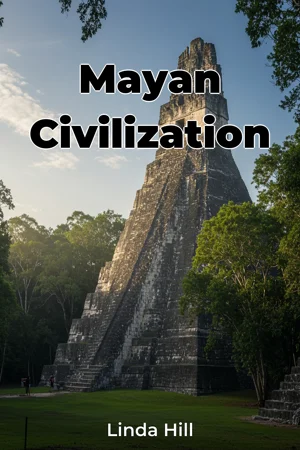
"Mayan Civilization" explores the fascinating world of the Maya and their profound impact on Mesoamerican history. The book reveals that Mayan society wasn't a single entity but a collection of diverse city-states, like Tikal, constantly interacting through trade and warfare. These interactions fostered a rich tapestry of regional identities and cultural expressions. The Maya made remarkable advancements in calendrical systems and monumental architecture, reflecting their complex worldview. This book examines Mayan civilization from its Preclassic origins to its Postclassic transformations, offering insights into their political structures, social hierarchies, and cultural achievements. It highlights the significance of Mayan hieroglyphs in documenting royal histories and religious beliefs. By drawing on archaeological excavations and epigraphic inscriptions, the book presents a balanced perspective on Mayan society, acknowledging both its achievements and limitations. Structured in three parts, the book first introduces the geographic and temporal setting of the Maya, then delves into their political and social systems, and finally explores their cultural accomplishments. This approach provides a comprehensive understanding of Mayan civilization, making it a valuable resource for anyone interested in Mesoamerican history and the dynamics of complex societies.
Book Details
ISBN
9788235297532
Publisher
Publifye AS
Your Licenses
You don't own any licenses for this book
Purchase a license below to unlock this book and download the EPUB.
Purchase License
Select a tier to unlock this book
Need bulk licensing?
Contact us for enterprise agreements.