
About This Book
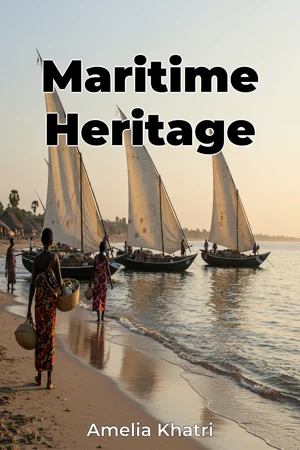
Did you know that African seafaring traditions predate many commonly recognized maritime powers? "Maritime Heritage" unveils the largely untold story of Africa’s profound and enduring relationship with the sea, exploring ancient shipbuilding techniques, the extensive seafaring trade networks that crisscrossed the continent and beyond, and the significant, often overlooked, role of African sailors in global exploration and exchange. This book argues that Africa's maritime history is not a peripheral narrative but a central component of global maritime heritage, reshaping our understanding of early technological innovation, trade, and cultural exchange. This study delves into three key areas. First, it meticulously examines the indigenous shipbuilding technologies developed across the African continent, revealing the ingenuity and adaptability employed in crafting vessels suited to diverse environments, from the rivers of West Africa to the open waters of the Indian Ocean. Second, it maps the intricate web of pre-colonial African maritime trade networks, demonstrating how these networks facilitated the exchange of goods, ideas, and cultural practices between African communities and with other continents. Finally, it shines a light on the contributions of African sailors, navigators, and maritime laborers in global maritime activities, challenging Eurocentric narratives of exploration and maritime dominance. Understanding this history requires a grasp of both African history and basic maritime principles. The book lays a foundation by exploring the diverse geography of the African continent and the social structures of its coastal communities. It clarifies essential maritime terminology and navigational methods to enable a deeper understanding of the topic. "Maritime Heritage" asserts that the existing historical record has often marginalized Africa's maritime contributions, resulting in an incomplete and distorted picture of global maritime history. By centering African voices and experiences, this book offers a more nuanced and accurate account of the past, challenging prevailing narratives and promoting a more inclusive understanding of maritime heritage. The book begins by introducing the reader to the concept of "maritime heritage" and its significance in understanding human history. It then proceeds through three major sections: "African Shipbuilding Traditions," "Maritime Trade Networks," and "African Sailors in Global Exploration." Each section presents detailed case studies and analyses, culminating in a discussion of the ongoing relevance of African maritime heritage in the modern world. The final chapter explores the implications of this rediscovered history for contemporary issues such as cultural preservation, sustainable development, and global diplomacy. The research for "Maritime Heritage" draws upon a wide range of sources, including archaeological findings, archival documents, oral histories, and ethnographic studies. Unique data sources include shipwrecks off the African coast, colonial-era shipping manifests (analyzed with new digital humanities techniques), and linguistic analysis of maritime vocabulary. This book also connects to several other fields, including anthropology (examining cultural adaptations to maritime environments), archaeology (uncovering material evidence of past maritime activities), and economics (analyzing the impact of maritime trade on African societies). These interdisciplinary connections enrich the book's analysis and provide a more holistic understanding of the topic. "Maritime Heritage" distinguishes itself by adopting a deliberately Afrocentric perspective, giving voice to African experiences and challenging Eurocentric biases. This approach involves not only highlighting African achievements but also critically examining the power dynamics that have shaped the historical narrative. Written in an accessible yet scholarly tone, this book is intended for a broad audience, including students, academics, maritime professionals, and anyone interested in African history or maritime studies. It provides valuable insights for those seeking a more thorough and inclusive understanding of global history. As a work of historical non-fiction, "Maritime Heritage" adheres to rigorous standards of evidence and accuracy. While the scope is broad, covering centuries of history and a vast geographical area, the book aims to provide in-depth analysis within selected case studies, recognizing that a comprehensive account of all African maritime activity would be impossible within a single volume. The information presented in "Maritime Heritage" has real-world applications in fields such as maritime archaeology (guiding future research), heritage tourism (promoting culturally sensitive tourism), and international relations (fostering greater understanding and cooperation between nations). The book addresses the ongoing debate surrounding the interpretation of historical evidence related to African maritime activity, acknowledging the challenges of reconstructing the past from incomplete and often biased sources. It encourages critical engagement with these debates and proposes new avenues for future research.
Did you know that African seafaring traditions predate many commonly recognized maritime powers? "Maritime Heritage" unveils the largely untold story of Africa’s profound and enduring relationship with the sea, exploring ancient shipbuilding techniques, the extensive seafaring trade networks that crisscrossed the continent and beyond, and the significant, often overlooked, role of African sailors in global exploration and exchange. This book argues that Africa's maritime history is not a peripheral narrative but a central component of global maritime heritage, reshaping our understanding of early technological innovation, trade, and cultural exchange. This study delves into three key areas. First, it meticulously examines the indigenous shipbuilding technologies developed across the African continent, revealing the ingenuity and adaptability employed in crafting vessels suited to diverse environments, from the rivers of West Africa to the open waters of the Indian Ocean. Second, it maps the intricate web of pre-colonial African maritime trade networks, demonstrating how these networks facilitated the exchange of goods, ideas, and cultural practices between African communities and with other continents. Finally, it shines a light on the contributions of African sailors, navigators, and maritime laborers in global maritime activities, challenging Eurocentric narratives of exploration and maritime dominance. Understanding this history requires a grasp of both African history and basic maritime principles. The book lays a foundation by exploring the diverse geography of the African continent and the social structures of its coastal communities. It clarifies essential maritime terminology and navigational methods to enable a deeper understanding of the topic. "Maritime Heritage" asserts that the existing historical record has often marginalized Africa's maritime contributions, resulting in an incomplete and distorted picture of global maritime history. By centering African voices and experiences, this book offers a more nuanced and accurate account of the past, challenging prevailing narratives and promoting a more inclusive understanding of maritime heritage. The book begins by introducing the reader to the concept of "maritime heritage" and its significance in understanding human history. It then proceeds through three major sections: "African Shipbuilding Traditions," "Maritime Trade Networks," and "African Sailors in Global Exploration." Each section presents detailed case studies and analyses, culminating in a discussion of the ongoing relevance of African maritime heritage in the modern world. The final chapter explores the implications of this rediscovered history for contemporary issues such as cultural preservation, sustainable development, and global diplomacy. The research for "Maritime Heritage" draws upon a wide range of sources, including archaeological findings, archival documents, oral histories, and ethnographic studies. Unique data sources include shipwrecks off the African coast, colonial-era shipping manifests (analyzed with new digital humanities techniques), and linguistic analysis of maritime vocabulary. This book also connects to several other fields, including anthropology (examining cultural adaptations to maritime environments), archaeology (uncovering material evidence of past maritime activities), and economics (analyzing the impact of maritime trade on African societies). These interdisciplinary connections enrich the book's analysis and provide a more holistic understanding of the topic. "Maritime Heritage" distinguishes itself by adopting a deliberately Afrocentric perspective, giving voice to African experiences and challenging Eurocentric biases. This approach involves not only highlighting African achievements but also critically examining the power dynamics that have shaped the historical narrative. Written in an accessible yet scholarly tone, this book is intended for a broad audience, including students, academics, maritime professionals, and anyone interested in African history or maritime studies. It provides valuable insights for those seeking a more thorough and inclusive understanding of global history. As a work of historical non-fiction, "Maritime Heritage" adheres to rigorous standards of evidence and accuracy. While the scope is broad, covering centuries of history and a vast geographical area, the book aims to provide in-depth analysis within selected case studies, recognizing that a comprehensive account of all African maritime activity would be impossible within a single volume. The information presented in "Maritime Heritage" has real-world applications in fields such as maritime archaeology (guiding future research), heritage tourism (promoting culturally sensitive tourism), and international relations (fostering greater understanding and cooperation between nations). The book addresses the ongoing debate surrounding the interpretation of historical evidence related to African maritime activity, acknowledging the challenges of reconstructing the past from incomplete and often biased sources. It encourages critical engagement with these debates and proposes new avenues for future research.
"Maritime Heritage" unveils the often-overlooked maritime history of Africa, asserting its central role in global maritime heritage rather than a peripheral one. The book challenges Eurocentric narratives by exploring ancient African shipbuilding traditions and extensive pre-colonial trade networks. It highlights the ingenuity of African societies in crafting vessels suited to various environments and reveals how these networks facilitated the exchange of goods, ideas, and cultural practices, reshaping our understanding of early technological innovation. A key insight is the significant contribution of African sailors in global exploration, often overshadowed in mainstream historical accounts. The book is structured into three major sections, beginning with "African Shipbuilding Traditions," then "Maritime Trade Networks," and finally "African Sailors in Global Exploration." It uses a range of sources, including archaeological findings and oral histories, to give voice to African experiences. By adopting an Afrocentric perspective, "Maritime Heritage" challenges prevailing biases and promotes a more inclusive understanding of world history, emphasizing the need to critically examine power dynamics that have shaped historical narratives and offering a more nuanced and accurate account of the past.
Book Details
ISBN
9788235297372
Publisher
Publifye AS
Your Licenses
You don't own any licenses for this book
Purchase a license below to unlock this book and download the EPUB.
Purchase License
Select a tier to unlock this book
Need bulk licensing?
Contact us for enterprise agreements.