
About This Book
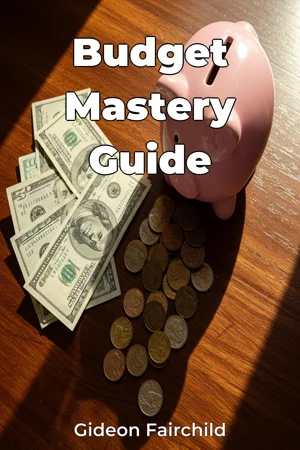
Are you ready to transform your financial life from a state of uncertainty to one of confident control? The "Budget Mastery Guide" provides a comprehensive framework for achieving financial stability through practical budgeting techniques rooted in sound economic principles. This book offers a step-by-step approach to mastering your finances, regardless of your current income level or financial knowledge. We delve into core areas such as understanding cash flow, managing debt, and setting realistic financial goals. These elements are crucial because they form the bedrock of any successful budget. Without a clear grasp of income and expenses, effective debt management, and well-defined objectives, budgeting becomes a futile exercise. Building upon established economic theories like behavioral economics and consumer choice theory, we illustrate how psychological biases impact spending habits and how to implement strategies to counteract these tendencies. Furthermore, we explore the historical context of budgeting, from its early applications in government to its modern use in personal finance, providing a richer understanding of its evolution and relevance. No prior knowledge of economics is needed. This guide presents complex concepts in an accessible format. The central argument of "Budget Mastery Guide" is that financial stability is attainable for everyone through consistent application of informed budgeting practices. This argument is critical because it empowers individuals to take control of their financial futures, reducing stress, promoting long-term security, and enabling them to pursue their life goals with greater confidence. This book is structured to guide you through a complete budgeting journey. It begins by introducing the fundamental concepts of budgeting and financial planning. We then progressively build upon these foundations. 1) The initial sections focus on assessing your current financial situation, including tracking income and expenses, calculating net worth, and identifying areas for improvement. 2) The second part explores various budgeting methods, from traditional spreadsheets to modern budgeting apps, highlighting the pros and cons of each to help you select the approach that best suits your needs. Topics include the 50/30/20 rule, zero-based budgeting and envelope budgeting. 3) The book culminates in a discussion of long-term financial planning. This includes strategies for saving for retirement, investing wisely, and managing debt effectively. The arguments presented are supported by a combination of empirical research, case studies, and practical examples. We draw upon data from government sources, academic studies, and financial institutions to provide a fact-based and reliable foundation for the budgeting techniques outlined. We also incorporate real-world scenarios and personal anecdotes to illustrate the practical application of these techniques. "Budget Mastery Guide" connects to several other disciplines, including psychology (understanding financial behavior), sociology (examining societal influences on spending), and mathematics (calculating financial metrics). These interdisciplinary connections enrich the book's argument by providing a more holistic understanding of the financial landscape. What sets this book apart is its emphasis on behavioral insights and practical application. Rather than simply presenting abstract economic principles, it translates these concepts into concrete strategies that readers can implement immediately. The tone is conversational and encouraging, making complex financial topics accessible to a broad audience. This book is tailored for young adults starting their careers, families striving for financial security, and anyone seeking to gain control of their finances. It will appeal to readers who are looking for actionable advice, practical tools, and a supportive guide to help them achieve their financial goals. As a guide in the finance genre, "Budget Mastery Guide" adheres to the conventions of providing clear, concise, and actionable advice. We avoid jargon and provide step-by-step instructions to ensure that readers can easily implement the budgeting techniques outlined. The scope of this book is intentionally limited to personal budgeting and financial planning. While we touch upon investing and retirement planning, we do not delve into complex investment strategies or advanced financial concepts. The focus remains on providing a solid foundation for financial stability through effective budgeting. The information in this book can be applied directly to your daily life. By following the budgeting techniques outlined, you can track your spending, identify areas for improvement, create a realistic budget, and achieve your financial goals. Whether you want to save for a down payment on a house, pay off debt, or simply gain control of your finances, "Budget Mastery Guide" provides the tools and knowledge you need to succeed. While budgeting is widely accepted as a sound financial practice, debates exist regarding the optimal budgeting methods and the role of government in promoting financial literacy. We address these controversies by presenting different perspectives and encouraging readers to critically evaluate the information presented.
Are you ready to transform your financial life from a state of uncertainty to one of confident control? The "Budget Mastery Guide" provides a comprehensive framework for achieving financial stability through practical budgeting techniques rooted in sound economic principles. This book offers a step-by-step approach to mastering your finances, regardless of your current income level or financial knowledge. We delve into core areas such as understanding cash flow, managing debt, and setting realistic financial goals. These elements are crucial because they form the bedrock of any successful budget. Without a clear grasp of income and expenses, effective debt management, and well-defined objectives, budgeting becomes a futile exercise. Building upon established economic theories like behavioral economics and consumer choice theory, we illustrate how psychological biases impact spending habits and how to implement strategies to counteract these tendencies. Furthermore, we explore the historical context of budgeting, from its early applications in government to its modern use in personal finance, providing a richer understanding of its evolution and relevance. No prior knowledge of economics is needed. This guide presents complex concepts in an accessible format. The central argument of "Budget Mastery Guide" is that financial stability is attainable for everyone through consistent application of informed budgeting practices. This argument is critical because it empowers individuals to take control of their financial futures, reducing stress, promoting long-term security, and enabling them to pursue their life goals with greater confidence. This book is structured to guide you through a complete budgeting journey. It begins by introducing the fundamental concepts of budgeting and financial planning. We then progressively build upon these foundations. 1) The initial sections focus on assessing your current financial situation, including tracking income and expenses, calculating net worth, and identifying areas for improvement. 2) The second part explores various budgeting methods, from traditional spreadsheets to modern budgeting apps, highlighting the pros and cons of each to help you select the approach that best suits your needs. Topics include the 50/30/20 rule, zero-based budgeting and envelope budgeting. 3) The book culminates in a discussion of long-term financial planning. This includes strategies for saving for retirement, investing wisely, and managing debt effectively. The arguments presented are supported by a combination of empirical research, case studies, and practical examples. We draw upon data from government sources, academic studies, and financial institutions to provide a fact-based and reliable foundation for the budgeting techniques outlined. We also incorporate real-world scenarios and personal anecdotes to illustrate the practical application of these techniques. "Budget Mastery Guide" connects to several other disciplines, including psychology (understanding financial behavior), sociology (examining societal influences on spending), and mathematics (calculating financial metrics). These interdisciplinary connections enrich the book's argument by providing a more holistic understanding of the financial landscape. What sets this book apart is its emphasis on behavioral insights and practical application. Rather than simply presenting abstract economic principles, it translates these concepts into concrete strategies that readers can implement immediately. The tone is conversational and encouraging, making complex financial topics accessible to a broad audience. This book is tailored for young adults starting their careers, families striving for financial security, and anyone seeking to gain control of their finances. It will appeal to readers who are looking for actionable advice, practical tools, and a supportive guide to help them achieve their financial goals. As a guide in the finance genre, "Budget Mastery Guide" adheres to the conventions of providing clear, concise, and actionable advice. We avoid jargon and provide step-by-step instructions to ensure that readers can easily implement the budgeting techniques outlined. The scope of this book is intentionally limited to personal budgeting and financial planning. While we touch upon investing and retirement planning, we do not delve into complex investment strategies or advanced financial concepts. The focus remains on providing a solid foundation for financial stability through effective budgeting. The information in this book can be applied directly to your daily life. By following the budgeting techniques outlined, you can track your spending, identify areas for improvement, create a realistic budget, and achieve your financial goals. Whether you want to save for a down payment on a house, pay off debt, or simply gain control of your finances, "Budget Mastery Guide" provides the tools and knowledge you need to succeed. While budgeting is widely accepted as a sound financial practice, debates exist regarding the optimal budgeting methods and the role of government in promoting financial literacy. We address these controversies by presenting different perspectives and encouraging readers to critically evaluate the information presented.
"Budget Mastery Guide" offers a comprehensive, step-by-step approach to achieving financial stability through effective budgeting and sound economic principles. The book emphasizes understanding cash flow, managing debt, and setting clear financial goals as the foundation for successful budgeting, regardless of income level or prior financial knowledge. By incorporating concepts from behavioral economics, the guide reveals how psychological biases impact spending and provides strategies to counteract them. It also explores the history of budgeting, illustrating its evolution from government applications to modern personal finance. This book distinguishes itself by translating abstract economic principles into actionable strategies, using empirical research, case studies, and real-world examples to support its techniques. You'll discover the pros and cons of various budgeting methods, including the popular 50/30/20 rule, zero-based budgeting, and envelope budgeting. The guide progresses from assessing your current financial situation to developing long-term financial plans for saving, investing, and managing debt, making it a valuable resource for anyone seeking to gain control of their finances and achieve financial goals.
Book Details
ISBN
9788235297341
Publisher
Publifye AS
Your Licenses
You don't own any licenses for this book
Purchase a license below to unlock this book and download the EPUB.
Purchase License
Select a tier to unlock this book
Need bulk licensing?
Contact us for enterprise agreements.