
About This Book
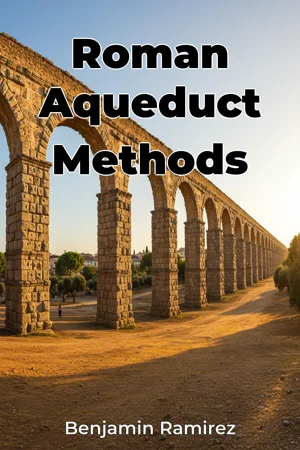
How did the Romans, without modern technology, manage to provide fresh water to over one million inhabitants of Rome, a feat unmatched for centuries? "Roman Aqueduct Methods" delves into the sophisticated engineering and logistical prowess behind these iconic structures, exploring the key aspects of their construction, water flow management, and the intricate urban distribution networks they supplied. These systems were not merely conduits for water; they were testaments to Roman ingenuity and organizational skill, shaping urban development and public health across their vast empire. This book addresses several critical areas: the engineering principles underpinning aqueduct design and construction, the techniques employed to control water flow and prevent damage, and the urban planning strategies that ensured efficient water delivery throughout Roman cities. Understanding these aspects is vital for architects, engineers, historians, and anyone interested in the legacy of Roman innovation and its enduring relevance to modern infrastructure challenges. We will examine the historical context of aqueduct development, tracing their evolution from simple channels to complex multi-tiered structures. The book assumes a basic familiarity with Roman history but provides detailed explanations of relevant engineering concepts, ensuring accessibility for a broad audience. The central argument of this book is that the success of Roman aqueducts stemmed from a holistic approach integrating meticulous planning, advanced surveying techniques, innovative construction methods, and effective water management strategies. Their sophisticated understanding of hydraulics, materials science, and large-scale project management enabled them to create systems that were both durable and remarkably efficient. Analyzing these methods provides valuable insights into sustainable infrastructure development that remain relevant today. The book is structured to provide a comprehensive understanding of Roman aqueduct systems. First, we introduce the fundamental concepts of Roman engineering and water management principles. Next, we explore the construction process, detailing surveying techniques, tunneling methods, and the use of materials like concrete and stone. A significant portion of the book then focuses on water flow control, examining the use of settling tanks, filtration systems, and distribution mechanisms within the city, highlighting key infrastructure like castella divisoria. Finally, we analyze the integration of aqueducts into the urban landscape, examining their impact on public health, sanitation, and urban development. To support our arguments, we draw upon a wide range of evidence, including archaeological findings, primary source accounts from Roman engineers and historians such as Vitruvius, and modern scientific analyses of aqueduct materials and hydraulic performance. The book incorporates recent archaeological data and computational fluid dynamics simulations to offer a fresh perspective on Roman aqueduct technology. This study connects to several interdisciplinary fields. It intersects with civil engineering, providing historical context for modern water management techniques. It also relates to urban planning, demonstrating how infrastructure shapes city development. Furthermore, it has strong connections to classical studies and archaeology, offering insights into Roman society and technology. These interdisciplinary links enrich the book's analysis and broaden its appeal. This book provides a unique perspective by combining a detailed technical analysis of Roman aqueducts with a broader understanding of their social and economic impact. It moves beyond a purely descriptive account to explore the underlying principles that made these systems so successful and long-lasting. The tone is academic but accessible, aiming to engage both specialists and general readers with clear explanations, detailed illustrations, and engaging historical anecdotes. The target audience includes students and professionals in engineering, architecture, history, and archaeology, as well as anyone interested in Roman technology and infrastructure. It offers a valuable resource for understanding the historical development of water management systems and their continuing relevance to contemporary challenges. As a work of non-fiction history and architecture, this book adheres to the conventions of scholarly research, providing detailed citations, a comprehensive bibliography, and a rigorous analysis of primary and secondary sources. The scope of the book is limited to Roman aqueducts specifically, focusing on their design, construction, and operation. We do not extensively cover other aspects of Roman water management, such as sewage systems or bathhouses, although these are mentioned in the context of the aqueducts' overall contribution to urban sanitation. The information in this book can be applied to modern challenges in water resource management, sustainable infrastructure development, and the preservation of historical engineering marvels. The lessons learned from Roman aqueducts offer valuable insights for designing efficient, durable, and environmentally responsible water systems in the 21st century.
How did the Romans, without modern technology, manage to provide fresh water to over one million inhabitants of Rome, a feat unmatched for centuries? "Roman Aqueduct Methods" delves into the sophisticated engineering and logistical prowess behind these iconic structures, exploring the key aspects of their construction, water flow management, and the intricate urban distribution networks they supplied. These systems were not merely conduits for water; they were testaments to Roman ingenuity and organizational skill, shaping urban development and public health across their vast empire. This book addresses several critical areas: the engineering principles underpinning aqueduct design and construction, the techniques employed to control water flow and prevent damage, and the urban planning strategies that ensured efficient water delivery throughout Roman cities. Understanding these aspects is vital for architects, engineers, historians, and anyone interested in the legacy of Roman innovation and its enduring relevance to modern infrastructure challenges. We will examine the historical context of aqueduct development, tracing their evolution from simple channels to complex multi-tiered structures. The book assumes a basic familiarity with Roman history but provides detailed explanations of relevant engineering concepts, ensuring accessibility for a broad audience. The central argument of this book is that the success of Roman aqueducts stemmed from a holistic approach integrating meticulous planning, advanced surveying techniques, innovative construction methods, and effective water management strategies. Their sophisticated understanding of hydraulics, materials science, and large-scale project management enabled them to create systems that were both durable and remarkably efficient. Analyzing these methods provides valuable insights into sustainable infrastructure development that remain relevant today. The book is structured to provide a comprehensive understanding of Roman aqueduct systems. First, we introduce the fundamental concepts of Roman engineering and water management principles. Next, we explore the construction process, detailing surveying techniques, tunneling methods, and the use of materials like concrete and stone. A significant portion of the book then focuses on water flow control, examining the use of settling tanks, filtration systems, and distribution mechanisms within the city, highlighting key infrastructure like castella divisoria. Finally, we analyze the integration of aqueducts into the urban landscape, examining their impact on public health, sanitation, and urban development. To support our arguments, we draw upon a wide range of evidence, including archaeological findings, primary source accounts from Roman engineers and historians such as Vitruvius, and modern scientific analyses of aqueduct materials and hydraulic performance. The book incorporates recent archaeological data and computational fluid dynamics simulations to offer a fresh perspective on Roman aqueduct technology. This study connects to several interdisciplinary fields. It intersects with civil engineering, providing historical context for modern water management techniques. It also relates to urban planning, demonstrating how infrastructure shapes city development. Furthermore, it has strong connections to classical studies and archaeology, offering insights into Roman society and technology. These interdisciplinary links enrich the book's analysis and broaden its appeal. This book provides a unique perspective by combining a detailed technical analysis of Roman aqueducts with a broader understanding of their social and economic impact. It moves beyond a purely descriptive account to explore the underlying principles that made these systems so successful and long-lasting. The tone is academic but accessible, aiming to engage both specialists and general readers with clear explanations, detailed illustrations, and engaging historical anecdotes. The target audience includes students and professionals in engineering, architecture, history, and archaeology, as well as anyone interested in Roman technology and infrastructure. It offers a valuable resource for understanding the historical development of water management systems and their continuing relevance to contemporary challenges. As a work of non-fiction history and architecture, this book adheres to the conventions of scholarly research, providing detailed citations, a comprehensive bibliography, and a rigorous analysis of primary and secondary sources. The scope of the book is limited to Roman aqueducts specifically, focusing on their design, construction, and operation. We do not extensively cover other aspects of Roman water management, such as sewage systems or bathhouses, although these are mentioned in the context of the aqueducts' overall contribution to urban sanitation. The information in this book can be applied to modern challenges in water resource management, sustainable infrastructure development, and the preservation of historical engineering marvels. The lessons learned from Roman aqueducts offer valuable insights for designing efficient, durable, and environmentally responsible water systems in the 21st century.
"Roman Aqueduct Methods" explores the remarkable engineering achievements of the Romans in providing fresh water to their cities. It examines how, without modern technology, they managed to supply water to over a million people in Rome, a feat unmatched for centuries. The book reveals that these aqueducts were more than just conduits; they were testaments to Roman ingenuity, shaping urban development and public health across their vast empire. The book delves into the engineering principles, water flow management techniques, and urban planning strategies that underpinned their success, showing how meticulous planning and innovative construction methods led to remarkably efficient and durable systems. The book emphasizes the holistic approach the Romans took, integrating planning, surveying, construction, and water management. For example, the Romans demonstrated a sophisticated understanding of hydraulics. Drawing on archaeological findings, historical accounts from figures like Vitruvius, and modern scientific analyses, the book offers a fresh perspective on Roman aqueduct technology. The book progresses systematically, introducing fundamental concepts of Roman engineering and water management, then detailing the construction process including surveying, tunneling, and material usage. It further examines water flow control through settling tanks, filtration systems, and distribution mechanisms. Finally, it analyzes the aqueducts' integration into the urban landscape and their impact on public health and sanitation, providing valuable insights into sustainable infrastructure development.
Book Details
ISBN
9788235297143
Publisher
Publifye AS
Your Licenses
You don't own any licenses for this book
Purchase a license below to unlock this book and download the EPUB.
Purchase License
Select a tier to unlock this book
Need bulk licensing?
Contact us for enterprise agreements.