
About This Book
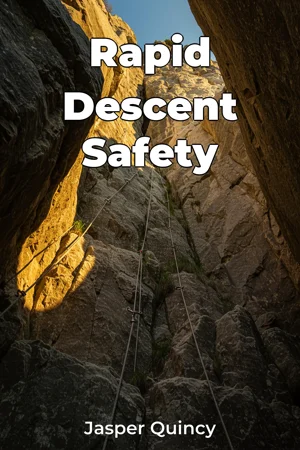
How can you ensure survival when a rapid rope descent is the only way out? "Rapid Descent Safety" provides a comprehensive guide to the critical techniques and considerations necessary for safe and efficient rope work in time-sensitive situations. This book addresses two core areas: the establishment of secure and reliable anchor systems under pressure, and the mastery of controlled descent methods using appropriate equipment and braking techniques. Understanding both is paramount, as even a minor lapse in either can lead to severe injury or death. The book emphasizes the crucial role of risk assessment, specifically tailored for scenarios where time is a critical constraint. We delve into the factors influencing anchor selection, examining natural anchors, artificial placements, and multi-point systems. Further, we explore the mechanics of various descent control devices, from simple friction hitches to advanced mechanical devices, detailing their advantages, limitations, and appropriate applications. The physics of braking and load management in rapid descents are thoroughly explained, providing a scientific foundation for safe practices. "Rapid Descent Safety" builds upon established mountaineering and search and rescue protocols, incorporating recent advancements in equipment technology and rope techniques. The central argument is that proficiency in rapid descent is not merely a matter of physical skill, but a synthesis of sound judgment, thorough preparation, and a deep understanding of the underlying principles of physics and equipment mechanics. This book underscores the importance of a proactive approach to safety, emphasizing pre-planning, equipment inspection, and contingency planning. The book structure is designed for progressive learning: a) We begin by introducing fundamental concepts of rope, knots, and anchor systems, providing a solid foundation for readers with varying levels of experience. b) The core of the book is dedicated to detailed analysis of descent control devices, braking techniques, and the specific challenges posed by different terrain types (e.g., cliffs, canyons, urban environments). Chapters cover emergency procedures, self-rescue techniques, and the mitigation of common hazards encountered during rapid descents. c) The book culminates in practical guidelines for establishing team protocols, conducting realistic training exercises, and integrating rapid descent techniques into broader operational strategies. d) Case studies of real-world incidents are presented to illustrate the consequences of both successful and unsuccessful rapid descents, offering valuable lessons learned for practitioners. "Rapid Descent Safety" draws upon a range of sources, including industry standards, scientific research on rope dynamics, and expert interviews with experienced climbers, search and rescue professionals, and special operations personnel. Unique data includes field-testing results of various descent control devices under simulated emergency conditions. The subject matter has connections to fields such as engineering (material science of ropes and equipment), physics (friction and load distribution), and psychology (decision-making under stress). These connections enrich the discussion and provide a more complete understanding of the factors influencing safety. This book distinguishes itself by focusing specifically on the challenges of rapid descent in time-critical situations. It provides a framework for making informed decisions under pressure, emphasizing the importance of adaptability and improvisation. The writing style is factual and direct, prioritizing clarity and accuracy over stylistic embellishment. The target audience includes climbers, mountaineers, search and rescue personnel, military operators, and anyone who may face the need for rapid rope descent in challenging environments. This book offers actionable knowledge and skills that can improve safety and increase survivability. As a non-fiction adventure and sports guide, “Rapid Descent Safety” adheres to the genre's emphasis on practicality, accuracy, and real-world application. While covering a broad range of techniques and equipment, the book does not delve into specific tactical procedures that are unique to military or law enforcement operations. The information presented is intended to provide a foundation of knowledge and skills that can be adapted to a wide variety of situations. Readers will gain the ability to assess descent scenarios, select appropriate equipment, establish secure anchors, and execute controlled descents with confidence. Ongoing debates regarding the relative merits of different descent control devices are addressed, offering a balanced perspective and encouraging readers to make informed choices based on their individual needs and experience.
How can you ensure survival when a rapid rope descent is the only way out? "Rapid Descent Safety" provides a comprehensive guide to the critical techniques and considerations necessary for safe and efficient rope work in time-sensitive situations. This book addresses two core areas: the establishment of secure and reliable anchor systems under pressure, and the mastery of controlled descent methods using appropriate equipment and braking techniques. Understanding both is paramount, as even a minor lapse in either can lead to severe injury or death. The book emphasizes the crucial role of risk assessment, specifically tailored for scenarios where time is a critical constraint. We delve into the factors influencing anchor selection, examining natural anchors, artificial placements, and multi-point systems. Further, we explore the mechanics of various descent control devices, from simple friction hitches to advanced mechanical devices, detailing their advantages, limitations, and appropriate applications. The physics of braking and load management in rapid descents are thoroughly explained, providing a scientific foundation for safe practices. "Rapid Descent Safety" builds upon established mountaineering and search and rescue protocols, incorporating recent advancements in equipment technology and rope techniques. The central argument is that proficiency in rapid descent is not merely a matter of physical skill, but a synthesis of sound judgment, thorough preparation, and a deep understanding of the underlying principles of physics and equipment mechanics. This book underscores the importance of a proactive approach to safety, emphasizing pre-planning, equipment inspection, and contingency planning. The book structure is designed for progressive learning: a) We begin by introducing fundamental concepts of rope, knots, and anchor systems, providing a solid foundation for readers with varying levels of experience. b) The core of the book is dedicated to detailed analysis of descent control devices, braking techniques, and the specific challenges posed by different terrain types (e.g., cliffs, canyons, urban environments). Chapters cover emergency procedures, self-rescue techniques, and the mitigation of common hazards encountered during rapid descents. c) The book culminates in practical guidelines for establishing team protocols, conducting realistic training exercises, and integrating rapid descent techniques into broader operational strategies. d) Case studies of real-world incidents are presented to illustrate the consequences of both successful and unsuccessful rapid descents, offering valuable lessons learned for practitioners. "Rapid Descent Safety" draws upon a range of sources, including industry standards, scientific research on rope dynamics, and expert interviews with experienced climbers, search and rescue professionals, and special operations personnel. Unique data includes field-testing results of various descent control devices under simulated emergency conditions. The subject matter has connections to fields such as engineering (material science of ropes and equipment), physics (friction and load distribution), and psychology (decision-making under stress). These connections enrich the discussion and provide a more complete understanding of the factors influencing safety. This book distinguishes itself by focusing specifically on the challenges of rapid descent in time-critical situations. It provides a framework for making informed decisions under pressure, emphasizing the importance of adaptability and improvisation. The writing style is factual and direct, prioritizing clarity and accuracy over stylistic embellishment. The target audience includes climbers, mountaineers, search and rescue personnel, military operators, and anyone who may face the need for rapid rope descent in challenging environments. This book offers actionable knowledge and skills that can improve safety and increase survivability. As a non-fiction adventure and sports guide, “Rapid Descent Safety” adheres to the genre's emphasis on practicality, accuracy, and real-world application. While covering a broad range of techniques and equipment, the book does not delve into specific tactical procedures that are unique to military or law enforcement operations. The information presented is intended to provide a foundation of knowledge and skills that can be adapted to a wide variety of situations. Readers will gain the ability to assess descent scenarios, select appropriate equipment, establish secure anchors, and execute controlled descents with confidence. Ongoing debates regarding the relative merits of different descent control devices are addressed, offering a balanced perspective and encouraging readers to make informed choices based on their individual needs and experience.
"Rapid Descent Safety" is a vital guide focused on mastering rope work for quickly escaping dangerous situations. It emphasizes the dual necessities of creating trustworthy anchor systems, even under pressure, and expertly controlling descents with the right gear and braking methods. A key insight is the critical role of risk assessment when time is short, examining how to choose the best anchor points—whether natural formations or artificial supports—and understanding the mechanics of different descent control devices. The book progresses from basic rope and knot skills to detailed analysis of descent equipment and techniques suited for various terrains, such as cliffs or urban settings. It also covers emergency self-rescue methods and strategies for avoiding common hazards. Drawing from mountaineering and search and rescue protocols, the book uniquely emphasizes the physics of braking and load management, providing a scientific basis for safe adventure sports. What sets this book apart is its specific focus on rapid descent in time-critical scenarios, offering a framework for sound decision-making when under pressure. Case studies are included to provide valuable lessons learned. The book culminates with team protocols and training exercises, integrating rapid descent techniques into broader operational strategies applicable to climbers, mountaineers, and search and rescue teams, making it an essential resource for enhancing safety and survivability.
Book Details
ISBN
9788235297099
Publisher
Publifye AS
Your Licenses
You don't own any licenses for this book
Purchase a license below to unlock this book and download the EPUB.
Purchase License
Select a tier to unlock this book
Need bulk licensing?
Contact us for enterprise agreements.