
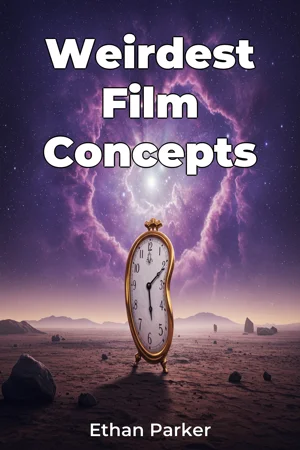
About This Book
Have you ever wondered how some truly bizarre movie concepts make it past the studio gatekeepers and onto the silver screen? "Weirdest Film Concepts" delves into the strange and fascinating world of experimental cinema, examining how several unusual movie ideas were not only greenlit but also became fully realized projects. This book explores the intersection of artistic vision, financial risk, and audience reception, providing a unique perspective on the creative process within the film industry. We will examine two key topics. First, the book explores the specific qualities that define a "weird" or experimental film concept and how these unconventional ideas differ from mainstream narratives. Second, it analyzes the decision-making processes within film studios that lead to the approval of these unusual projects, considering the roles of producers, directors, and financial backers in championing these often-controversial ventures. Historical context is crucial. The book traces the evolution of experimental cinema from its avant-garde roots in the early 20th century to its more recent manifestations in independent and studio-backed productions. Understanding this history provides a framework for analyzing the specific films discussed and appreciating the changing attitudes toward unconventional storytelling. No prior knowledge in film studies is required, although familiarity with basic film terminology will be beneficial. The central argument is that the greenlighting of a "weird" film concept is not solely based on financial viability. Rather, it is a complex interplay of artistic ambition, industry trends, and the influence of individuals who are willing to take risks on unconventional ideas. Furthermore, the book posits that these films, while often misunderstood or dismissed, play a vital role in pushing the boundaries of cinematic expression and challenging conventional storytelling norms. The book is structured in three parts. Part one introduces the concept of "weird" cinema, defining what makes a film unconventional and exploring the motivations behind creating such projects. Part two then delves into several case studies of films with particularly unusual concepts, examining their production history, critical reception, and long-term impact. Examples of films include those featuring experimental narratives, bizarre special effects, or challenging thematic content. Each case study analyzes the specific factors that contributed to the film's approval and eventual release. Part three synthesizes the findings from the case studies, providing a framework for understanding how and why "weird" films get made, and discusses their significance within the broader context of film history and art. The evidence presented in the book is drawn from a variety of sources, including production notes, studio archives, interviews with filmmakers and actors, and critical analyses of the films themselves. This multi-faceted approach provides a comprehensive understanding of each film's journey from concept to completion. "Weirdest Film Concepts" connects interdisciplinary topics, including film theory, art history, and business management. By examining these films through the lens of art history, the book highlights their connection to broader artistic movements and avant-garde traditions. Connecting film with business management offers insight into decision-making processes, risk assessment, and financing strategies employed in the film industry. What sets this book apart is its focus on the practical mechanics of how these films came to be. It doesn't just analyze the finished product; it delves into the behind-the-scenes processes and explores the often-conflicting motivations of the individuals involved. The tone is informative and analytical, providing in-depth information while remaining accessible to a broad audience. The writing style is clear and engaging, avoiding jargon and focusing on conveying complex ideas in an easily understandable manner. The target audience includes film students, film enthusiasts, and anyone interested in the creative process behind filmmaking. The book offers valuable insights into the inner workings of the film industry and provides a new appreciation for the risks and rewards of experimental cinema. In line with the conventions of scholarly non-fiction, the book includes a detailed bibliography, filmography, and index to facilitate further research and exploration. The book's scope is limited to films that have achieved a certain level of recognition or distribution, allowing for a more in-depth analysis of their production history and impact. Films that remain obscure or unreleased are generally excluded, allowing for a manageable scope. The real-world applications extend to offering aspiring filmmakers a better understanding of how to pitch unconventional ideas and navigate the challenges of bringing them to fruition. It also provides film critics and scholars with a new framework for analyzing and evaluating films that push the boundaries of cinematic expression. The book will undoubtedly touch on controversies, as many of the films discussed generated significant debate and discussion upon their release. The book addresses these controversies head-on, providing a balanced and nuanced perspective on the issues at stake.
Have you ever wondered how some truly bizarre movie concepts make it past the studio gatekeepers and onto the silver screen? "Weirdest Film Concepts" delves into the strange and fascinating world of experimental cinema, examining how several unusual movie ideas were not only greenlit but also became fully realized projects. This book explores the intersection of artistic vision, financial risk, and audience reception, providing a unique perspective on the creative process within the film industry. We will examine two key topics. First, the book explores the specific qualities that define a "weird" or experimental film concept and how these unconventional ideas differ from mainstream narratives. Second, it analyzes the decision-making processes within film studios that lead to the approval of these unusual projects, considering the roles of producers, directors, and financial backers in championing these often-controversial ventures. Historical context is crucial. The book traces the evolution of experimental cinema from its avant-garde roots in the early 20th century to its more recent manifestations in independent and studio-backed productions. Understanding this history provides a framework for analyzing the specific films discussed and appreciating the changing attitudes toward unconventional storytelling. No prior knowledge in film studies is required, although familiarity with basic film terminology will be beneficial. The central argument is that the greenlighting of a "weird" film concept is not solely based on financial viability. Rather, it is a complex interplay of artistic ambition, industry trends, and the influence of individuals who are willing to take risks on unconventional ideas. Furthermore, the book posits that these films, while often misunderstood or dismissed, play a vital role in pushing the boundaries of cinematic expression and challenging conventional storytelling norms. The book is structured in three parts. Part one introduces the concept of "weird" cinema, defining what makes a film unconventional and exploring the motivations behind creating such projects. Part two then delves into several case studies of films with particularly unusual concepts, examining their production history, critical reception, and long-term impact. Examples of films include those featuring experimental narratives, bizarre special effects, or challenging thematic content. Each case study analyzes the specific factors that contributed to the film's approval and eventual release. Part three synthesizes the findings from the case studies, providing a framework for understanding how and why "weird" films get made, and discusses their significance within the broader context of film history and art. The evidence presented in the book is drawn from a variety of sources, including production notes, studio archives, interviews with filmmakers and actors, and critical analyses of the films themselves. This multi-faceted approach provides a comprehensive understanding of each film's journey from concept to completion. "Weirdest Film Concepts" connects interdisciplinary topics, including film theory, art history, and business management. By examining these films through the lens of art history, the book highlights their connection to broader artistic movements and avant-garde traditions. Connecting film with business management offers insight into decision-making processes, risk assessment, and financing strategies employed in the film industry. What sets this book apart is its focus on the practical mechanics of how these films came to be. It doesn't just analyze the finished product; it delves into the behind-the-scenes processes and explores the often-conflicting motivations of the individuals involved. The tone is informative and analytical, providing in-depth information while remaining accessible to a broad audience. The writing style is clear and engaging, avoiding jargon and focusing on conveying complex ideas in an easily understandable manner. The target audience includes film students, film enthusiasts, and anyone interested in the creative process behind filmmaking. The book offers valuable insights into the inner workings of the film industry and provides a new appreciation for the risks and rewards of experimental cinema. In line with the conventions of scholarly non-fiction, the book includes a detailed bibliography, filmography, and index to facilitate further research and exploration. The book's scope is limited to films that have achieved a certain level of recognition or distribution, allowing for a more in-depth analysis of their production history and impact. Films that remain obscure or unreleased are generally excluded, allowing for a manageable scope. The real-world applications extend to offering aspiring filmmakers a better understanding of how to pitch unconventional ideas and navigate the challenges of bringing them to fruition. It also provides film critics and scholars with a new framework for analyzing and evaluating films that push the boundaries of cinematic expression. The book will undoubtedly touch on controversies, as many of the films discussed generated significant debate and discussion upon their release. The book addresses these controversies head-on, providing a balanced and nuanced perspective on the issues at stake.
"Weirdest Film Concepts" explores the fascinating journey of unconventional film ideas from initial concept to the silver screen. This book examines how experimental cinema navigates the complex intersection of artistic vision and the film industry's financial realities. Discover how certain bizarre concepts, often challenging traditional storytelling norms, are greenlit, transforming into fully realized projects. The book traces the evolution of experimental cinema, revealing how avant-garde roots have influenced modern independent and studio-backed productions. It analyzes decision-making processes within film studios, highlighting the roles of producers and directors in championing these risky ventures. Through case studies, the book investigates films featuring experimental narratives and bizarre special effects, providing a comprehensive understanding of each film's journey. Structured in three parts, the book first defines "weird" cinema, then delves into specific film examples, and finally synthesizes findings to understand how and why these films get made. By connecting film theory with art history and business management, "Weirdest Film Concepts" offers a unique perspective on the creative process, risk assessment, and the significance of unconventional filmmaking.
Book Details
ISBN
9788235296795
Publisher
Publifye AS
Your Licenses
You don't own any licenses for this book
Purchase a license below to unlock this book and download the EPUB.
Purchase License
Select a tier to unlock this book
Need bulk licensing?
Contact us for enterprise agreements.