
About This Book
Could the unraveling of an ancient calendar system hold the key to understanding a civilization's rise, fall, and enduring legacy? "Mayan Calendar" delves into the intricate world of the Mayan Long Count, a sophisticated time-keeping system that governed the lives of the ancient Maya for centuries. This book explores the complexities of its calculations, its central role in Mayan society, and the rituals and predictions associated with it. Understanding the Mayan calendar unlocks insights into their worldview, their advanced knowledge of astronomy and mathematics, and the profound cultural significance of time itself. This book navigates three core themes: The mathematical and astronomical foundations of the Long Count; the calendar's integration into Mayan societal structures and religious practices; and the prophecies and historical interpretations linked to specific dates, including the infamous 2012 phenomenon. These topics are vital to grasping not only the technical brilliance of the Maya but also their deep connection to the cosmos and the cyclical nature of existence. We begin by establishing the historical context of the Mayan civilization, including their geographical distribution, social hierarchy, and intellectual achievements. Readers will learn about the basic principles of Mayan mathematics, including their use of a base-20 number system and the concept of zero—a significant achievement for its time. Furthermore, the book provides the underlying fundamentals of Mayan astronomy. The central message of "Mayan Calendar" is that the Long Count was far more than a mere method of tracking time; it was a crucial element of Mayan identity, a framework for their understanding of the universe, and a tool for shaping their destiny. This perspective challenges simplistic interpretations of the calendar as solely prophetic or superstitious, presenting it instead as a sophisticated blend of science, religion, and political power. The book begins by introducing the fundamental concepts of the Long Count, explaining its structure, the various cycles within it (kin, uinal, tun, katun, baktun), and how these cycles interrelate. The discussion expands to explore the calendar's role in organizing religious ceremonies, dictating agricultural practices, and legitimizing the rule of Mayan kings. The concluding chapters investigate the historical interpretations of key dates within the Long Count, the evolution of scholarly understanding of the Mayan calendar, and the implications of Mayan timekeeping for our contemporary understanding of time and civilization. "Mayan Calendar" synthesizes archaeological evidence, epigraphic studies of Mayan hieroglyphs, and astronomical data to support its arguments. It draws upon primary sources, such as Mayan codices and inscriptions on stelae, as well as secondary research from leading Mayan scholars. The book uses accessible language and illustrative examples to explain complex concepts, making the information understandable to a wide audience. This book connects to several disciplines, including archaeology, anthropology, history, astronomy, and mathematics. By integrating insights from these fields, the book provides a holistic understanding of the Mayan calendar and its place in human history. It also invites readers to consider the cross-cultural relevance of different timekeeping systems and their impact on shaping human societies. "Mayan Calendar" stands out due to its comprehensive approach, blending rigorous academic research with accessible writing. It avoids sensationalism and focuses on presenting a balanced and nuanced view of the Mayan calendar, separating fact from fiction and providing a clear explanation of the science and culture behind it. Written in a clear and engaging style, "Mayan Calendar" is aimed at general readers with an interest in history, science, and ancient cultures. No prior knowledge of Mayan civilization or calendar systems is required. The book will also appeal to students and researchers in related fields who are seeking a comprehensive and up-to-date overview of the Mayan Long Count. As a history and science book, it adheres to the conventions of presenting well-researched information in a clear, organized manner, with appropriate citations and references. The book's scope is primarily focused on the Mayan Long Count, with a lesser emphasis on other Mayan calendars, such as the Tzolk'in and Haab'. This allows for a deeper and more thorough exploration of the Long Count while acknowledging its unique importance within Mayan society. The knowledge gained offers a new perspective on how societies perceive and structure time, offering valuable insights for individuals interested in understanding the cultural and historical factors that shape human experience. The book also acknowledges the ongoing debates surrounding the interpretation of Mayan prophecies and the significance of certain dates within the Long Count. It presents different perspectives on these issues, encouraging readers to critically evaluate the evidence and form their own conclusions.
Could the unraveling of an ancient calendar system hold the key to understanding a civilization's rise, fall, and enduring legacy? "Mayan Calendar" delves into the intricate world of the Mayan Long Count, a sophisticated time-keeping system that governed the lives of the ancient Maya for centuries. This book explores the complexities of its calculations, its central role in Mayan society, and the rituals and predictions associated with it. Understanding the Mayan calendar unlocks insights into their worldview, their advanced knowledge of astronomy and mathematics, and the profound cultural significance of time itself. This book navigates three core themes: The mathematical and astronomical foundations of the Long Count; the calendar's integration into Mayan societal structures and religious practices; and the prophecies and historical interpretations linked to specific dates, including the infamous 2012 phenomenon. These topics are vital to grasping not only the technical brilliance of the Maya but also their deep connection to the cosmos and the cyclical nature of existence. We begin by establishing the historical context of the Mayan civilization, including their geographical distribution, social hierarchy, and intellectual achievements. Readers will learn about the basic principles of Mayan mathematics, including their use of a base-20 number system and the concept of zero—a significant achievement for its time. Furthermore, the book provides the underlying fundamentals of Mayan astronomy. The central message of "Mayan Calendar" is that the Long Count was far more than a mere method of tracking time; it was a crucial element of Mayan identity, a framework for their understanding of the universe, and a tool for shaping their destiny. This perspective challenges simplistic interpretations of the calendar as solely prophetic or superstitious, presenting it instead as a sophisticated blend of science, religion, and political power. The book begins by introducing the fundamental concepts of the Long Count, explaining its structure, the various cycles within it (kin, uinal, tun, katun, baktun), and how these cycles interrelate. The discussion expands to explore the calendar's role in organizing religious ceremonies, dictating agricultural practices, and legitimizing the rule of Mayan kings. The concluding chapters investigate the historical interpretations of key dates within the Long Count, the evolution of scholarly understanding of the Mayan calendar, and the implications of Mayan timekeeping for our contemporary understanding of time and civilization. "Mayan Calendar" synthesizes archaeological evidence, epigraphic studies of Mayan hieroglyphs, and astronomical data to support its arguments. It draws upon primary sources, such as Mayan codices and inscriptions on stelae, as well as secondary research from leading Mayan scholars. The book uses accessible language and illustrative examples to explain complex concepts, making the information understandable to a wide audience. This book connects to several disciplines, including archaeology, anthropology, history, astronomy, and mathematics. By integrating insights from these fields, the book provides a holistic understanding of the Mayan calendar and its place in human history. It also invites readers to consider the cross-cultural relevance of different timekeeping systems and their impact on shaping human societies. "Mayan Calendar" stands out due to its comprehensive approach, blending rigorous academic research with accessible writing. It avoids sensationalism and focuses on presenting a balanced and nuanced view of the Mayan calendar, separating fact from fiction and providing a clear explanation of the science and culture behind it. Written in a clear and engaging style, "Mayan Calendar" is aimed at general readers with an interest in history, science, and ancient cultures. No prior knowledge of Mayan civilization or calendar systems is required. The book will also appeal to students and researchers in related fields who are seeking a comprehensive and up-to-date overview of the Mayan Long Count. As a history and science book, it adheres to the conventions of presenting well-researched information in a clear, organized manner, with appropriate citations and references. The book's scope is primarily focused on the Mayan Long Count, with a lesser emphasis on other Mayan calendars, such as the Tzolk'in and Haab'. This allows for a deeper and more thorough exploration of the Long Count while acknowledging its unique importance within Mayan society. The knowledge gained offers a new perspective on how societies perceive and structure time, offering valuable insights for individuals interested in understanding the cultural and historical factors that shape human experience. The book also acknowledges the ongoing debates surrounding the interpretation of Mayan prophecies and the significance of certain dates within the Long Count. It presents different perspectives on these issues, encouraging readers to critically evaluate the evidence and form their own conclusions.
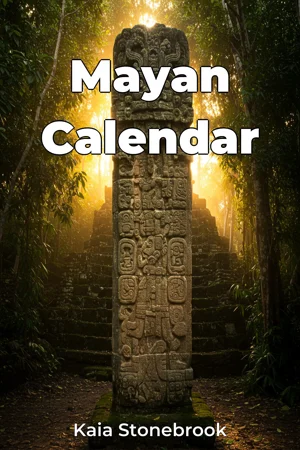
"Mayan Calendar" explores the fascinating Long Count, a sophisticated timekeeping system central to Mayan civilization. The book unveils how this intricate calendar shaped Mayan life, offering unique insights into their worldview, advanced astronomy, and complex mathematics. One intriguing aspect is the Mayan's base-20 number system, including their innovative concept of zero. The book also highlights how the calendar wasn't just about tracking days; it governed religious ceremonies, agricultural practices, and even legitimized the rule of kings. The book progresses by first establishing the historical context of the Mayan civilization, then delving into the mathematical and astronomical foundations of the Long Count. It then investigates the historical interpretations of key dates and the evolution of scholarly understanding. By synthesizing archaeological evidence, epigraphic studies, and astronomical data, "Mayan Calendar" provides a balanced view of Mayan timekeeping, separating fact from the 2012 phenomenon and other misinterpretations.
Book Details
ISBN
9788235296788
Publisher
Publifye AS
Your Licenses
You don't own any licenses for this book
Purchase a license below to unlock this book and download the EPUB.
Purchase License
Select a tier to unlock this book
Need bulk licensing?
Contact us for enterprise agreements.