
About This Book
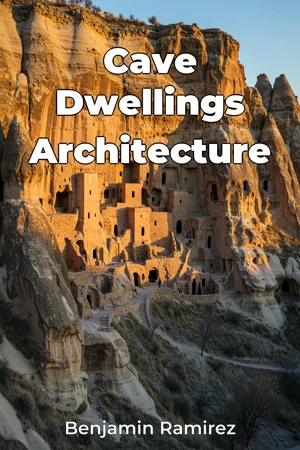
Have you ever considered the ingenuity required to carve homes from solid rock, creating entire communities hidden beneath the earth's surface? "Cave Dwellings Architecture" explores the captivating world of subterranean settlements, examining the architectural techniques, cultural adaptations, and historical significance of these remarkable human endeavors. This book delves into the fundamental question of how and why diverse societies across the globe chose to make caves and rock shelters their homes. The study pivots on three core themes: first, the diverse construction methods employed in creating cave dwellings, ranging from simple modifications of existing natural cavities to complex, multi-level structures carved entirely by hand; second, the profound ways in which different cultures adapted their lifestyles, social structures, and belief systems to the unique challenges and opportunities presented by underground living; and third, the long-term impact of geological and environmental factors on the sustainability and evolution of these settlements. These topics are vital because they offer valuable insights into human adaptability, resourcefulness, and the intricate interplay between culture and environment. The book argues that understanding cave dwellings provides a unique lens through which to examine broader themes of architectural innovation, sustainable living, and human resilience throughout history. To provide context, the book will present a historical overview of cave dwelling practices worldwide, spanning from prehistoric times to the present day. It will consider the social, economic, and political conditions that led various communities to adopt subterranean living, as well as the technological advancements that made such constructions possible. While no prior expert knowledge is needed, a basic understanding of architectural principles and historical timelines will enhance the reader's appreciation of the material. The book's central argument posits that cave dwellings are not simply primitive shelters but rather sophisticated architectural solutions that reflect a deep understanding of local environments and cultural needs. A key aspect will be examining how these structures were deliberately engineered to provide thermal insulation, protection from the elements, and defense against external threats. The book’s structure unfolds as follows: the introduction lays the groundwork by defining cave dwellings, outlining their global distribution, and introducing the main research questions. Subsequent chapters will explore specific case studies from different regions, such as the cave cities of Cappadocia, the Mesa Verde cliff dwellings, and the troglodyte settlements of North Africa. Each chapter will delve into the architectural features, construction techniques, and cultural practices associated with these sites. The concluding chapters synthesize the findings, highlighting common themes and variations across different cultures, and discussing the lessons that can be learned from cave dwellings in contemporary architecture and urban planning. Emphasis will be placed on analyzing the geological characteristics of the rock formations used, the tools employed by the builders, and the environmental impact of these constructions. The analysis will be supported by a diverse range of evidence, including archaeological reports, architectural surveys, historical accounts, and ethnographic studies. The book will also draw upon geological and climatological data to assess the environmental factors that influenced the design and location of cave dwellings. "Cave Dwellings Architecture" intersects with several fields, including archaeology, anthropology, and environmental studies. These interdisciplinary connections enrich the analysis by providing a holistic perspective on the social, cultural, and environmental dimensions of cave dwelling practices. This book stands out due to its comprehensive and comparative approach, offering a global perspective on cave dwellings that transcends regional boundaries. In terms of tone and writing style, "Cave Dwellings Architecture" is written in an accessible yet rigorous manner, appealing to a broad audience while maintaining scholarly integrity. The intended audience includes architecture enthusiasts, history buffs, archaeologists, and anyone interested in sustainable building practices and alternative forms of housing. The book is meticulously researched, visually engaging, and provides a wealth of information on a topic that is often overlooked in mainstream architectural discourse. As a work of non-fiction, the book adheres to the genre's conventions by presenting factual information, citing sources, and employing a clear and objective writing style. The book focuses on inhabited cave dwellings and intentionally excludes purely geological caves or those used exclusively for ritualistic purposes. The knowledge contained within "Cave Dwellings Architecture" has real-world applications in contemporary architecture and urban planning. By studying the design principles and sustainable features of cave dwellings, architects and planners can gain valuable insights into creating more energy-efficient, climate-resilient, and culturally sensitive buildings and communities. The interpretation of some cave paintings found within cave dwellings, and their significance to inhabitants, remains a topic of debate among archaeologists. This book addresses these debates by presenting different perspectives and offering reasoned interpretations based on available evidence.
Have you ever considered the ingenuity required to carve homes from solid rock, creating entire communities hidden beneath the earth's surface? "Cave Dwellings Architecture" explores the captivating world of subterranean settlements, examining the architectural techniques, cultural adaptations, and historical significance of these remarkable human endeavors. This book delves into the fundamental question of how and why diverse societies across the globe chose to make caves and rock shelters their homes. The study pivots on three core themes: first, the diverse construction methods employed in creating cave dwellings, ranging from simple modifications of existing natural cavities to complex, multi-level structures carved entirely by hand; second, the profound ways in which different cultures adapted their lifestyles, social structures, and belief systems to the unique challenges and opportunities presented by underground living; and third, the long-term impact of geological and environmental factors on the sustainability and evolution of these settlements. These topics are vital because they offer valuable insights into human adaptability, resourcefulness, and the intricate interplay between culture and environment. The book argues that understanding cave dwellings provides a unique lens through which to examine broader themes of architectural innovation, sustainable living, and human resilience throughout history. To provide context, the book will present a historical overview of cave dwelling practices worldwide, spanning from prehistoric times to the present day. It will consider the social, economic, and political conditions that led various communities to adopt subterranean living, as well as the technological advancements that made such constructions possible. While no prior expert knowledge is needed, a basic understanding of architectural principles and historical timelines will enhance the reader's appreciation of the material. The book's central argument posits that cave dwellings are not simply primitive shelters but rather sophisticated architectural solutions that reflect a deep understanding of local environments and cultural needs. A key aspect will be examining how these structures were deliberately engineered to provide thermal insulation, protection from the elements, and defense against external threats. The book’s structure unfolds as follows: the introduction lays the groundwork by defining cave dwellings, outlining their global distribution, and introducing the main research questions. Subsequent chapters will explore specific case studies from different regions, such as the cave cities of Cappadocia, the Mesa Verde cliff dwellings, and the troglodyte settlements of North Africa. Each chapter will delve into the architectural features, construction techniques, and cultural practices associated with these sites. The concluding chapters synthesize the findings, highlighting common themes and variations across different cultures, and discussing the lessons that can be learned from cave dwellings in contemporary architecture and urban planning. Emphasis will be placed on analyzing the geological characteristics of the rock formations used, the tools employed by the builders, and the environmental impact of these constructions. The analysis will be supported by a diverse range of evidence, including archaeological reports, architectural surveys, historical accounts, and ethnographic studies. The book will also draw upon geological and climatological data to assess the environmental factors that influenced the design and location of cave dwellings. "Cave Dwellings Architecture" intersects with several fields, including archaeology, anthropology, and environmental studies. These interdisciplinary connections enrich the analysis by providing a holistic perspective on the social, cultural, and environmental dimensions of cave dwelling practices. This book stands out due to its comprehensive and comparative approach, offering a global perspective on cave dwellings that transcends regional boundaries. In terms of tone and writing style, "Cave Dwellings Architecture" is written in an accessible yet rigorous manner, appealing to a broad audience while maintaining scholarly integrity. The intended audience includes architecture enthusiasts, history buffs, archaeologists, and anyone interested in sustainable building practices and alternative forms of housing. The book is meticulously researched, visually engaging, and provides a wealth of information on a topic that is often overlooked in mainstream architectural discourse. As a work of non-fiction, the book adheres to the genre's conventions by presenting factual information, citing sources, and employing a clear and objective writing style. The book focuses on inhabited cave dwellings and intentionally excludes purely geological caves or those used exclusively for ritualistic purposes. The knowledge contained within "Cave Dwellings Architecture" has real-world applications in contemporary architecture and urban planning. By studying the design principles and sustainable features of cave dwellings, architects and planners can gain valuable insights into creating more energy-efficient, climate-resilient, and culturally sensitive buildings and communities. The interpretation of some cave paintings found within cave dwellings, and their significance to inhabitants, remains a topic of debate among archaeologists. This book addresses these debates by presenting different perspectives and offering reasoned interpretations based on available evidence.
"Cave Dwellings Architecture" explores the fascinating world of underground settlements, revealing ingenious methods of carving homes from solid rock. It examines how diverse cultures adapted to subterranean living, showcasing their architectural techniques and the historical significance of these dwellings. These cave cities weren't just simple shelters; they were sophisticated solutions providing thermal insulation and protection. The book delves into construction methods, cultural adaptations, and environmental factors in cave dwellings worldwide, from Cappadocia to Mesa Verde. Each chapter explores specific case studies, analyzing architectural features and cultural practices. Understanding these historical, vernacular architecture examples offers insights into sustainable architecture and human resilience. The book progresses from defining cave dwellings and their global distribution to exploring regional examples and synthesizing findings. It emphasizes that lessons from these underground settlements can inform contemporary architecture and urban planning, promoting energy-efficient and climate-resilient designs.
Book Details
ISBN
9788235296542
Publisher
Publifye AS
Your Licenses
You don't own any licenses for this book
Purchase a license below to unlock this book and download the EPUB.
Purchase License
Select a tier to unlock this book
Need bulk licensing?
Contact us for enterprise agreements.