
About This Book
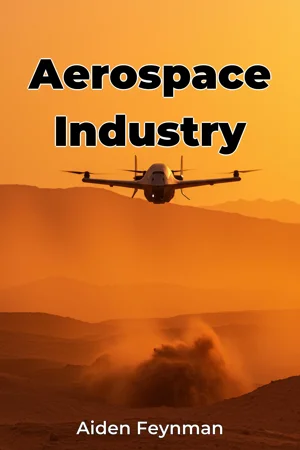
How does relentless innovation in aviation, defense, and space exploration continually reshape the boundaries of what's technologically possible? "Aerospace Industry" delves into the core technologies driving advancements across these interconnected sectors, providing a comprehensive understanding of the forces propelling the aerospace industry forward. This book examines the synergistic relationship between aviation, defense, and space technologies, revealing how breakthroughs in one area often lead to significant progress in others. Understanding these dynamics is crucial for anyone seeking to grasp the future trajectory of aerospace and its impact on our world. The book focuses on three main concepts: advanced materials science, propulsion systems, and autonomous systems. Advanced materials, such as carbon fiber composites and lightweight alloys, are revolutionizing aircraft and spacecraft design, leading to greater fuel efficiency and improved performance. Propulsion systems, ranging from advanced jet engines to electric propulsion and rocket technology, are enabling faster, more efficient, and environmentally sustainable air and space travel. Autonomous systems, including drones, self-piloting aircraft, and robotic spacecraft, are transforming operations and opening new possibilities for exploration and data collection. To fully appreciate the current state of aerospace, it is necessary to consider its historical context, from the early days of flight to the space race and beyond. The book traces the evolution of key technologies and the pivotal moments that shaped the industry. An understanding of basic physics and engineering principles will be helpful but not essential, as complex concepts are explained in an accessible manner. The central argument of "Aerospace Industry" is that the ongoing convergence of aviation, defense, and space technologies is driving a new era of innovation, characterized by increased efficiency, greater autonomy, and expanded capabilities. This convergence has profound implications for national security, economic growth, and our understanding of the universe. The book begins by introducing the fundamental principles of aerospace engineering and the historical developments that paved the way for modern technologies. Subsequent chapters delve into advanced materials, exploring their properties, manufacturing processes, and applications in aircraft, spacecraft, and missiles. The book then examines various propulsion systems, comparing their performance characteristics and environmental impacts. A significant portion of the book is dedicated to autonomous systems, covering topics such as artificial intelligence, sensor technology, and robotics. The concluding chapters explore the practical applications of these technologies in both civilian and military contexts, and their potential for future development. The analysis presented in the book is grounded in extensive research, drawing upon data from industry reports, government publications, academic journals, and interviews with aerospace professionals. Unique data sources, such as flight test results and materials characterization studies, are used to support the arguments. "Aerospace Industry" connects to several other fields, including materials science, computer science, and environmental science. The development of advanced materials relies heavily on breakthroughs in materials science. Autonomous systems are intimately linked to advancements in computer science and artificial intelligence. The environmental impact of aerospace activities necessitates considerations from the field of environmental science, particularly with regard to sustainable aviation and space debris mitigation. A unique aspect of this book is its holistic approach, integrating perspectives from aviation, defense, and space to provide a comprehensive understanding of the aerospace industry. Furthermore, it emphasizes the importance of interdisciplinary collaboration in driving innovation. The tone of the book is informative and analytical, presenting complex information in a clear and accessible manner. The writing style is professional but not overly technical, making it suitable for a broad audience. The target audience includes students, engineers, policymakers, investors, and anyone interested in learning more about the aerospace industry. The book is valuable to them because it provides a comprehensive overview of the key technologies, trends, and challenges shaping the future of aerospace. It is targeted as a non-fiction work of technology and science writing, emphasizing accuracy, clarity, and evidence-based analysis. The scope of the book is broad, covering a wide range of aerospace technologies, but it is limited to the civilian and military applications of these technologies. It does not delve into the specific details of individual aircraft or spacecraft designs. The information in the book can be applied practically by aerospace professionals working in research and development, engineering, and management. It can also inform policymakers and investors about the opportunities and challenges facing the industry. The book also addresses ongoing debates in the field, such as the environmental impact of aviation, the ethical implications of autonomous weapons systems, and the challenges of space debris mitigation. By exploring these controversies, the book provides a balanced and nuanced perspective on the aerospace industry.
How does relentless innovation in aviation, defense, and space exploration continually reshape the boundaries of what's technologically possible? "Aerospace Industry" delves into the core technologies driving advancements across these interconnected sectors, providing a comprehensive understanding of the forces propelling the aerospace industry forward. This book examines the synergistic relationship between aviation, defense, and space technologies, revealing how breakthroughs in one area often lead to significant progress in others. Understanding these dynamics is crucial for anyone seeking to grasp the future trajectory of aerospace and its impact on our world. The book focuses on three main concepts: advanced materials science, propulsion systems, and autonomous systems. Advanced materials, such as carbon fiber composites and lightweight alloys, are revolutionizing aircraft and spacecraft design, leading to greater fuel efficiency and improved performance. Propulsion systems, ranging from advanced jet engines to electric propulsion and rocket technology, are enabling faster, more efficient, and environmentally sustainable air and space travel. Autonomous systems, including drones, self-piloting aircraft, and robotic spacecraft, are transforming operations and opening new possibilities for exploration and data collection. To fully appreciate the current state of aerospace, it is necessary to consider its historical context, from the early days of flight to the space race and beyond. The book traces the evolution of key technologies and the pivotal moments that shaped the industry. An understanding of basic physics and engineering principles will be helpful but not essential, as complex concepts are explained in an accessible manner. The central argument of "Aerospace Industry" is that the ongoing convergence of aviation, defense, and space technologies is driving a new era of innovation, characterized by increased efficiency, greater autonomy, and expanded capabilities. This convergence has profound implications for national security, economic growth, and our understanding of the universe. The book begins by introducing the fundamental principles of aerospace engineering and the historical developments that paved the way for modern technologies. Subsequent chapters delve into advanced materials, exploring their properties, manufacturing processes, and applications in aircraft, spacecraft, and missiles. The book then examines various propulsion systems, comparing their performance characteristics and environmental impacts. A significant portion of the book is dedicated to autonomous systems, covering topics such as artificial intelligence, sensor technology, and robotics. The concluding chapters explore the practical applications of these technologies in both civilian and military contexts, and their potential for future development. The analysis presented in the book is grounded in extensive research, drawing upon data from industry reports, government publications, academic journals, and interviews with aerospace professionals. Unique data sources, such as flight test results and materials characterization studies, are used to support the arguments. "Aerospace Industry" connects to several other fields, including materials science, computer science, and environmental science. The development of advanced materials relies heavily on breakthroughs in materials science. Autonomous systems are intimately linked to advancements in computer science and artificial intelligence. The environmental impact of aerospace activities necessitates considerations from the field of environmental science, particularly with regard to sustainable aviation and space debris mitigation. A unique aspect of this book is its holistic approach, integrating perspectives from aviation, defense, and space to provide a comprehensive understanding of the aerospace industry. Furthermore, it emphasizes the importance of interdisciplinary collaboration in driving innovation. The tone of the book is informative and analytical, presenting complex information in a clear and accessible manner. The writing style is professional but not overly technical, making it suitable for a broad audience. The target audience includes students, engineers, policymakers, investors, and anyone interested in learning more about the aerospace industry. The book is valuable to them because it provides a comprehensive overview of the key technologies, trends, and challenges shaping the future of aerospace. It is targeted as a non-fiction work of technology and science writing, emphasizing accuracy, clarity, and evidence-based analysis. The scope of the book is broad, covering a wide range of aerospace technologies, but it is limited to the civilian and military applications of these technologies. It does not delve into the specific details of individual aircraft or spacecraft designs. The information in the book can be applied practically by aerospace professionals working in research and development, engineering, and management. It can also inform policymakers and investors about the opportunities and challenges facing the industry. The book also addresses ongoing debates in the field, such as the environmental impact of aviation, the ethical implications of autonomous weapons systems, and the challenges of space debris mitigation. By exploring these controversies, the book provides a balanced and nuanced perspective on the aerospace industry.
"Aerospace Industry" explores the dynamic intersection of aviation, defense, and space exploration, revealing how innovation across these sectors propels technological progress. It highlights the convergence of these fields, noting that advances in one often spark breakthroughs in others. The book delves into key technologies like advanced materials, which are revolutionizing aircraft design for better fuel efficiency, and propulsion systems, including electric options for sustainable travel. The book progresses from foundational aerospace engineering principles to in-depth analyses of advanced materials, propulsion systems, and increasingly important autonomous systems. It emphasizes how the historical context of the aerospace sector, from early flight to the space race, shapes current advancements. Readers will gain insights into how autonomous systems, such as self-piloting aircraft, are transforming operations and expanding data collection capabilities. This book uniquely integrates perspectives from aviation, defense, and space, offering a holistic view of the aerospace industry. Grounded in extensive research and industry data, it connects to broader fields like materials science and computer science, presenting complex concepts in an accessible way for students, engineers, and anyone interested in the future of aerospace.
Book Details
ISBN
9788235296481
Publisher
Publifye AS
Your Licenses
You don't own any licenses for this book
Purchase a license below to unlock this book and download the EPUB.
Purchase License
Select a tier to unlock this book
Need bulk licensing?
Contact us for enterprise agreements.