
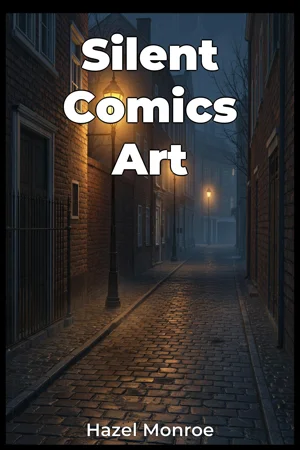
About This Book
Can a story truly captivate without a single word? "Silent Comics Art" delves into the compelling world of wordless comics, exploring how artists use the visual language of imagery, panel transitions, and character expression to construct narratives that resonate deeply with readers. This book examines the art form's unique capabilities, revealing how these visual narratives can evoke complex emotions, convey intricate plots, and transcend linguistic barriers. This exploration centers on two critical areas: the manipulation of sequential imagery to create pacing and meaning, and the understanding of visual cues and symbolism employed by artists to communicate character, setting, and theme. These elements are crucial to constructing a narrative when dialogue and narration are absent, demanding a sophisticated understanding of visual storytelling principles. The evolution of silent comics will be explored, tracing its roots from early forms of visual storytelling to contemporary examples. Attention will be given to key artists and movements that have shaped the genre, providing context for understanding the creative choices made by practitioners. A basic understanding of comics terminology, such as panels, gutters, and layouts, will be beneficial but not essential, as the book will cover these concepts. The central argument of "Silent Comics Art" is that wordless comics represent a distinct and powerful form of visual communication, capable of conveying nuanced and universally understood narratives. This argument challenges the traditional assumption that words are necessary for effective storytelling, highlighting the potential of visual art to communicate directly to the reader's emotions and intellect. The book is structured in three parts. The first part introduces the fundamental concepts of wordless comics, defining the key elements of visual storytelling and providing a historical overview of the genre. The second part analyzes specific examples of wordless comics, examining the techniques used by artists to create compelling narratives. Chapters will cover topics such as character design, composition, and the use of symbolism. The third part explores the broader implications of wordless comics, considering their potential for cross-cultural communication and their role in challenging traditional notions of literacy. This section also examines the use of these techniques in other art forms like film. The arguments presented are supported by detailed analyses of published wordless comics, alongside interviews with artists and scholars in the field. Drawing upon examples from various genres and artistic styles, the book offers a comprehensive survey of the medium. The book connects to fields such as visual communication, semiotics, and film studies. By analyzing the visual language of comics, the book sheds light on the broader principles of visual storytelling and its impact on human perception. The lessons can be applied to fields such as marketing, education, and even international relations, enhancing its overall argument. "Silent Comics Art" offers a comprehensive analysis of wordless comics. Focusing on both the practical and theoretical aspects of the art form, the book emphasizes the importance of understanding visual storytelling principles for both creators and readers. The tone of the book is informative and analytical, yet accessible to a general audience. While grounded in art theory, the book avoids overly technical jargon, making it suitable for readers with varying levels of expertise. The target audience includes comic book enthusiasts, art students, educators, and anyone interested in the power of visual communication. As a book focusing on Art and Design, "Silent Comics Art" will adhere to the conventions of art historical analysis, while incorporating elements of design theory and visual studies. While the book aims to provide a comprehensive overview of wordless comics, it intentionally limits its scope to published works, excluding fan-made or amateur creations. This focus allows for a deeper analysis of professionally produced comics and ensures a consistent level of artistic quality. The principles discussed can be applied by artists and educators seeking to enhance their visual storytelling skills. The insights offered can also be valuable for anyone interested in understanding the power of visual communication. While the effectiveness of wordless communication is generally accepted, there is an ongoing debate about its limitations, particularly in conveying complex or abstract ideas. The book addresses this debate by examining the strategies artists use to overcome these limitations and by exploring the potential of wordless comics to challenge traditional notions of literacy and communication. The book aims to inspire a deeper appreciation for the unique art form of wordless comics.
Can a story truly captivate without a single word? "Silent Comics Art" delves into the compelling world of wordless comics, exploring how artists use the visual language of imagery, panel transitions, and character expression to construct narratives that resonate deeply with readers. This book examines the art form's unique capabilities, revealing how these visual narratives can evoke complex emotions, convey intricate plots, and transcend linguistic barriers. This exploration centers on two critical areas: the manipulation of sequential imagery to create pacing and meaning, and the understanding of visual cues and symbolism employed by artists to communicate character, setting, and theme. These elements are crucial to constructing a narrative when dialogue and narration are absent, demanding a sophisticated understanding of visual storytelling principles. The evolution of silent comics will be explored, tracing its roots from early forms of visual storytelling to contemporary examples. Attention will be given to key artists and movements that have shaped the genre, providing context for understanding the creative choices made by practitioners. A basic understanding of comics terminology, such as panels, gutters, and layouts, will be beneficial but not essential, as the book will cover these concepts. The central argument of "Silent Comics Art" is that wordless comics represent a distinct and powerful form of visual communication, capable of conveying nuanced and universally understood narratives. This argument challenges the traditional assumption that words are necessary for effective storytelling, highlighting the potential of visual art to communicate directly to the reader's emotions and intellect. The book is structured in three parts. The first part introduces the fundamental concepts of wordless comics, defining the key elements of visual storytelling and providing a historical overview of the genre. The second part analyzes specific examples of wordless comics, examining the techniques used by artists to create compelling narratives. Chapters will cover topics such as character design, composition, and the use of symbolism. The third part explores the broader implications of wordless comics, considering their potential for cross-cultural communication and their role in challenging traditional notions of literacy. This section also examines the use of these techniques in other art forms like film. The arguments presented are supported by detailed analyses of published wordless comics, alongside interviews with artists and scholars in the field. Drawing upon examples from various genres and artistic styles, the book offers a comprehensive survey of the medium. The book connects to fields such as visual communication, semiotics, and film studies. By analyzing the visual language of comics, the book sheds light on the broader principles of visual storytelling and its impact on human perception. The lessons can be applied to fields such as marketing, education, and even international relations, enhancing its overall argument. "Silent Comics Art" offers a comprehensive analysis of wordless comics. Focusing on both the practical and theoretical aspects of the art form, the book emphasizes the importance of understanding visual storytelling principles for both creators and readers. The tone of the book is informative and analytical, yet accessible to a general audience. While grounded in art theory, the book avoids overly technical jargon, making it suitable for readers with varying levels of expertise. The target audience includes comic book enthusiasts, art students, educators, and anyone interested in the power of visual communication. As a book focusing on Art and Design, "Silent Comics Art" will adhere to the conventions of art historical analysis, while incorporating elements of design theory and visual studies. While the book aims to provide a comprehensive overview of wordless comics, it intentionally limits its scope to published works, excluding fan-made or amateur creations. This focus allows for a deeper analysis of professionally produced comics and ensures a consistent level of artistic quality. The principles discussed can be applied by artists and educators seeking to enhance their visual storytelling skills. The insights offered can also be valuable for anyone interested in understanding the power of visual communication. While the effectiveness of wordless communication is generally accepted, there is an ongoing debate about its limitations, particularly in conveying complex or abstract ideas. The book addresses this debate by examining the strategies artists use to overcome these limitations and by exploring the potential of wordless comics to challenge traditional notions of literacy and communication. The book aims to inspire a deeper appreciation for the unique art form of wordless comics.
"Silent Comics Art" explores the captivating realm of wordless comics, showcasing how artists craft compelling narratives purely through visual language. It examines techniques like sequential imagery and symbolism, demonstrating how pacing, character, and theme are conveyed without dialogue. One key insight is how these comics transcend linguistic barriers, communicating directly through universally understood visual cues. The book traces the evolution of silent comics, highlighting key artists and movements that have shaped the genre. It analyzes specific examples, delving into character design and composition. The study reveals how visual storytelling principles can evoke complex emotions and convey intricate plots, challenging the notion that words are essential for effective communication. Structured in three parts, the book begins with fundamental concepts, progresses to analyzing artistic techniques, and concludes by exploring the broader implications of wordless comics. It considers their potential for cross-cultural communication and their role in challenging traditional literacy. This approach provides a comprehensive understanding of visual communication's power in narrative art and design.
Book Details
ISBN
9788235296443
Publisher
Publifye AS
Your Licenses
You don't own any licenses for this book
Purchase a license below to unlock this book and download the EPUB.
Purchase License
Select a tier to unlock this book
Need bulk licensing?
Contact us for enterprise agreements.