
About This Book
How did a nation forged in revolution become a military superpower capable of challenging the United States for global dominance? "Soviet Weapons" delves into the heart of Soviet military technological development, examining the design, production, and deployment of its most significant weapons systems, from the ubiquitous T-34 tank to the terrifying power of its nuclear arsenal. We will explore how these weapons systems not only shaped the course of numerous global conflicts but also fundamentally altered military strategies worldwide. This book investigates the intertwined topics of technological innovation, ideological imperative, and geopolitical strategy that characterized the Soviet military-industrial complex. Understanding these elements is crucial to grasping the Soviet Union's rise and fall, its impact on proxy wars across the globe, and the enduring legacy of its military technology in the post-Soviet era. A grasp of basic 20th-century history and military concepts will greatly benefit the reader. The central argument of "Soviet Weapons" is that the Soviet Union’s military technology was not simply about copying or stealing Western designs, but was a unique product of its historical context, ideological goals, and resource constraints. The Soviets often prioritized practicality, mass production, and adaptability over technological sophistication, resulting in weapons systems that were remarkably effective despite their perceived shortcomings. This focus allowed the USSR to maintain parity with the West, influence global events, and project power far beyond its borders. The book's structure will begin with an introductory overview of the Soviet military-industrial complex, tracing its origins from the Russian Civil War through the Stalinist era. A detailed examination of specific weapon systems, organized by category (e.g., tanks, aircraft, nuclear weapons), will follow. Each chapter will focus on the design philosophy, production history, combat deployment, and technological evolution of selected weapons. The book culminates with an analysis of the Soviet Union's military technological legacy and its continuing relevance in modern warfare, including the proliferation of Soviet-designed weapons systems and their impact on contemporary conflicts. Our analysis will rely heavily on primary source materials, including declassified Soviet documents, technical manuals, and archival records, as well as secondary sources from leading historians and military analysts. We will also incorporate data on production figures, export statistics, and combat performance to provide a comprehensive and fact-based assessment. "Soviet Weapons" connects to other fields such as political science, economics, and technological studies. It provides insights into the political dynamics of the Cold War, the economic impact of military spending, and the social consequences of technological development. Further, it explores how technological advancements influenced political decision-making during the Cold War and its aftermath. This book offers a fresh perspective by examining Soviet military technology through the lens of its unique socio-political context, challenging conventional narratives that often portray Soviet designs as inferior copies of Western systems. The tone is academic but accessible, striving for clarity and precision while avoiding unnecessary jargon. The primary audience includes military historians, students of Cold War history, defense analysts, and anyone interested in the history of technology and international relations. This book offers valuable insights into a critical period of global history and provides a deeper understanding of the forces that shaped the modern world. As a work of military history, "Soviet Weapons" adheres to the genre's conventions of rigorous research, accurate documentation, and objective analysis. The scope of the book is limited to the Soviet era, from 1917 to 1991, and focuses primarily on hardware development. While it acknowledges the role of individuals and institutions, the emphasis is on the weapons themselves and their impact. The information presented has real-world applications for defense professionals, policymakers, and anyone seeking to understand the ongoing influence of Soviet military technology on contemporary conflicts. It can inform strategic planning, risk assessment, and arms control negotiations. Finally, the book addresses ongoing debates about the effectiveness of Soviet military technology and its contribution to the Cold War. It considers competing perspectives and presents a balanced assessment of the Soviet Union's military legacy.
How did a nation forged in revolution become a military superpower capable of challenging the United States for global dominance? "Soviet Weapons" delves into the heart of Soviet military technological development, examining the design, production, and deployment of its most significant weapons systems, from the ubiquitous T-34 tank to the terrifying power of its nuclear arsenal. We will explore how these weapons systems not only shaped the course of numerous global conflicts but also fundamentally altered military strategies worldwide. This book investigates the intertwined topics of technological innovation, ideological imperative, and geopolitical strategy that characterized the Soviet military-industrial complex. Understanding these elements is crucial to grasping the Soviet Union's rise and fall, its impact on proxy wars across the globe, and the enduring legacy of its military technology in the post-Soviet era. A grasp of basic 20th-century history and military concepts will greatly benefit the reader. The central argument of "Soviet Weapons" is that the Soviet Union’s military technology was not simply about copying or stealing Western designs, but was a unique product of its historical context, ideological goals, and resource constraints. The Soviets often prioritized practicality, mass production, and adaptability over technological sophistication, resulting in weapons systems that were remarkably effective despite their perceived shortcomings. This focus allowed the USSR to maintain parity with the West, influence global events, and project power far beyond its borders. The book's structure will begin with an introductory overview of the Soviet military-industrial complex, tracing its origins from the Russian Civil War through the Stalinist era. A detailed examination of specific weapon systems, organized by category (e.g., tanks, aircraft, nuclear weapons), will follow. Each chapter will focus on the design philosophy, production history, combat deployment, and technological evolution of selected weapons. The book culminates with an analysis of the Soviet Union's military technological legacy and its continuing relevance in modern warfare, including the proliferation of Soviet-designed weapons systems and their impact on contemporary conflicts. Our analysis will rely heavily on primary source materials, including declassified Soviet documents, technical manuals, and archival records, as well as secondary sources from leading historians and military analysts. We will also incorporate data on production figures, export statistics, and combat performance to provide a comprehensive and fact-based assessment. "Soviet Weapons" connects to other fields such as political science, economics, and technological studies. It provides insights into the political dynamics of the Cold War, the economic impact of military spending, and the social consequences of technological development. Further, it explores how technological advancements influenced political decision-making during the Cold War and its aftermath. This book offers a fresh perspective by examining Soviet military technology through the lens of its unique socio-political context, challenging conventional narratives that often portray Soviet designs as inferior copies of Western systems. The tone is academic but accessible, striving for clarity and precision while avoiding unnecessary jargon. The primary audience includes military historians, students of Cold War history, defense analysts, and anyone interested in the history of technology and international relations. This book offers valuable insights into a critical period of global history and provides a deeper understanding of the forces that shaped the modern world. As a work of military history, "Soviet Weapons" adheres to the genre's conventions of rigorous research, accurate documentation, and objective analysis. The scope of the book is limited to the Soviet era, from 1917 to 1991, and focuses primarily on hardware development. While it acknowledges the role of individuals and institutions, the emphasis is on the weapons themselves and their impact. The information presented has real-world applications for defense professionals, policymakers, and anyone seeking to understand the ongoing influence of Soviet military technology on contemporary conflicts. It can inform strategic planning, risk assessment, and arms control negotiations. Finally, the book addresses ongoing debates about the effectiveness of Soviet military technology and its contribution to the Cold War. It considers competing perspectives and presents a balanced assessment of the Soviet Union's military legacy.
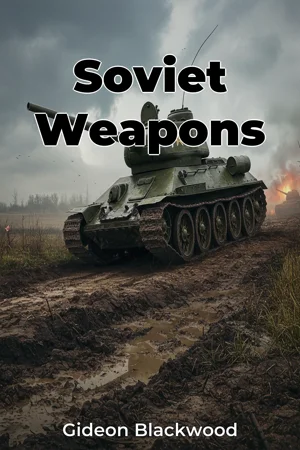
"Soviet Weapons" explores the Soviet Union's rise as a military superpower, detailing its unique approach to weapons development. It examines how the nation, born from revolution, managed to challenge the United States through innovative, if sometimes unconventional, military technology. The book highlights that Soviet designs weren't mere copies of Western systems but products of specific historical, ideological, and resource-driven contexts. For example, the T-34 tank, renowned for its mass production and effectiveness, showcases the Soviet prioritization of practicality over sophistication. The book investigates the Soviet military-industrial complex, emphasizing the interplay between technological innovation, ideological imperatives, and geopolitical strategy. It reveals how the Soviet Union often favored adaptability in its weapons systems, allowing it to maintain parity with the West despite perceived technological gaps. Readers will gain insights into the design philosophies, production histories, and combat deployments of various weapons, from tanks to nuclear arms. Beginning with an overview of the Soviet military-industrial complex from the Russian Civil War through the Stalinist era, the book progresses through detailed examinations of specific weapon systems categorized by type. It concludes with an analysis of the Soviet Union's lasting military technological legacy and its continued relevance in modern warfare, making it valuable for those interested in military history and Cold War history.
Book Details
ISBN
9788235296436
Publisher
Publifye AS
Your Licenses
You don't own any licenses for this book
Purchase a license below to unlock this book and download the EPUB.
Purchase License
Select a tier to unlock this book
Need bulk licensing?
Contact us for enterprise agreements.