
About This Book
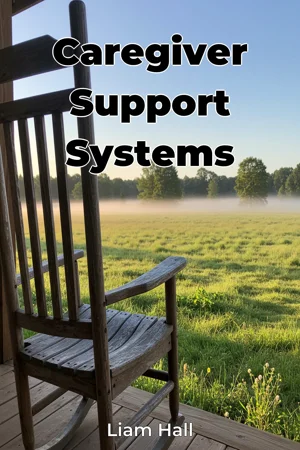
Are you one of the millions of unsung heroes providing care for a loved one? Navigating the complexities of caregiving demands more than just love and dedication; it requires a deep understanding of support systems, financial realities, and the very real threat of burnout. "Caregiver Support Systems" offers a comprehensive guide to address these challenges head-on, providing practical strategies and emotional support for those on the front lines of care. This book tackles three critical areas: funding models for care, burnout prevention strategies, and the intricacies of care coordination. These topics are vital because the long-term sustainability of caregiving depends on financial stability, the caregiver's well-being, and the ability to navigate the complex web of healthcare and social services. Without a firm grasp of these elements, caregivers risk exhaustion, financial strain, and compromised care for their loved ones. "Caregiver Support Systems" grounds its approach in a realistic understanding of the modern caregiving landscape. It acknowledges the increasing demands placed on families due to factors such as an aging population, rising healthcare costs, and evolving family structures. The book argues that effective caregiving requires a holistic approach that integrates financial planning, self-care practices, and collaborative teamwork among healthcare professionals, family members, and community resources. The central thesis is that a well-supported caregiver is the cornerstone of quality care for the recipient. The book unfolds in a structured manner, beginning with an exploration of existing funding models, including government programs, private insurance options, and innovative financing strategies. It delves into the nuances of eligibility requirements, application processes, and potential pitfalls, equipping readers with the knowledge to make informed financial decisions. The second major section focuses on burnout prevention. It identifies the key stressors that contribute to caregiver burnout and provides evidence-based strategies for managing stress, setting boundaries, and prioritizing self-care. Practical tools, such as mindfulness exercises, time management techniques, and communication strategies, are offered. The final section addresses the challenges of care coordination, emphasizing the importance of clear communication, shared decision-making, and effective advocacy. It explores strategies for navigating healthcare systems, building strong relationships with healthcare providers, and accessing community-based resources. The arguments presented are supported by a blend of research findings, case studies, and expert interviews. Data from national surveys on caregiving, analyses of healthcare policies, and insights from geriatric care managers are incorporated to provide a comprehensive and evidence-based perspective. "Caregiver Support Systems" draws connections to several related fields, including gerontology, healthcare administration, and social work. By integrating perspectives from these disciplines, the book offers a more nuanced understanding of the multifaceted challenges of caregiving. This book uniquely emphasizes the interconnectedness of financial stability, emotional well-being, and coordinated care. The goal is to empower caregivers with the knowledge and tools they need to thrive, not just survive. Written in a clear and accessible style, the book avoids jargon and technical language, making it suitable for a broad audience. It speaks directly to family caregivers, offering practical advice and emotional support. While primarily aimed at family caregivers, professionals working in healthcare, social services, and elder care will also find valuable insights and strategies. The scope of "Caregiver Support Systems" is intentionally broad, covering a wide range of issues relevant to caregivers across different demographics and caregiving situations. However, it does not delve into the specifics of managing specialized medical conditions. Instead, it focuses on the common challenges and universal needs shared by caregivers, regardless of the specific condition of their loved one. The information presented can be applied in countless ways. Caregivers can use the book to develop a personalized self-care plan, navigate the complexities of healthcare systems, and advocate for their loved one's needs. Financial planners can use the insights to better advise clients on long-term care planning. Healthcare professionals can use the book to improve their communication with caregivers and provide more effective support. "Caregiver Support Systems" acknowledges the ongoing debates surrounding long-term care policy and funding. It explores different perspectives on the role of government, families, and individuals in financing and providing care, encouraging readers to engage in informed discussions and advocate for policies that support caregivers.
Are you one of the millions of unsung heroes providing care for a loved one? Navigating the complexities of caregiving demands more than just love and dedication; it requires a deep understanding of support systems, financial realities, and the very real threat of burnout. "Caregiver Support Systems" offers a comprehensive guide to address these challenges head-on, providing practical strategies and emotional support for those on the front lines of care. This book tackles three critical areas: funding models for care, burnout prevention strategies, and the intricacies of care coordination. These topics are vital because the long-term sustainability of caregiving depends on financial stability, the caregiver's well-being, and the ability to navigate the complex web of healthcare and social services. Without a firm grasp of these elements, caregivers risk exhaustion, financial strain, and compromised care for their loved ones. "Caregiver Support Systems" grounds its approach in a realistic understanding of the modern caregiving landscape. It acknowledges the increasing demands placed on families due to factors such as an aging population, rising healthcare costs, and evolving family structures. The book argues that effective caregiving requires a holistic approach that integrates financial planning, self-care practices, and collaborative teamwork among healthcare professionals, family members, and community resources. The central thesis is that a well-supported caregiver is the cornerstone of quality care for the recipient. The book unfolds in a structured manner, beginning with an exploration of existing funding models, including government programs, private insurance options, and innovative financing strategies. It delves into the nuances of eligibility requirements, application processes, and potential pitfalls, equipping readers with the knowledge to make informed financial decisions. The second major section focuses on burnout prevention. It identifies the key stressors that contribute to caregiver burnout and provides evidence-based strategies for managing stress, setting boundaries, and prioritizing self-care. Practical tools, such as mindfulness exercises, time management techniques, and communication strategies, are offered. The final section addresses the challenges of care coordination, emphasizing the importance of clear communication, shared decision-making, and effective advocacy. It explores strategies for navigating healthcare systems, building strong relationships with healthcare providers, and accessing community-based resources. The arguments presented are supported by a blend of research findings, case studies, and expert interviews. Data from national surveys on caregiving, analyses of healthcare policies, and insights from geriatric care managers are incorporated to provide a comprehensive and evidence-based perspective. "Caregiver Support Systems" draws connections to several related fields, including gerontology, healthcare administration, and social work. By integrating perspectives from these disciplines, the book offers a more nuanced understanding of the multifaceted challenges of caregiving. This book uniquely emphasizes the interconnectedness of financial stability, emotional well-being, and coordinated care. The goal is to empower caregivers with the knowledge and tools they need to thrive, not just survive. Written in a clear and accessible style, the book avoids jargon and technical language, making it suitable for a broad audience. It speaks directly to family caregivers, offering practical advice and emotional support. While primarily aimed at family caregivers, professionals working in healthcare, social services, and elder care will also find valuable insights and strategies. The scope of "Caregiver Support Systems" is intentionally broad, covering a wide range of issues relevant to caregivers across different demographics and caregiving situations. However, it does not delve into the specifics of managing specialized medical conditions. Instead, it focuses on the common challenges and universal needs shared by caregivers, regardless of the specific condition of their loved one. The information presented can be applied in countless ways. Caregivers can use the book to develop a personalized self-care plan, navigate the complexities of healthcare systems, and advocate for their loved one's needs. Financial planners can use the insights to better advise clients on long-term care planning. Healthcare professionals can use the book to improve their communication with caregivers and provide more effective support. "Caregiver Support Systems" acknowledges the ongoing debates surrounding long-term care policy and funding. It explores different perspectives on the role of government, families, and individuals in financing and providing care, encouraging readers to engage in informed discussions and advocate for policies that support caregivers.
"Caregiver Support Systems" addresses the multifaceted challenges faced by those providing care for loved ones, emphasizing the critical need for support, financial understanding, and burnout prevention. This book uniquely integrates financial planning, self-care practices, and care coordination, recognizing that a well-supported caregiver is essential for quality care. Many caregivers grapple with financial strain and exhaustion; for example, understanding funding models like government programs can alleviate some of this burden, and implementing strategies for stress management can prevent burnout. The book progresses logically, starting with an exploration of funding models to ensure financial stability. It then delves into burnout prevention, offering practical tools like mindfulness exercises and communication strategies to prioritize self-care. Finally, it tackles care coordination, highlighting the importance of clear communication and effective advocacy within healthcare systems. By providing a holistic approach, "Caregiver Support Systems" empowers caregivers to navigate the complexities of elder care and family relationships, ensuring their well-being and the well-being of those they care for.
Book Details
ISBN
9788235296276
Publisher
Publifye AS
Your Licenses
You don't own any licenses for this book
Purchase a license below to unlock this book and download the EPUB.
Purchase License
Select a tier to unlock this book
Need bulk licensing?
Contact us for enterprise agreements.