
About This Book
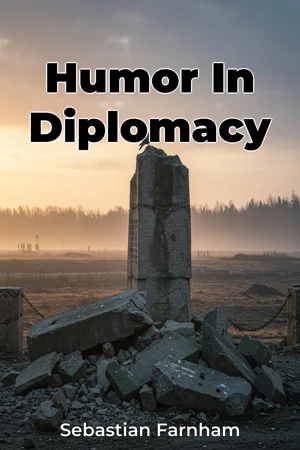
Can a well-timed joke defuse a tense international standoff? Humor in Diplomacy explores the surprising and often overlooked role of humor in international relations, demonstrating how wit, satire, and self-deprecation have been strategically employed to navigate complex negotiations, prevent escalations, and foster understanding between nations. This book delves into the historical and political significance of humor as a diplomatic tool, revealing its power to soften political tensions and bridge cultural divides. This book examines three key areas: the use of humor as a tool for de-escalation in conflict zones, its role in facilitating communication across cultural barriers, and its impact on shaping public perception of diplomatic figures and international relations. These topics are important because they offer a fresh perspective on how diplomacy actually functions, challenging traditional views that focus solely on power politics and formal agreements. Understanding the mechanics of humor in diplomacy provides valuable insights into the subtle but vital ways international relations are conducted. We will look at historical instances, analyzing specific cases from the 20th and 21st centuries. This includes examining speeches, negotiations, and public appearances of key diplomatic figures. The reader should ideally have a basic understanding of 20th and 21st-century history and political science. The central argument of Humor in Diplomacy is that humor is not merely a frivolous aside in international negotiations but a crucial and often undervalued instrument for building trust, diffusing tension, and achieving diplomatic breakthroughs. This argument challenges the conventional wisdom that diplomacy is always a serious and solemn affair, highlighting the importance of adaptability and emotional intelligence in effective statecraft. The book begins by introducing the core concepts of diplomatic humor, exploring its various forms and functions. It then develops its argument through a series of case studies, examining instances where humor has played a pivotal role in shaping international outcomes. Major sections will cover: (1) the use of humor to break deadlocks in negotiations, featuring examples from Cold War summits and contemporary trade talks; (2) the function of satire and parody in critiquing political regimes and policies; and (3) the role of self-deprecating humor in building rapport and humanizing leaders on the world stage. The culmination of the argument illustrates how a deeper understanding of humor can improve diplomatic training and strategies. Finally, the book offers practical applications for diplomats and policymakers, suggesting ways to incorporate humor effectively into their interactions and communications. The book will present evidence from primary sources, including diplomatic cables, transcripts of negotiations, memoirs of diplomats, and analyses of political cartoons and satirical media. We will also draw upon secondary research in political science, history, and communication studies. A unique aspect of the research involves analyzing archival audio and video recordings of diplomatic events to assess the impact of humor on audience reception and negotiation dynamics. This book connects to the fields of psychology, sociology, and communication studies. Psychology provides insights into how humor affects emotional responses and interpersonal connections. Sociology highlights how cultural norms shape the interpretation and reception of humor. Communication studies offer frameworks for analyzing the rhetorical and persuasive strategies employed in diplomatic humor. These connections enrich the book's analysis by providing a more nuanced understanding of the underlying mechanisms at play. Humor in Diplomacy offers an innovative perspective by examining the intersection of humor theory and diplomatic practice. It moves beyond anecdotal observations to provide a systematic analysis of how humor functions as a strategic tool in international relations. The tone of the book is scholarly yet accessible, blending rigorous analysis with engaging storytelling. The writing style aims to be clear, concise, and thought-provoking, making complex ideas understandable to a broad audience. The target audience includes students and scholars of political science, history, and international relations, as well as diplomats, policymakers, and anyone interested in gaining a deeper understanding of the dynamics of international affairs. The book would be valuable to them because it offers a fresh perspective on diplomacy, highlighting the importance of emotional intelligence and cultural sensitivity in effective statecraft. As a work of non-fiction, this book adheres to the standards of academic rigor, providing thorough documentation of sources and presenting well-supported arguments. The book covers a wide range of historical periods and geographical regions, but it focuses primarily on the diplomatic practices of major global powers. It acknowledges the limitations of generalizing across cultures and contexts, emphasizing the importance of cultural awareness and sensitivity in the use of humor. The information presented in the book can be applied in various real-world settings, including diplomatic training programs, cross-cultural communication workshops, and leadership development seminars. It offers practical guidance on how to use humor effectively to build relationships, diffuse tension, and achieve constructive outcomes in international interactions. The book addresses ongoing debates about the ethics of using humor in diplomacy, particularly in situations involving human rights or political oppression. It explores the potential risks of misinterpreting or trivializing serious issues, while also highlighting the value of humor as a tool for promoting dialogue and understanding.
Can a well-timed joke defuse a tense international standoff? Humor in Diplomacy explores the surprising and often overlooked role of humor in international relations, demonstrating how wit, satire, and self-deprecation have been strategically employed to navigate complex negotiations, prevent escalations, and foster understanding between nations. This book delves into the historical and political significance of humor as a diplomatic tool, revealing its power to soften political tensions and bridge cultural divides. This book examines three key areas: the use of humor as a tool for de-escalation in conflict zones, its role in facilitating communication across cultural barriers, and its impact on shaping public perception of diplomatic figures and international relations. These topics are important because they offer a fresh perspective on how diplomacy actually functions, challenging traditional views that focus solely on power politics and formal agreements. Understanding the mechanics of humor in diplomacy provides valuable insights into the subtle but vital ways international relations are conducted. We will look at historical instances, analyzing specific cases from the 20th and 21st centuries. This includes examining speeches, negotiations, and public appearances of key diplomatic figures. The reader should ideally have a basic understanding of 20th and 21st-century history and political science. The central argument of Humor in Diplomacy is that humor is not merely a frivolous aside in international negotiations but a crucial and often undervalued instrument for building trust, diffusing tension, and achieving diplomatic breakthroughs. This argument challenges the conventional wisdom that diplomacy is always a serious and solemn affair, highlighting the importance of adaptability and emotional intelligence in effective statecraft. The book begins by introducing the core concepts of diplomatic humor, exploring its various forms and functions. It then develops its argument through a series of case studies, examining instances where humor has played a pivotal role in shaping international outcomes. Major sections will cover: (1) the use of humor to break deadlocks in negotiations, featuring examples from Cold War summits and contemporary trade talks; (2) the function of satire and parody in critiquing political regimes and policies; and (3) the role of self-deprecating humor in building rapport and humanizing leaders on the world stage. The culmination of the argument illustrates how a deeper understanding of humor can improve diplomatic training and strategies. Finally, the book offers practical applications for diplomats and policymakers, suggesting ways to incorporate humor effectively into their interactions and communications. The book will present evidence from primary sources, including diplomatic cables, transcripts of negotiations, memoirs of diplomats, and analyses of political cartoons and satirical media. We will also draw upon secondary research in political science, history, and communication studies. A unique aspect of the research involves analyzing archival audio and video recordings of diplomatic events to assess the impact of humor on audience reception and negotiation dynamics. This book connects to the fields of psychology, sociology, and communication studies. Psychology provides insights into how humor affects emotional responses and interpersonal connections. Sociology highlights how cultural norms shape the interpretation and reception of humor. Communication studies offer frameworks for analyzing the rhetorical and persuasive strategies employed in diplomatic humor. These connections enrich the book's analysis by providing a more nuanced understanding of the underlying mechanisms at play. Humor in Diplomacy offers an innovative perspective by examining the intersection of humor theory and diplomatic practice. It moves beyond anecdotal observations to provide a systematic analysis of how humor functions as a strategic tool in international relations. The tone of the book is scholarly yet accessible, blending rigorous analysis with engaging storytelling. The writing style aims to be clear, concise, and thought-provoking, making complex ideas understandable to a broad audience. The target audience includes students and scholars of political science, history, and international relations, as well as diplomats, policymakers, and anyone interested in gaining a deeper understanding of the dynamics of international affairs. The book would be valuable to them because it offers a fresh perspective on diplomacy, highlighting the importance of emotional intelligence and cultural sensitivity in effective statecraft. As a work of non-fiction, this book adheres to the standards of academic rigor, providing thorough documentation of sources and presenting well-supported arguments. The book covers a wide range of historical periods and geographical regions, but it focuses primarily on the diplomatic practices of major global powers. It acknowledges the limitations of generalizing across cultures and contexts, emphasizing the importance of cultural awareness and sensitivity in the use of humor. The information presented in the book can be applied in various real-world settings, including diplomatic training programs, cross-cultural communication workshops, and leadership development seminars. It offers practical guidance on how to use humor effectively to build relationships, diffuse tension, and achieve constructive outcomes in international interactions. The book addresses ongoing debates about the ethics of using humor in diplomacy, particularly in situations involving human rights or political oppression. It explores the potential risks of misinterpreting or trivializing serious issues, while also highlighting the value of humor as a tool for promoting dialogue and understanding.
"Humor in Diplomacy" explores the underappreciated role of humor in international relations, arguing that wit and self-deprecation are not mere asides, but strategic tools. It examines how humor can de-escalate conflicts, facilitate cross-cultural communication, and shape public perceptions of diplomats. The book challenges the traditional view of diplomacy as solely serious and solemn, highlighting the importance of adaptability and emotional intelligence. For example, a well-placed joke can sometimes achieve what formal negotiations cannot. The book progresses through case studies, analyzing historical instances where humor played a pivotal role. Major sections cover how humor breaks deadlocks in negotiations, the function of satire in critiquing political regimes, and the impact of self-deprecating humor in humanizing leaders. By analyzing speeches, negotiations, and political cartoons, the book demonstrates how humor fosters trust and diffuses tension. Ultimately, "Humor in Diplomacy" offers a fresh perspective for students, scholars, diplomats, and policymakers, illustrating how a deeper understanding of humor can improve diplomatic strategies and training.
Book Details
ISBN
9788235296191
Publisher
Publifye AS
Your Licenses
You don't own any licenses for this book
Purchase a license below to unlock this book and download the EPUB.
Purchase License
Select a tier to unlock this book
Need bulk licensing?
Contact us for enterprise agreements.