
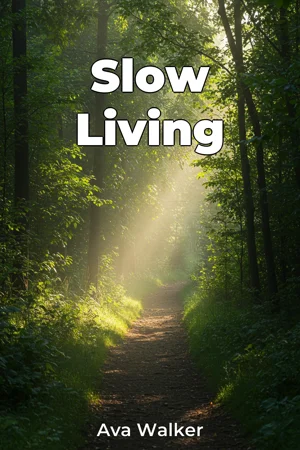
About This Book
Are you feeling overwhelmed by the relentless pace of modern life, yearning for a life of greater intention and purpose? "Slow Living" offers a practical guide to reclaiming your time and attention, fostering personal well-being, and cultivating meaningful experiences in a world increasingly defined by speed and distraction. This book explores the core principles of slow living, its historical roots, and its relevance to contemporary challenges, providing a roadmap for readers to design a more mindful and fulfilling life. The book's central argument is that by intentionally slowing down and prioritizing quality over quantity, individuals can significantly improve their mental and physical health, strengthen their relationships, and discover deeper satisfaction in their daily routines. This argument is particularly vital in today's society, where constant connectivity and the pressure to achieve more often lead to burnout, anxiety, and a diminished sense of purpose. "Slow Living" begins by defining slow living as a philosophy and practice that emphasizes conscious engagement with one's environment, relationships, and activities. We trace the origins of the slow movement, exploring its emergence as a counter-response to the acceleration of modern life and its influences from various fields, including environmentalism, mindfulness, and the arts. The book then delves into key areas where slow living can be applied, including work, relationships, consumption, and personal growth. Each section includes practical strategies, exercises, and real-life examples to help readers integrate slow living principles into their own lives. For instance, we examine how to cultivate mindful work habits, build deeper connections with loved ones, consume more consciously and sustainably, and develop self-care routines that nourish both body and mind. A dedicated chapter explores the art of mindful technology use, offering strategies for minimizing distractions and maximizing the benefits of digital tools while maintaining a healthy balance. The discussion includes the presentation of research derived from studies in psychology, sociology, and environmental science. This information provides the justification for the benefits of slow living practices, such as reduced stress levels, improved mental clarity, and increased feelings of connectedness. We also draw from historical examples of communities and individuals who have embraced slow living principles, showcasing diverse approaches and adaptations. "Slow Living" connects to other disciplines such as mindfulness-based stress reduction (MBSR), positive psychology, and ecological economics. The book offers a unique perspective by integrating these diverse strands into a holistic framework for intentional living. The writing style is accessible and conversational, making complex concepts easy to understand. The tone is encouraging and supportive, guiding readers toward personal growth without judgment or pressure. The target audience includes anyone feeling overwhelmed by the demands of modern life, those seeking greater purpose and fulfillment, and individuals interested in mindfulness, sustainability, and personal well-being. This book will be valuable to them by providing a practical and inspiring guide to creating a more intentional and meaningful life. "Slow Living" acknowledges its limits by focusing primarily on individual practices and choices, while recognizing the importance of systemic change. The goal is to empower readers to take control of their own lives and create positive change from the inside out. The book provides a framework for readers to assess their current lifestyle, identify areas for improvement, and develop a personalized plan for slow living. Ultimately, "Slow Living" offers a path toward a more balanced, fulfilling, and sustainable way of life, inviting readers to embrace the present moment and cultivate a deeper sense of well-being.
Are you feeling overwhelmed by the relentless pace of modern life, yearning for a life of greater intention and purpose? "Slow Living" offers a practical guide to reclaiming your time and attention, fostering personal well-being, and cultivating meaningful experiences in a world increasingly defined by speed and distraction. This book explores the core principles of slow living, its historical roots, and its relevance to contemporary challenges, providing a roadmap for readers to design a more mindful and fulfilling life. The book's central argument is that by intentionally slowing down and prioritizing quality over quantity, individuals can significantly improve their mental and physical health, strengthen their relationships, and discover deeper satisfaction in their daily routines. This argument is particularly vital in today's society, where constant connectivity and the pressure to achieve more often lead to burnout, anxiety, and a diminished sense of purpose. "Slow Living" begins by defining slow living as a philosophy and practice that emphasizes conscious engagement with one's environment, relationships, and activities. We trace the origins of the slow movement, exploring its emergence as a counter-response to the acceleration of modern life and its influences from various fields, including environmentalism, mindfulness, and the arts. The book then delves into key areas where slow living can be applied, including work, relationships, consumption, and personal growth. Each section includes practical strategies, exercises, and real-life examples to help readers integrate slow living principles into their own lives. For instance, we examine how to cultivate mindful work habits, build deeper connections with loved ones, consume more consciously and sustainably, and develop self-care routines that nourish both body and mind. A dedicated chapter explores the art of mindful technology use, offering strategies for minimizing distractions and maximizing the benefits of digital tools while maintaining a healthy balance. The discussion includes the presentation of research derived from studies in psychology, sociology, and environmental science. This information provides the justification for the benefits of slow living practices, such as reduced stress levels, improved mental clarity, and increased feelings of connectedness. We also draw from historical examples of communities and individuals who have embraced slow living principles, showcasing diverse approaches and adaptations. "Slow Living" connects to other disciplines such as mindfulness-based stress reduction (MBSR), positive psychology, and ecological economics. The book offers a unique perspective by integrating these diverse strands into a holistic framework for intentional living. The writing style is accessible and conversational, making complex concepts easy to understand. The tone is encouraging and supportive, guiding readers toward personal growth without judgment or pressure. The target audience includes anyone feeling overwhelmed by the demands of modern life, those seeking greater purpose and fulfillment, and individuals interested in mindfulness, sustainability, and personal well-being. This book will be valuable to them by providing a practical and inspiring guide to creating a more intentional and meaningful life. "Slow Living" acknowledges its limits by focusing primarily on individual practices and choices, while recognizing the importance of systemic change. The goal is to empower readers to take control of their own lives and create positive change from the inside out. The book provides a framework for readers to assess their current lifestyle, identify areas for improvement, and develop a personalized plan for slow living. Ultimately, "Slow Living" offers a path toward a more balanced, fulfilling, and sustainable way of life, inviting readers to embrace the present moment and cultivate a deeper sense of well-being.
"Slow Living" addresses the pervasive feeling of being overwhelmed in today's fast-paced world, offering a guide to intentional living and enhanced well-being. It emphasizes prioritizing quality over quantity to improve mental and physical health. The book explores how adopting slow living principles can lead to reduced stress and a greater sense of purpose, arguing that mindful engagement with our environment and relationships is key to a more fulfilling life. Interestingly, the slow movement has roots in environmentalism, mindfulness, and the arts. The book progresses through key areas like work, relationships, and consumption, providing practical strategies for integrating slow living into daily routines. For example, it delves into conscious consumption and mindful technology use, offering ways to minimize distractions and maximize benefits from digital tools. By drawing on research from psychology and sociology, "Slow Living" presents a holistic framework for personal growth, encouraging readers to cultivate a balanced and sustainable lifestyle.
Book Details
ISBN
9788235295972
Publisher
Publifye AS
Your Licenses
You don't own any licenses for this book
Purchase a license below to unlock this book and download the EPUB.
Purchase License
Select a tier to unlock this book
Need bulk licensing?
Contact us for enterprise agreements.