
About This Book
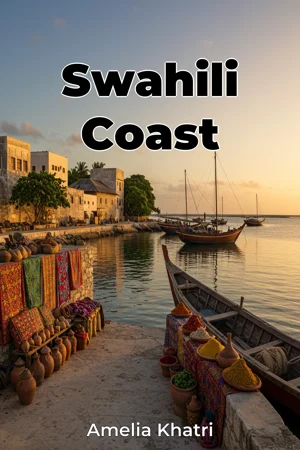
What if the history we know is only a fraction of the story? "Swahili Coast" unveils the vibrant and complex history of a region whose influence extended far beyond its shores, challenging conventional narratives of African and global history. This book explores the Swahili Coast not merely as a geographical location, but as a dynamic hub shaped by trade, the transformative impact of Islam, and the profound effects of international cultural exchange. These elements culminated in a unique societal development that demands deeper understanding. This book delves into three core themes. First, it examines the intricate network of trade that connected the Swahili Coast to the Indian Ocean world, from the earliest exchanges of goods to the rise of sophisticated mercantile systems. Second, it traces the arrival and integration of Islam, demonstrating its influence on Swahili language, law, architecture, and social structures. Third, it analyzes the reciprocal cultural exchanges between the Swahili people and diverse populations, including those from the Arabian Peninsula, Persia, India, and even China, highlighting the synthesis of ideas and practices that defined Swahili identity. Understanding the Swahili Coast requires familiarity with basic concepts of maritime history, pre-colonial African societies, and the spread of Islam. However, this book offers an accessible overview of these topics, building upon foundational knowledge to explore specialized areas. The central argument of "Swahili Coast" is that the region represents a distinctive case study in global interconnectedness, challenging Eurocentric perspectives that often marginalize or overlook African contributions to world history. It argues that the Swahili Coast was not simply a recipient of external influences, but an active participant in shaping its own destiny and influencing broader historical trends. The book begins by establishing the geographical and historical context of the Swahili Coast, outlining its ecological diversity and tracing its early settlement patterns. From there, it examines the growth of trade networks, analyzing the commodities exchanged (gold, ivory, slaves, textiles, spices) and the social structures that facilitated this commerce. A significant portion of the book is dedicated to the arrival and evolution of Islam, exploring its impact on Swahili urban centers, political organization, and intellectual life. Finally, the book investigates the complex interplay of cultures along the coast, highlighting the synthesis of African, Arab, Persian, and Indian influences evident in Swahili language, art, architecture, and cuisine. The book concludes by examining the legacy of the Swahili Coast in the modern era, considering its influence on contemporary East Africa and its relevance to ongoing debates about globalization and cultural identity. The arguments presented are supported by a wide range of evidence, including archaeological findings from sites such as Kilwa Kisiwani and Gedi, historical accounts from Arab and European travelers, linguistic analysis of the Swahili language, and ethnographic studies of contemporary Swahili communities. The book also draws upon previously untranslated primary source materials. This book connects to several other fields, including anthropology (through its focus on cultural exchange), economics (through its analysis of trade networks), and political science (through its examination of state formation and governance). These interdisciplinary connections enrich our understanding of the Swahili Coast and its significance in world history. "Swahili Coast" provides a nuanced, balanced perspective on the history of the Swahili Coast, moving beyond simplistic narratives of cultural dominance or decline. Written in a clear and engaging style, "Swahili Coast" is intended for students, researchers, and anyone interested in African history, world history, or the history of maritime trade. It offers a valuable resource for understanding a region that played a pivotal role in shaping global interactions. The book covers a broad span of history, from the early centuries of the Common Era to the present day, but focuses primarily on the period between the 8th and 19th centuries. While it aims to provide a comprehensive overview, it does not delve into every aspect of Swahili culture or society. The insights gained from this book can be applied to understanding contemporary issues of globalization, cultural exchange, and identity formation. The Swahili Coast serves as a powerful example of how diverse cultures can interact and create something new and vibrant. The book will also address some scholarly debates on the nature of Swahili identity and the extent of external influence.
What if the history we know is only a fraction of the story? "Swahili Coast" unveils the vibrant and complex history of a region whose influence extended far beyond its shores, challenging conventional narratives of African and global history. This book explores the Swahili Coast not merely as a geographical location, but as a dynamic hub shaped by trade, the transformative impact of Islam, and the profound effects of international cultural exchange. These elements culminated in a unique societal development that demands deeper understanding. This book delves into three core themes. First, it examines the intricate network of trade that connected the Swahili Coast to the Indian Ocean world, from the earliest exchanges of goods to the rise of sophisticated mercantile systems. Second, it traces the arrival and integration of Islam, demonstrating its influence on Swahili language, law, architecture, and social structures. Third, it analyzes the reciprocal cultural exchanges between the Swahili people and diverse populations, including those from the Arabian Peninsula, Persia, India, and even China, highlighting the synthesis of ideas and practices that defined Swahili identity. Understanding the Swahili Coast requires familiarity with basic concepts of maritime history, pre-colonial African societies, and the spread of Islam. However, this book offers an accessible overview of these topics, building upon foundational knowledge to explore specialized areas. The central argument of "Swahili Coast" is that the region represents a distinctive case study in global interconnectedness, challenging Eurocentric perspectives that often marginalize or overlook African contributions to world history. It argues that the Swahili Coast was not simply a recipient of external influences, but an active participant in shaping its own destiny and influencing broader historical trends. The book begins by establishing the geographical and historical context of the Swahili Coast, outlining its ecological diversity and tracing its early settlement patterns. From there, it examines the growth of trade networks, analyzing the commodities exchanged (gold, ivory, slaves, textiles, spices) and the social structures that facilitated this commerce. A significant portion of the book is dedicated to the arrival and evolution of Islam, exploring its impact on Swahili urban centers, political organization, and intellectual life. Finally, the book investigates the complex interplay of cultures along the coast, highlighting the synthesis of African, Arab, Persian, and Indian influences evident in Swahili language, art, architecture, and cuisine. The book concludes by examining the legacy of the Swahili Coast in the modern era, considering its influence on contemporary East Africa and its relevance to ongoing debates about globalization and cultural identity. The arguments presented are supported by a wide range of evidence, including archaeological findings from sites such as Kilwa Kisiwani and Gedi, historical accounts from Arab and European travelers, linguistic analysis of the Swahili language, and ethnographic studies of contemporary Swahili communities. The book also draws upon previously untranslated primary source materials. This book connects to several other fields, including anthropology (through its focus on cultural exchange), economics (through its analysis of trade networks), and political science (through its examination of state formation and governance). These interdisciplinary connections enrich our understanding of the Swahili Coast and its significance in world history. "Swahili Coast" provides a nuanced, balanced perspective on the history of the Swahili Coast, moving beyond simplistic narratives of cultural dominance or decline. Written in a clear and engaging style, "Swahili Coast" is intended for students, researchers, and anyone interested in African history, world history, or the history of maritime trade. It offers a valuable resource for understanding a region that played a pivotal role in shaping global interactions. The book covers a broad span of history, from the early centuries of the Common Era to the present day, but focuses primarily on the period between the 8th and 19th centuries. While it aims to provide a comprehensive overview, it does not delve into every aspect of Swahili culture or society. The insights gained from this book can be applied to understanding contemporary issues of globalization, cultural exchange, and identity formation. The Swahili Coast serves as a powerful example of how diverse cultures can interact and create something new and vibrant. The book will also address some scholarly debates on the nature of Swahili identity and the extent of external influence.
The Swahili Coast, a vibrant region of East Africa, played a pivotal role in shaping global history through maritime trade, the spread of Islam, and dynamic cultural exchange. More than just a geographical location, the Swahili Coast functioned as a crucial hub connecting Africa to the Indian Ocean world. "Swahili Coast" explores how pre-colonial Africa actively participated in globalization, challenging Eurocentric views that often overlook African contributions. The book argues that Swahili society was not merely a recipient of external influences but an active participant in shaping its own destiny. The book examines the growth of trade networks and the impact of Islam on Swahili language, law, and architecture. Intriguingly, the Swahili language itself reflects a blend of African and Arabic influences, showcasing the synthesis of cultures. The book also investigates the reciprocal cultural exchanges between the Swahili people and diverse populations, including those from the Arabian Peninsula, Persia, India, and even China, highlighting the synthesis of ideas and practices that defined Swahili identity. Beginning with the region's geographical and historical context, the book progresses through the growth of trade networks, the evolution of Islam, and the complex interplay of cultures. By drawing on archaeological findings, historical accounts, and linguistic analysis, "Swahili Coast" offers a nuanced perspective on the history of this influential region and its relevance to modern debates about cultural identity.
Book Details
ISBN
9788235295873
Publisher
Publifye AS
Your Licenses
You don't own any licenses for this book
Purchase a license below to unlock this book and download the EPUB.
Purchase License
Select a tier to unlock this book
Need bulk licensing?
Contact us for enterprise agreements.