
About This Book
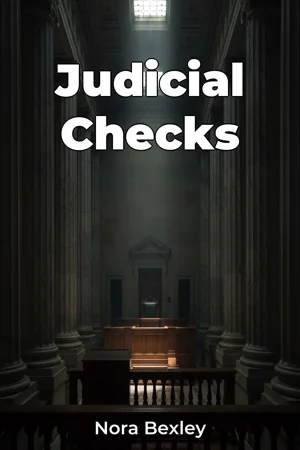
Can the judiciary truly serve as a bulwark against potential governmental overreach, while simultaneously safeguarding individual liberties? "Judicial Checks" explores the multifaceted role of courts in reviewing administrative actions, protecting constitutional rights, and shaping the boundaries of governmental power through legal interpretation. This book delves into the ways legal institutions function as critical checks on both legislative and executive branches, offering an in-depth analysis of how judicial review operates in practice. The core of "Judicial Checks" examines two key areas: first, the methods by which courts evaluate the legality and constitutionality of administrative actions, from rulemaking to enforcement decisions. Second, it assesses the judiciary’s role in defending fundamental rights enshrined in national constitutions, particularly when these rights are challenged by governmental policies or actions. Understanding these mechanisms is important for anyone concerned with maintaining a transparent and accountable government that respects the rule of law. To fully appreciate the modern role of judicial review, the book initially provides a historical context, tracing the evolution of judicial power from its origins in common law systems to its present form. It explains the development of key legal doctrines, such as standing, ripeness, and mootness, which determine when and how courts can intervene in disputes involving governmental action. A background in basic legal principles and constitutional law will be beneficial for readers. The central argument of "Judicial Checks" is that the effectiveness of judicial review as a check on government power depends not only on the formal legal doctrines but also on the judiciary’s institutional capacity, its independence from political influence, and its willingness to engage with complex policy issues. The book argues that a vigilant and informed judiciary is essential for preserving a balance of power and protecting the rights of individuals and minority groups. The book is structured in three parts. The first part introduces the theoretical foundations of judicial review, exploring different models of judicial decision-making and the role of courts in a democratic society. The second part examines specific areas of law where judicial review plays a significant role, such as environmental regulation, immigration, and national security. These case studies illustrate the practical challenges and trade-offs involved in balancing governmental authority with individual rights. The third section analyzes the implications of judicial review for democratic governance, considering both its strengths and limitations as a tool for accountability. It culminates with an assessment of how judicial checks can be enhanced to better serve the interests of justice and promote a more equitable society. Evidence is drawn from a diverse range of sources, including judicial opinions, legal scholarship, empirical studies of judicial behavior, and comparative analyses of judicial systems in different countries. The book incorporates original data on judicial decision-making in administrative law cases, providing new insights into the factors that influence judicial outcomes. "Judicial Checks" connects to several other fields, including political science, public administration, and sociology. It explores the political dynamics of judicial appointments, the organizational structure of administrative agencies, and the social and cultural factors that shape legal norms. This interdisciplinary approach enriches the analysis and provides a more comprehensive understanding of the judiciary’s role in society. This book distinguishes itself through its pragmatic approach to judicial review, moving beyond abstract legal theory to examine the real-world consequences of judicial decisions. It offers a fresh perspective on how courts can effectively check government power while remaining accountable to democratic values. Written in an academic style, the book is intended for scholars, students, and policymakers interested in law, politics, and public policy. It offers valuable insights for anyone seeking to understand the role of courts in shaping the relationship between the individual and the state. The book’s scope is limited to the study of judicial review in established democracies, primarily focusing on the United States, Canada, and Western Europe. While it acknowledges the importance of judicial review in other contexts, it does not attempt to provide a comprehensive global overview. The information presented has real-world applications for lawyers, judges, government officials, and citizens interested in promoting good governance and protecting fundamental rights. It provides a framework for analyzing judicial decisions, advocating for legal reforms, and holding government accountable. The book addresses several ongoing debates in the field, including the role of judicial activism, the proper scope of judicial deference to administrative agencies, and the impact of political polarization on judicial decision-making. By engaging with these controversies, "Judicial Checks" offers a nuanced and balanced assessment of the judiciary’s role in contemporary society.
Can the judiciary truly serve as a bulwark against potential governmental overreach, while simultaneously safeguarding individual liberties? "Judicial Checks" explores the multifaceted role of courts in reviewing administrative actions, protecting constitutional rights, and shaping the boundaries of governmental power through legal interpretation. This book delves into the ways legal institutions function as critical checks on both legislative and executive branches, offering an in-depth analysis of how judicial review operates in practice. The core of "Judicial Checks" examines two key areas: first, the methods by which courts evaluate the legality and constitutionality of administrative actions, from rulemaking to enforcement decisions. Second, it assesses the judiciary’s role in defending fundamental rights enshrined in national constitutions, particularly when these rights are challenged by governmental policies or actions. Understanding these mechanisms is important for anyone concerned with maintaining a transparent and accountable government that respects the rule of law. To fully appreciate the modern role of judicial review, the book initially provides a historical context, tracing the evolution of judicial power from its origins in common law systems to its present form. It explains the development of key legal doctrines, such as standing, ripeness, and mootness, which determine when and how courts can intervene in disputes involving governmental action. A background in basic legal principles and constitutional law will be beneficial for readers. The central argument of "Judicial Checks" is that the effectiveness of judicial review as a check on government power depends not only on the formal legal doctrines but also on the judiciary’s institutional capacity, its independence from political influence, and its willingness to engage with complex policy issues. The book argues that a vigilant and informed judiciary is essential for preserving a balance of power and protecting the rights of individuals and minority groups. The book is structured in three parts. The first part introduces the theoretical foundations of judicial review, exploring different models of judicial decision-making and the role of courts in a democratic society. The second part examines specific areas of law where judicial review plays a significant role, such as environmental regulation, immigration, and national security. These case studies illustrate the practical challenges and trade-offs involved in balancing governmental authority with individual rights. The third section analyzes the implications of judicial review for democratic governance, considering both its strengths and limitations as a tool for accountability. It culminates with an assessment of how judicial checks can be enhanced to better serve the interests of justice and promote a more equitable society. Evidence is drawn from a diverse range of sources, including judicial opinions, legal scholarship, empirical studies of judicial behavior, and comparative analyses of judicial systems in different countries. The book incorporates original data on judicial decision-making in administrative law cases, providing new insights into the factors that influence judicial outcomes. "Judicial Checks" connects to several other fields, including political science, public administration, and sociology. It explores the political dynamics of judicial appointments, the organizational structure of administrative agencies, and the social and cultural factors that shape legal norms. This interdisciplinary approach enriches the analysis and provides a more comprehensive understanding of the judiciary’s role in society. This book distinguishes itself through its pragmatic approach to judicial review, moving beyond abstract legal theory to examine the real-world consequences of judicial decisions. It offers a fresh perspective on how courts can effectively check government power while remaining accountable to democratic values. Written in an academic style, the book is intended for scholars, students, and policymakers interested in law, politics, and public policy. It offers valuable insights for anyone seeking to understand the role of courts in shaping the relationship between the individual and the state. The book’s scope is limited to the study of judicial review in established democracies, primarily focusing on the United States, Canada, and Western Europe. While it acknowledges the importance of judicial review in other contexts, it does not attempt to provide a comprehensive global overview. The information presented has real-world applications for lawyers, judges, government officials, and citizens interested in promoting good governance and protecting fundamental rights. It provides a framework for analyzing judicial decisions, advocating for legal reforms, and holding government accountable. The book addresses several ongoing debates in the field, including the role of judicial activism, the proper scope of judicial deference to administrative agencies, and the impact of political polarization on judicial decision-making. By engaging with these controversies, "Judicial Checks" offers a nuanced and balanced assessment of the judiciary’s role in contemporary society.
"Judicial Checks" explores how courts act as vital checks on government power, particularly regarding administrative actions and constitutional rights. The book examines how courts evaluate the legality of administrative actions and defend fundamental rights against governmental policies. It argues that the effectiveness of judicial review depends on the judiciary's independence and willingness to engage with complex policy issues. Understanding these mechanisms is important for maintaining a transparent and accountable government, and the book distinguishes itself by moving beyond abstract legal theory to examine the real-world consequences of judicial decisions. The book begins by providing a historical context, tracing the evolution of judicial power and explaining key legal doctrines. It then examines specific areas of law, such as environmental regulation and immigration, to illustrate the practical challenges involved in balancing governmental authority with individual rights. In doing so, the book draws evidence from judicial opinions, legal scholarship, and comparative analyses of judicial systems in different countries, providing new insights into the factors that influence judicial outcomes. The book concludes by analyzing the implications of judicial review for democratic governance, considering both its strengths and limitations as a tool for accountability.
Book Details
ISBN
9788235295828
Publisher
Publifye AS
Your Licenses
You don't own any licenses for this book
Purchase a license below to unlock this book and download the EPUB.
Purchase License
Select a tier to unlock this book
Need bulk licensing?
Contact us for enterprise agreements.