
About This Book
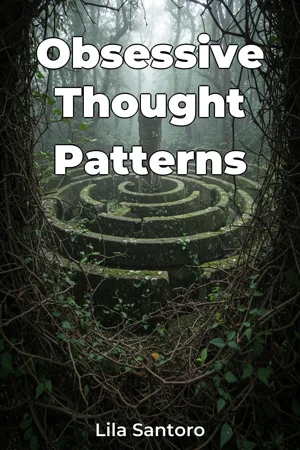
Do intrusive thoughts plague your mind, creating a cycle of worry and distress that seems impossible to break? "Obsessive Thought Patterns" offers a comprehensive exploration of obsessive thinking, delving into its psychological underpinnings and providing evidence-based therapeutic approaches to manage these persistent, unwanted thoughts. We aim to empower you with the knowledge and tools necessary to understand and navigate the complexities of your own mind. This book addresses two key areas. First, it dissects the psychological basis of obsessive thinking, examining the cognitive and neurological processes that contribute to intrusive thoughts and compulsive behaviors. Second, it provides a detailed overview of various therapeutic interventions, from cognitive behavioral therapy (CBT) to mindfulness-based techniques, offering a practical guide to reclaiming control over your thought processes. These topics are crucial because obsessive thinking can significantly impair daily functioning, impacting relationships, work, and overall well-being. We will explore the historical context of understanding obsessions, tracing the evolution of diagnostic criteria and treatment approaches from early psychoanalytic theories to modern cognitive science. No prior knowledge of psychology is required; the book is written for a general audience, with clear explanations of complex concepts. The central argument of "Obsessive Thought Patterns" is that while intrusive thoughts are a common human experience, it is the *reaction* to these thoughts – the attempts to suppress, neutralize, or avoid them – that often perpetuates the cycle of obsession. By understanding these reactions and learning alternative coping strategies, individuals can significantly reduce the frequency and intensity of obsessive thoughts. The book is structured to provide a clear and progressive understanding of obsessive thinking. It begins with an introduction to the core concepts, defining obsessions and compulsions, and differentiating them from normal thought processes. Subsequent chapters delve into: (1) the cognitive models of obsessive-compulsive disorder (OCD), exploring the roles of thought-action fusion, responsibility beliefs, and intolerance of uncertainty; (2) the neurological correlates of OCD, examining the involvement of specific brain regions and neurotransmitter systems; (3) a detailed overview of CBT techniques for OCD, including exposure and response prevention (ERP) and cognitive restructuring; and (4) mindfulness and acceptance-based approaches to managing intrusive thoughts, emphasizing non-judgmental awareness and acceptance. The book culminates with practical strategies for implementing these techniques in daily life and maintaining long-term symptom management. The arguments presented are supported by a wealth of empirical research, including randomized controlled trials of CBT and neuroimaging studies of brain function in individuals with OCD. We draw on data from leading research institutions and clinical trials to provide a balanced and evidence-based perspective. "Obsessive Thought Patterns" also connects to related fields such as neuroscience, philosophy (particularly epistemology and the nature of belief), and general mental health. This interdisciplinary approach provides a more holistic understanding of obsessive thinking and its impact on human experience. Our unique approach lies in its integration of cognitive behavioral techniques with mindfulness-based strategies, offering a flexible and personalized approach to managing obsessive thoughts. This combines active thought challenging and behavior modification with acceptance and mindful awareness. The tone is informative and supportive, aiming to empower readers with knowledge and practical tools. The writing style is accessible and engaging, avoiding technical jargon and using real-life examples to illustrate key concepts. The target audience includes individuals who experience obsessive thoughts, their families and friends, and mental health professionals seeking a comprehensive overview of current research and treatment approaches. This book is valuable to anyone seeking to understand and manage obsessive thinking, providing a roadmap for recovery and improved mental well-being. As a self-help psychology book, it meets the genre's expectation of providing actionable strategies and practical advice. While the book provides a broad overview of obsessive thinking and related disorders, it is not intended to be a substitute for professional mental health treatment. Its scope is limited to providing information and self-help strategies; it does not offer personalized diagnoses or treatment plans. The information within can be applied in everyday life through the implementation of CBT and mindfulness techniques. Readers can learn to identify and challenge their negative thought patterns, practice exposure exercises to reduce anxiety, and cultivate a greater sense of self-awareness and acceptance. While the efficacy of CBT for OCD is well-established, debates continue regarding the optimal duration and intensity of treatment, as well as the use of medication in conjunction with therapy. We will address these controversies in a balanced and informed manner, presenting different perspectives and highlighting areas of ongoing research.
Do intrusive thoughts plague your mind, creating a cycle of worry and distress that seems impossible to break? "Obsessive Thought Patterns" offers a comprehensive exploration of obsessive thinking, delving into its psychological underpinnings and providing evidence-based therapeutic approaches to manage these persistent, unwanted thoughts. We aim to empower you with the knowledge and tools necessary to understand and navigate the complexities of your own mind. This book addresses two key areas. First, it dissects the psychological basis of obsessive thinking, examining the cognitive and neurological processes that contribute to intrusive thoughts and compulsive behaviors. Second, it provides a detailed overview of various therapeutic interventions, from cognitive behavioral therapy (CBT) to mindfulness-based techniques, offering a practical guide to reclaiming control over your thought processes. These topics are crucial because obsessive thinking can significantly impair daily functioning, impacting relationships, work, and overall well-being. We will explore the historical context of understanding obsessions, tracing the evolution of diagnostic criteria and treatment approaches from early psychoanalytic theories to modern cognitive science. No prior knowledge of psychology is required; the book is written for a general audience, with clear explanations of complex concepts. The central argument of "Obsessive Thought Patterns" is that while intrusive thoughts are a common human experience, it is the *reaction* to these thoughts – the attempts to suppress, neutralize, or avoid them – that often perpetuates the cycle of obsession. By understanding these reactions and learning alternative coping strategies, individuals can significantly reduce the frequency and intensity of obsessive thoughts. The book is structured to provide a clear and progressive understanding of obsessive thinking. It begins with an introduction to the core concepts, defining obsessions and compulsions, and differentiating them from normal thought processes. Subsequent chapters delve into: (1) the cognitive models of obsessive-compulsive disorder (OCD), exploring the roles of thought-action fusion, responsibility beliefs, and intolerance of uncertainty; (2) the neurological correlates of OCD, examining the involvement of specific brain regions and neurotransmitter systems; (3) a detailed overview of CBT techniques for OCD, including exposure and response prevention (ERP) and cognitive restructuring; and (4) mindfulness and acceptance-based approaches to managing intrusive thoughts, emphasizing non-judgmental awareness and acceptance. The book culminates with practical strategies for implementing these techniques in daily life and maintaining long-term symptom management. The arguments presented are supported by a wealth of empirical research, including randomized controlled trials of CBT and neuroimaging studies of brain function in individuals with OCD. We draw on data from leading research institutions and clinical trials to provide a balanced and evidence-based perspective. "Obsessive Thought Patterns" also connects to related fields such as neuroscience, philosophy (particularly epistemology and the nature of belief), and general mental health. This interdisciplinary approach provides a more holistic understanding of obsessive thinking and its impact on human experience. Our unique approach lies in its integration of cognitive behavioral techniques with mindfulness-based strategies, offering a flexible and personalized approach to managing obsessive thoughts. This combines active thought challenging and behavior modification with acceptance and mindful awareness. The tone is informative and supportive, aiming to empower readers with knowledge and practical tools. The writing style is accessible and engaging, avoiding technical jargon and using real-life examples to illustrate key concepts. The target audience includes individuals who experience obsessive thoughts, their families and friends, and mental health professionals seeking a comprehensive overview of current research and treatment approaches. This book is valuable to anyone seeking to understand and manage obsessive thinking, providing a roadmap for recovery and improved mental well-being. As a self-help psychology book, it meets the genre's expectation of providing actionable strategies and practical advice. While the book provides a broad overview of obsessive thinking and related disorders, it is not intended to be a substitute for professional mental health treatment. Its scope is limited to providing information and self-help strategies; it does not offer personalized diagnoses or treatment plans. The information within can be applied in everyday life through the implementation of CBT and mindfulness techniques. Readers can learn to identify and challenge their negative thought patterns, practice exposure exercises to reduce anxiety, and cultivate a greater sense of self-awareness and acceptance. While the efficacy of CBT for OCD is well-established, debates continue regarding the optimal duration and intensity of treatment, as well as the use of medication in conjunction with therapy. We will address these controversies in a balanced and informed manner, presenting different perspectives and highlighting areas of ongoing research.
"Obsessive Thought Patterns" offers a comprehensive guide to understanding and managing intrusive thoughts, providing practical, evidence-based strategies rooted in psychology and self-help principles. It explores the psychological underpinnings of obsessive thinking, highlighting that while intrusive thoughts are common, our *reaction* to them often perpetuates the cycle. Learn how cognitive behavioral therapy (CBT) and mindfulness techniques can help reclaim control over your thought processes, reducing the frequency and intensity of unwanted thoughts. The book uniquely integrates cognitive behavioral techniques with mindfulness-based strategies, offering a flexible approach to managing thought patterns. It begins by defining obsessions and compulsions, then progresses through cognitive models of OCD, neurological correlates, CBT techniques like exposure and response prevention, and finally, mindfulness and acceptance-based approaches. Discover how thought-action fusion and intolerance of uncertainty contribute to obsessive thinking, and learn to challenge these beliefs. This resource empowers readers with knowledge and practical tools, making it valuable for anyone seeking to understand and manage obsessive thinking for improved mental health. By understanding the cognitive and neurological processes involved, and by learning alternative coping strategies, individuals can break free from the cycle of worry and distress caused by obsessive thought patterns.
Book Details
ISBN
9788235295781
Publisher
Publifye AS
Your Licenses
You don't own any licenses for this book
Purchase a license below to unlock this book and download the EPUB.
Purchase License
Select a tier to unlock this book
Need bulk licensing?
Contact us for enterprise agreements.