
About This Book
Imagine a world where the wind was not just a force of nature, but the primary engine of global connection. *Ships Before Engines* explores this pivotal era, detailing the ingenuity and impact of sailing vessels on human history. This book examines not only the evolution of ship design but also the profound ways in which wind-powered transportation facilitated exploration, trade, and cultural exchange, and their technological functions. This book's significance lies in offering a comprehensive understanding of a period when human innovation was inextricably linked to natural forces, and the mastery of the wind unlocked unprecedented opportunities and challenges. Understanding this era provides crucial context for appreciating the subsequent advancements in maritime technology and global interconnectedness. We will delve into the historical context of shipbuilding, starting from rudimentary rafts and canoes to the sophisticated caravels and galleons that dominated the seas. The book also provides necessary background on the scientific principles of sailing, explaining how sails harness wind energy, how hulls interact with water, and the importance of navigation techniques. No prior expertise in maritime history or nautical science is needed; we will elucidate complex concepts in a clear and accessible manner. The central argument of *Ships Before Engines* posits that the development and application of sailing technology were critical drivers of global transformation, shaping not only geographical exploration but also economic systems, political power dynamics, and cultural diffusion. This argument is significant because it challenges a purely engine-centric view of maritime history, highlighting the ingenuity and impact of pre-industrial technologies. The book unfolds in a structured manner. First, it introduces the fundamental principles of sailing and early ship designs. Second, we explore the pivotal role of sailing ships in facilitating global exploration, focusing on voyages of discovery and their consequences. Third, the book analyzes the impact of sailing technology on trade networks, examining how ships facilitated the exchange of goods, ideas, and people across continents. Finally, it culminates by assessing the long-term legacy of sailing ships, considering their influence on modern maritime practices and global relationships. The evidence presented in *Ships Before Engines* is drawn from a diverse range of sources, including archaeological findings, historical ship logs, contemporary illustrations, and scholarly analyses of maritime trade routes. Primary source materials, such as sailors' journals and merchants' records, are used to provide firsthand accounts of life at sea and the economic realities of wind-powered transportation. This book connects to various other fields, including environmental history (exploring the relationship between humans and wind power), economic history (analyzing the impact of maritime trade on global markets), and cultural studies (examining the exchange of ideas and beliefs facilitated by sailing ships). These interdisciplinary connections enrich the book's argument by demonstrating the multifaceted impact of sailing technology on human civilization. *Ships Before Engines* offers a unique perspective by focusing on the technological advancements and cultural impacts of sailing vessels before the advent of steam power. This approach allows for a more nuanced understanding of the ingenuity and importance of wind-powered transportation in shaping human history. The book adopts a fact-based, historical tone, while maintaining a clear and engaging writing style. It strives to be accessible to a broad audience, avoiding overly technical jargon and providing clear explanations of key concepts. The intended readership includes anyone interested in maritime history, technological innovation, or the history of global exploration and trade. The book would be valuable to students, researchers, and general readers alike, offering a comprehensive and engaging overview of a pivotal era in human history. As a work of non-fiction, *Ships Before Engines* adheres to the genre's conventions of accuracy, objectivity, and evidence-based analysis. It presents factual information clearly and concisely, supporting its arguments with credible sources and avoiding unsubstantiated claims. The book's scope encompasses the history of sailing vessels from their earliest beginnings to the advent of steam power. While focusing primarily on European maritime history, it also acknowledges the contributions of other cultures and regions to the development of sailing technology. The book intentionally limits its scope to pre-engine sailing vessels, providing a focused and in-depth analysis of this particular era. The information presented in this book has practical applications for understanding modern maritime practices, appreciating the challenges and opportunities of renewable energy, and recognizing the historical roots of globalization. By examining the technological innovations and societal impacts of sailing ships, readers can gain a deeper understanding of the complex relationship between technology, society, and the environment. While the significance of sailing technology is generally acknowledged, debates persist regarding the precise extent of its influence on specific historical events and the relative contributions of different cultures to its development. *Ships Before Engines* addresses these debates by presenting a balanced and nuanced analysis of the available evidence, acknowledging areas of uncertainty and offering reasoned interpretations based on current scholarship.
Imagine a world where the wind was not just a force of nature, but the primary engine of global connection. *Ships Before Engines* explores this pivotal era, detailing the ingenuity and impact of sailing vessels on human history. This book examines not only the evolution of ship design but also the profound ways in which wind-powered transportation facilitated exploration, trade, and cultural exchange, and their technological functions. This book's significance lies in offering a comprehensive understanding of a period when human innovation was inextricably linked to natural forces, and the mastery of the wind unlocked unprecedented opportunities and challenges. Understanding this era provides crucial context for appreciating the subsequent advancements in maritime technology and global interconnectedness. We will delve into the historical context of shipbuilding, starting from rudimentary rafts and canoes to the sophisticated caravels and galleons that dominated the seas. The book also provides necessary background on the scientific principles of sailing, explaining how sails harness wind energy, how hulls interact with water, and the importance of navigation techniques. No prior expertise in maritime history or nautical science is needed; we will elucidate complex concepts in a clear and accessible manner. The central argument of *Ships Before Engines* posits that the development and application of sailing technology were critical drivers of global transformation, shaping not only geographical exploration but also economic systems, political power dynamics, and cultural diffusion. This argument is significant because it challenges a purely engine-centric view of maritime history, highlighting the ingenuity and impact of pre-industrial technologies. The book unfolds in a structured manner. First, it introduces the fundamental principles of sailing and early ship designs. Second, we explore the pivotal role of sailing ships in facilitating global exploration, focusing on voyages of discovery and their consequences. Third, the book analyzes the impact of sailing technology on trade networks, examining how ships facilitated the exchange of goods, ideas, and people across continents. Finally, it culminates by assessing the long-term legacy of sailing ships, considering their influence on modern maritime practices and global relationships. The evidence presented in *Ships Before Engines* is drawn from a diverse range of sources, including archaeological findings, historical ship logs, contemporary illustrations, and scholarly analyses of maritime trade routes. Primary source materials, such as sailors' journals and merchants' records, are used to provide firsthand accounts of life at sea and the economic realities of wind-powered transportation. This book connects to various other fields, including environmental history (exploring the relationship between humans and wind power), economic history (analyzing the impact of maritime trade on global markets), and cultural studies (examining the exchange of ideas and beliefs facilitated by sailing ships). These interdisciplinary connections enrich the book's argument by demonstrating the multifaceted impact of sailing technology on human civilization. *Ships Before Engines* offers a unique perspective by focusing on the technological advancements and cultural impacts of sailing vessels before the advent of steam power. This approach allows for a more nuanced understanding of the ingenuity and importance of wind-powered transportation in shaping human history. The book adopts a fact-based, historical tone, while maintaining a clear and engaging writing style. It strives to be accessible to a broad audience, avoiding overly technical jargon and providing clear explanations of key concepts. The intended readership includes anyone interested in maritime history, technological innovation, or the history of global exploration and trade. The book would be valuable to students, researchers, and general readers alike, offering a comprehensive and engaging overview of a pivotal era in human history. As a work of non-fiction, *Ships Before Engines* adheres to the genre's conventions of accuracy, objectivity, and evidence-based analysis. It presents factual information clearly and concisely, supporting its arguments with credible sources and avoiding unsubstantiated claims. The book's scope encompasses the history of sailing vessels from their earliest beginnings to the advent of steam power. While focusing primarily on European maritime history, it also acknowledges the contributions of other cultures and regions to the development of sailing technology. The book intentionally limits its scope to pre-engine sailing vessels, providing a focused and in-depth analysis of this particular era. The information presented in this book has practical applications for understanding modern maritime practices, appreciating the challenges and opportunities of renewable energy, and recognizing the historical roots of globalization. By examining the technological innovations and societal impacts of sailing ships, readers can gain a deeper understanding of the complex relationship between technology, society, and the environment. While the significance of sailing technology is generally acknowledged, debates persist regarding the precise extent of its influence on specific historical events and the relative contributions of different cultures to its development. *Ships Before Engines* addresses these debates by presenting a balanced and nuanced analysis of the available evidence, acknowledging areas of uncertainty and offering reasoned interpretations based on current scholarship.
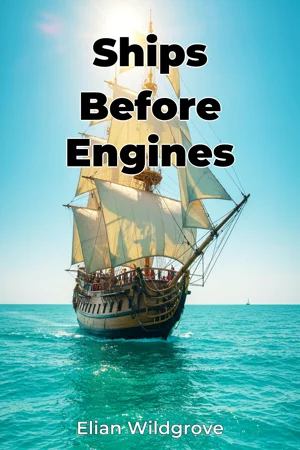
"Ships Before Engines" explores the transformative era when wind-powered sailing ships were the engines of global connection. The book examines how these vessels facilitated exploration, trade, and cultural exchange, highlighting the ingenuity of pre-industrial technologies. Readers will discover how sailing ships not only shaped geographical exploration but also influenced economic systems and political power dynamics. It elucidates complex concepts like how sails harness wind energy and how hulls interact with water, making maritime technology accessible to all. The book progresses in a structured manner, starting with the fundamentals of sailing and early designs, then exploring the role of ships in global exploration and trade. By focusing on the technological advancements and cultural impacts of sailing vessels before steam power, "Ships Before Engines" offers a unique perspective on maritime history. It challenges engine-centric views by highlighting the ingenuity and impact of pre-industrial technologies, demonstrating how crucial sailing technology was to global transformation.
Book Details
ISBN
9788235295774
Publisher
Publifye AS
Your Licenses
You don't own any licenses for this book
Purchase a license below to unlock this book and download the EPUB.
Purchase License
Select a tier to unlock this book
Need bulk licensing?
Contact us for enterprise agreements.