
About This Book
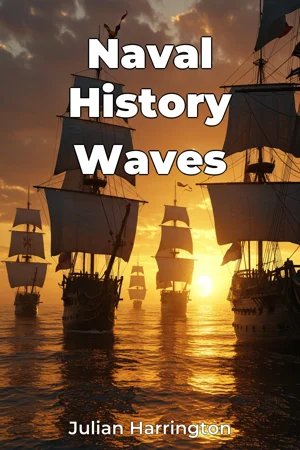
How has control of the seas shaped the course of history, and what lessons can we draw from past naval conflicts to understand contemporary geopolitical strategies? "Naval History Waves" explores the evolution of naval power, examining its profound strategic value in shaping historical outcomes and influencing global dynamics. This book delves into the critical role of navies in warfare, trade, and diplomacy from ancient times to the modern era. This book focuses on the interconnectedness of naval technology, maritime strategy, and international relations. Understanding these elements is vital for grasping the complexities of global power struggles and the enduring significance of sea control. We will analyze the pivotal naval battles, technological innovations, and strategic doctrines that have defined naval warfare across different periods. To fully appreciate the growth of naval power, we will first establish a historical context, tracing the development of shipbuilding, navigation, and naval organization across different civilizations. This includes examining the influence of geographical factors, economic considerations, and political ambitions on maritime capabilities. The central argument of "Naval History Waves" is that naval power has consistently acted as a decisive force in shaping geopolitical landscapes, influencing trade routes, colonial expansion, and the outcomes of major conflicts. The book highlights that nations with superior naval capabilities have historically enjoyed significant strategic advantages, impacting global power balances. The book is structured to provide a comprehensive overview of naval history: a) It begins by introducing early naval warfare, exploring its impact on empires and trade. b) It then examines key periods, such as the age of sail, the industrial revolution, and the modern era, detailing their respective naval strategies. c) The book culminates by analyzing the contemporary role of naval power in the 21st century, considering emerging technologies and geopolitical challenges. d) It analyzes the practical applications of naval strategies in modern conflict resolution and trade security, offering insights applicable to current geopolitical scenarios. Support for these arguments comes from diverse sources, including primary accounts from naval commanders, government records, technological blueprints, and detailed analyses of naval engagements. It incorporates statistical data on naval expenditures, fleet sizes, and trade volumes to quantify the impact of naval power throughout history. "Naval History Waves" connects to several interdisciplinary fields, including: - Economics: By analyzing the relationship between naval power and trade, providing data on naval expenditures, fleet sizes, and trade volumes. - Political Science: Examining the role of naval power in shaping international relations. - Technology: Investigating the impact of innovations in shipbuilding and weaponry. The book offers a fresh perspective by integrating technological advancements, strategic thinking, and political motivations to present a holistic view of naval history. It avoids a solely Eurocentric perspective, analyzing naval developments in Asia, Africa, and the Americas. The writing style is factual, analytical, and accessible, aimed at engaging both academics and general readers interested in military history and international relations. The book avoids jargon, making complex concepts understandable for a broad audience. The target audience includes history enthusiasts, military strategists, policymakers, and anyone interested in understanding the role of naval power in shaping world events. The book will be a valuable resource for students and researchers in history, political science, and military strategy. As a work of military history, "Naval History Waves" adheres to scholarly standards of accuracy and objectivity, incorporating diverse viewpoints and avoiding biased interpretations. It focuses on comprehensive analysis and interpretation while avoiding sensationalism. The scope of the book encompasses global naval history from ancient times to the present day, although it focuses on key naval powers and pivotal historical periods. It does not delve into hyper-specialized areas of naval technology but aims to provide a broad understanding of strategic implications. The lessons from "Naval History Waves" can be applied to understanding current geopolitical challenges, such as maritime security, trade route protection, and power projection. By analyzing historical precedents, the book offers insights into contemporary strategic decision-making. The book engages with ongoing debates about the future of naval power, considering the impact of emerging technologies, such as unmanned systems and cyber warfare, on traditional naval strategies. It provides a balanced assessment of the challenges and opportunities facing naval forces in the 21st century.
How has control of the seas shaped the course of history, and what lessons can we draw from past naval conflicts to understand contemporary geopolitical strategies? "Naval History Waves" explores the evolution of naval power, examining its profound strategic value in shaping historical outcomes and influencing global dynamics. This book delves into the critical role of navies in warfare, trade, and diplomacy from ancient times to the modern era. This book focuses on the interconnectedness of naval technology, maritime strategy, and international relations. Understanding these elements is vital for grasping the complexities of global power struggles and the enduring significance of sea control. We will analyze the pivotal naval battles, technological innovations, and strategic doctrines that have defined naval warfare across different periods. To fully appreciate the growth of naval power, we will first establish a historical context, tracing the development of shipbuilding, navigation, and naval organization across different civilizations. This includes examining the influence of geographical factors, economic considerations, and political ambitions on maritime capabilities. The central argument of "Naval History Waves" is that naval power has consistently acted as a decisive force in shaping geopolitical landscapes, influencing trade routes, colonial expansion, and the outcomes of major conflicts. The book highlights that nations with superior naval capabilities have historically enjoyed significant strategic advantages, impacting global power balances. The book is structured to provide a comprehensive overview of naval history: a) It begins by introducing early naval warfare, exploring its impact on empires and trade. b) It then examines key periods, such as the age of sail, the industrial revolution, and the modern era, detailing their respective naval strategies. c) The book culminates by analyzing the contemporary role of naval power in the 21st century, considering emerging technologies and geopolitical challenges. d) It analyzes the practical applications of naval strategies in modern conflict resolution and trade security, offering insights applicable to current geopolitical scenarios. Support for these arguments comes from diverse sources, including primary accounts from naval commanders, government records, technological blueprints, and detailed analyses of naval engagements. It incorporates statistical data on naval expenditures, fleet sizes, and trade volumes to quantify the impact of naval power throughout history. "Naval History Waves" connects to several interdisciplinary fields, including: - Economics: By analyzing the relationship between naval power and trade, providing data on naval expenditures, fleet sizes, and trade volumes. - Political Science: Examining the role of naval power in shaping international relations. - Technology: Investigating the impact of innovations in shipbuilding and weaponry. The book offers a fresh perspective by integrating technological advancements, strategic thinking, and political motivations to present a holistic view of naval history. It avoids a solely Eurocentric perspective, analyzing naval developments in Asia, Africa, and the Americas. The writing style is factual, analytical, and accessible, aimed at engaging both academics and general readers interested in military history and international relations. The book avoids jargon, making complex concepts understandable for a broad audience. The target audience includes history enthusiasts, military strategists, policymakers, and anyone interested in understanding the role of naval power in shaping world events. The book will be a valuable resource for students and researchers in history, political science, and military strategy. As a work of military history, "Naval History Waves" adheres to scholarly standards of accuracy and objectivity, incorporating diverse viewpoints and avoiding biased interpretations. It focuses on comprehensive analysis and interpretation while avoiding sensationalism. The scope of the book encompasses global naval history from ancient times to the present day, although it focuses on key naval powers and pivotal historical periods. It does not delve into hyper-specialized areas of naval technology but aims to provide a broad understanding of strategic implications. The lessons from "Naval History Waves" can be applied to understanding current geopolitical challenges, such as maritime security, trade route protection, and power projection. By analyzing historical precedents, the book offers insights into contemporary strategic decision-making. The book engages with ongoing debates about the future of naval power, considering the impact of emerging technologies, such as unmanned systems and cyber warfare, on traditional naval strategies. It provides a balanced assessment of the challenges and opportunities facing naval forces in the 21st century.
"Naval History Waves" explores how naval power has shaped history, offering insights into modern geopolitical strategies. The book examines the critical role of navies in warfare, trade, and diplomacy from ancient times to the modern era. One intriguing fact is how superior naval capabilities have historically given nations significant strategic advantages, influencing global power balances and trade routes. The book emphasizes the interconnectedness of naval technology, maritime strategy, and international relations, crucial for grasping global power struggles. The book approaches its subject by first grounding the reader in historical context, tracing shipbuilding and naval organization across civilizations. It then analyzes key periods like the age of sail and the industrial revolution, detailing naval strategies. Ultimately, "Naval History Waves" explores the contemporary role of naval power in the 21st century, considering emerging technologies and geopolitical challenges. By analyzing historical precedents, the book provides insights into contemporary strategic decision-making related to maritime security and power projection.
Book Details
ISBN
9788235295583
Publisher
Publifye AS
Your Licenses
You don't own any licenses for this book
Purchase a license below to unlock this book and download the EPUB.
Purchase License
Select a tier to unlock this book
Need bulk licensing?
Contact us for enterprise agreements.