
About This Book
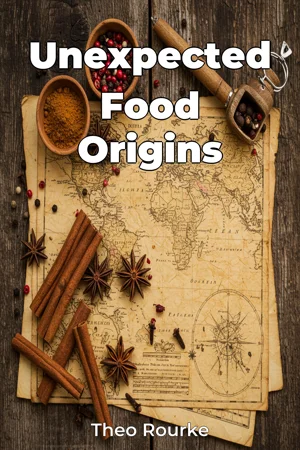
Ever wonder about the true story behind your favorite foods? "Unexpected Food Origins" embarks on a journey to uncover the surprising and often convoluted histories of everyday eats, revealing the cultural influences, accidental discoveries, and hidden ingredients that have shaped our culinary landscape. This isn’t just a collection of recipes; it's an exploration of how history, culture, and happenstance converge on our plates. We often take for granted the origins of the food we consume. This book addresses this by examining the development of specific foods, the cultural exchange and blending that created them, and the scientific and technological advancements that allowed them to be produced on a mass scale. Understanding these elements provides a more complete understanding of the world around us. The book provides a blend of historical context, culinary history, and social commentary, offering a multidisciplinary look at the food we eat. We delve into the historical context surrounding the creation and adaptation of various foods, examining the social and economic factors that drove their popularity. This includes exploring trade routes, agricultural revolutions, and the impact of globalization on food culture. Crucially, no prior expertise in food history or culinary arts is required; the book is designed to be accessible to anyone with an interest in food and history. The central argument of "Unexpected Food Origins" is that the history of food is far more complex and globally interconnected than we often realize. It demonstrates how the foods we consider commonplace frequently have surprising origins rooted in cultural exchange, accidental innovations, and sometimes even conflict. This argument is significant because it encourages a deeper appreciation for the diversity and historical context of our food, challenging assumptions about cultural ownership and the origins of culinary traditions. The book is structured to first introduce the key concepts of food history and cultural exchange. It then proceeds through several major sections, each focusing on specific categories of foods or culinary traditions. One section explores the impact of accidental discoveries, such as the story of penicillin's influence for food preservation, and how these chance occurrences have shaped our diets. Another section examines the role of cultural exchange in the development of hybrid cuisines, tracing the origins of dishes like pizza and pasta and their evolution through different cultures. A third section looks into hidden ingredients and processes, from the use of particular spices to the development of modern agricultural techniques. The book culminates by discussing implications and practical applications of this knowledge. This includes understanding food labeling, promoting sustainable agricultural practices, and fostering greater cultural awareness through food. The evidence presented is drawn from a variety of sources, including historical documents, scientific studies, culinary archives, and anthropological research. Primary source materials such as cookbooks, travelogues, and trade records are analyzed to provide firsthand accounts of the evolution of food practices. The book connects to other fields, such as anthropology (examining the cultural significance of food), economics (analyzing the global food trade), and environmental science (assessing the impact of food production on the environment). "Unexpected Food Origins" stands out due to its interdisciplinary approach and its focus on debunking common misconceptions about food origins. It avoids romanticized or simplified narratives, instead offering a nuanced and evidence-based account of food history. The writing style is accessible and engaging, designed to appeal to a broad audience while maintaining academic rigor. The target audience includes food enthusiasts, history buffs, and anyone curious about the stories behind their meals. It would be valuable to them because it provides a fresh perspective on familiar foods, encouraging a deeper understanding of our interconnected world. As a work of food writing and history, the book adheres to genre conventions by providing accurate and thoroughly researched information in an engaging and accessible manner. The book's scope is broad, covering a wide range of foods and culinary traditions from around the world. However, it intentionally limits its focus to the origins and evolution of specific foods, rather than providing a comprehensive overview of culinary history. The information in the book can be applied practically by consumers who seek to make more informed food choices, by chefs who want to incorporate historical context into their cooking, and by educators who wish to teach about food and culture in a more engaging way. The book also touches on current debates surrounding food sovereignty, cultural appropriation in cuisine, and the impact of globalization on local food systems.
Ever wonder about the true story behind your favorite foods? "Unexpected Food Origins" embarks on a journey to uncover the surprising and often convoluted histories of everyday eats, revealing the cultural influences, accidental discoveries, and hidden ingredients that have shaped our culinary landscape. This isn’t just a collection of recipes; it's an exploration of how history, culture, and happenstance converge on our plates. We often take for granted the origins of the food we consume. This book addresses this by examining the development of specific foods, the cultural exchange and blending that created them, and the scientific and technological advancements that allowed them to be produced on a mass scale. Understanding these elements provides a more complete understanding of the world around us. The book provides a blend of historical context, culinary history, and social commentary, offering a multidisciplinary look at the food we eat. We delve into the historical context surrounding the creation and adaptation of various foods, examining the social and economic factors that drove their popularity. This includes exploring trade routes, agricultural revolutions, and the impact of globalization on food culture. Crucially, no prior expertise in food history or culinary arts is required; the book is designed to be accessible to anyone with an interest in food and history. The central argument of "Unexpected Food Origins" is that the history of food is far more complex and globally interconnected than we often realize. It demonstrates how the foods we consider commonplace frequently have surprising origins rooted in cultural exchange, accidental innovations, and sometimes even conflict. This argument is significant because it encourages a deeper appreciation for the diversity and historical context of our food, challenging assumptions about cultural ownership and the origins of culinary traditions. The book is structured to first introduce the key concepts of food history and cultural exchange. It then proceeds through several major sections, each focusing on specific categories of foods or culinary traditions. One section explores the impact of accidental discoveries, such as the story of penicillin's influence for food preservation, and how these chance occurrences have shaped our diets. Another section examines the role of cultural exchange in the development of hybrid cuisines, tracing the origins of dishes like pizza and pasta and their evolution through different cultures. A third section looks into hidden ingredients and processes, from the use of particular spices to the development of modern agricultural techniques. The book culminates by discussing implications and practical applications of this knowledge. This includes understanding food labeling, promoting sustainable agricultural practices, and fostering greater cultural awareness through food. The evidence presented is drawn from a variety of sources, including historical documents, scientific studies, culinary archives, and anthropological research. Primary source materials such as cookbooks, travelogues, and trade records are analyzed to provide firsthand accounts of the evolution of food practices. The book connects to other fields, such as anthropology (examining the cultural significance of food), economics (analyzing the global food trade), and environmental science (assessing the impact of food production on the environment). "Unexpected Food Origins" stands out due to its interdisciplinary approach and its focus on debunking common misconceptions about food origins. It avoids romanticized or simplified narratives, instead offering a nuanced and evidence-based account of food history. The writing style is accessible and engaging, designed to appeal to a broad audience while maintaining academic rigor. The target audience includes food enthusiasts, history buffs, and anyone curious about the stories behind their meals. It would be valuable to them because it provides a fresh perspective on familiar foods, encouraging a deeper understanding of our interconnected world. As a work of food writing and history, the book adheres to genre conventions by providing accurate and thoroughly researched information in an engaging and accessible manner. The book's scope is broad, covering a wide range of foods and culinary traditions from around the world. However, it intentionally limits its focus to the origins and evolution of specific foods, rather than providing a comprehensive overview of culinary history. The information in the book can be applied practically by consumers who seek to make more informed food choices, by chefs who want to incorporate historical context into their cooking, and by educators who wish to teach about food and culture in a more engaging way. The book also touches on current debates surrounding food sovereignty, cultural appropriation in cuisine, and the impact of globalization on local food systems.
"Unexpected Food Origins" explores the fascinating and often surprising histories behind the foods we eat every day. It reveals how cultural exchange, accidental discoveries, and even hidden ingredients have shaped our culinary landscape. The book isn't just about recipes; it's a journey through time, uncovering the global interconnectedness of our plates. For example, the book highlights how something as ubiquitous as penicillin has influenced food preservation or how dishes like pizza have evolved through different cultures. This exploration of food history combines historical context with culinary insights, offering a multidisciplinary look at our meals. The book argues that the origins of food are far more complex than we often realize, challenging assumptions about cultural ownership and the origins of culinary traditions. Starting with key concepts of food history, the book progresses through major sections focusing on specific food categories, accidental discoveries, and the role of cultural exchange. It culminates by discussing the practical applications of this knowledge, such as understanding food labeling and promoting sustainable agriculture. The book stands out by debunking common misconceptions and providing a nuanced, evidence-based account suitable for food enthusiasts and history buffs alike. By examining the development of specific foods and the historical context surrounding their creation, "Unexpected Food Origins" provides a fresh perspective on familiar foods, encouraging a deeper appreciation of our interconnected world.
Book Details
ISBN
9788235295347
Publisher
Publifye AS
Your Licenses
You don't own any licenses for this book
Purchase a license below to unlock this book and download the EPUB.
Purchase License
Select a tier to unlock this book
Need bulk licensing?
Contact us for enterprise agreements.