
About This Book
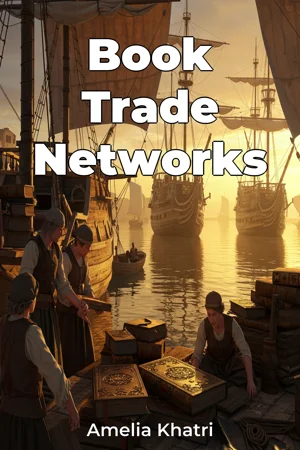
How did ideas travel before the internet? "Book Trade Networks" explores the fascinating history of how books, as physical objects embodying knowledge and culture, circulated across the globe through a complex interplay of trade, war, and diplomacy. Understanding these historical networks is crucial for comprehending the evolution of global intellectual exchange, the spread of literacy, and the formation of cultural identities. It reveals how access to information shaped societies and influenced historical events. This book argues that book distribution was not simply a matter of commercial exchange, but a deeply intertwined process involving political power, military conflict, and intercultural dialogue. It examines the multifaceted role of books as commodities, weapons of propaganda, and tools of diplomacy. The narrative unfolds against a backdrop of evolving technologies, shifting political landscapes, and the relentless human desire for knowledge. The book begins by introducing the fundamental concepts of book production and distribution, setting the stage with a discussion of early printing technologies and the emergence of book markets in different regions. It then develops its argument through three major thematic sections. The first explores the role of trade routes, examining how books were transported along established commercial arteries, such as the Silk Road and maritime shipping lanes, highlighting the economic incentives and logistical challenges involved. The second delves into the impact of war and conflict, analyzing how books served as spoils of war, instruments of ideological warfare, and sources of intelligence, with case studies of book confiscation, censorship, and the deliberate dissemination of propaganda. The third examines the use of books in diplomatic relations, illustrating how they were exchanged as gifts, used to foster cultural understanding, and employed as tools for negotiation and persuasion, showing how cultural exchange influenced international relations. The book culminates by considering the legacy of these historical networks in the digital age, examining how the patterns of information flow established centuries ago continue to shape our interconnected world. The evidence presented in support of these arguments draws upon a diverse range of sources, including archival records, trade documents, diplomatic correspondence, and literary texts. This interdisciplinary approach connects the fields of history, literature, political science, and economics, providing a holistic understanding of the multifaceted nature of book distribution. "Book Trade Networks" offers a unique perspective by examining the interconnectedness of these three seemingly disparate forces—trade, war, and diplomacy—in shaping the global flow of information. This book is written in an academic style, employing rigorous analysis and detailed historical evidence, while remaining accessible to a broad audience. The target audience includes students and scholars of history, literature, and international relations, as well as anyone interested in the history of books and the spread of knowledge. It provides valuable insights for understanding the complex dynamics of globalization, cultural exchange, and the role of information in shaping human societies. The scope of the book is intentionally broad, encompassing a global perspective and covering a wide range of historical periods, though it acknowledges the limitations inherent in attempting to provide an exhaustive account of such a vast and complex topic. The information presented in this book has real-world applications for understanding contemporary issues such as the spread of misinformation, the role of technology in shaping cultural narratives, and the importance of international collaboration in promoting education and literacy. The book also addresses ongoing debates within the field of book history, such as the relative importance of economic factors versus cultural influences in shaping patterns of book distribution.
How did ideas travel before the internet? "Book Trade Networks" explores the fascinating history of how books, as physical objects embodying knowledge and culture, circulated across the globe through a complex interplay of trade, war, and diplomacy. Understanding these historical networks is crucial for comprehending the evolution of global intellectual exchange, the spread of literacy, and the formation of cultural identities. It reveals how access to information shaped societies and influenced historical events. This book argues that book distribution was not simply a matter of commercial exchange, but a deeply intertwined process involving political power, military conflict, and intercultural dialogue. It examines the multifaceted role of books as commodities, weapons of propaganda, and tools of diplomacy. The narrative unfolds against a backdrop of evolving technologies, shifting political landscapes, and the relentless human desire for knowledge. The book begins by introducing the fundamental concepts of book production and distribution, setting the stage with a discussion of early printing technologies and the emergence of book markets in different regions. It then develops its argument through three major thematic sections. The first explores the role of trade routes, examining how books were transported along established commercial arteries, such as the Silk Road and maritime shipping lanes, highlighting the economic incentives and logistical challenges involved. The second delves into the impact of war and conflict, analyzing how books served as spoils of war, instruments of ideological warfare, and sources of intelligence, with case studies of book confiscation, censorship, and the deliberate dissemination of propaganda. The third examines the use of books in diplomatic relations, illustrating how they were exchanged as gifts, used to foster cultural understanding, and employed as tools for negotiation and persuasion, showing how cultural exchange influenced international relations. The book culminates by considering the legacy of these historical networks in the digital age, examining how the patterns of information flow established centuries ago continue to shape our interconnected world. The evidence presented in support of these arguments draws upon a diverse range of sources, including archival records, trade documents, diplomatic correspondence, and literary texts. This interdisciplinary approach connects the fields of history, literature, political science, and economics, providing a holistic understanding of the multifaceted nature of book distribution. "Book Trade Networks" offers a unique perspective by examining the interconnectedness of these three seemingly disparate forces—trade, war, and diplomacy—in shaping the global flow of information. This book is written in an academic style, employing rigorous analysis and detailed historical evidence, while remaining accessible to a broad audience. The target audience includes students and scholars of history, literature, and international relations, as well as anyone interested in the history of books and the spread of knowledge. It provides valuable insights for understanding the complex dynamics of globalization, cultural exchange, and the role of information in shaping human societies. The scope of the book is intentionally broad, encompassing a global perspective and covering a wide range of historical periods, though it acknowledges the limitations inherent in attempting to provide an exhaustive account of such a vast and complex topic. The information presented in this book has real-world applications for understanding contemporary issues such as the spread of misinformation, the role of technology in shaping cultural narratives, and the importance of international collaboration in promoting education and literacy. The book also addresses ongoing debates within the field of book history, such as the relative importance of economic factors versus cultural influences in shaping patterns of book distribution.
"Book Trade Networks" unveils the intricate history of how books, as tangible vessels of knowledge, traversed the globe through intertwined networks of trade, war, and diplomacy. This exploration sheds light on the evolution of global intellectual exchange and the formation of cultural identities. Intriguingly, books weren't merely commodities; they served as potent instruments of propaganda and vital tools in diplomatic negotiations, influencing historical events in profound ways. The book adopts a multifaceted approach, drawing from diverse sources like archival records and trade documents to connect fields such as history, literature, and political science. It progresses thematically, first examining trade routes like the Silk Road, then delving into the impact of war, including book confiscation and censorship. Finally, it explores how books were used in diplomacy to foster cultural understanding. Understanding these historical networks provides valuable insights into contemporary issues like the spread of misinformation and the role of technology in shaping cultural narratives.
Book Details
ISBN
9788235295309
Publisher
Publifye AS
Your Licenses
You don't own any licenses for this book
Purchase a license below to unlock this book and download the EPUB.
Purchase License
Select a tier to unlock this book
Need bulk licensing?
Contact us for enterprise agreements.