
About This Book
How did a civilization, without metal tools or the wheel, construct monumental cities that continue to inspire awe centuries later? "Mayan Architecture" meticulously examines the enduring architectural legacy of the Maya civilization, focusing on the engineering ingenuity, cultural significance, and lasting impact of their structures. This book delves into the heart of Mayan society through its most tangible creations: pyramids, temples, palaces, and urban layouts, exploring how these constructions served as both functional spaces and powerful symbols of religious and political authority. Central to our exploration are three key themes: the advanced engineering techniques employed by Mayan architects, the symbolic representation embedded within their designs, and the profound influence of Mayan cosmology on urban planning. Understanding these aspects is crucial not only for appreciating the aesthetic grandeur of Mayan architecture but also for gaining insight into the complex social, religious, and political dynamics of this sophisticated civilization. No prior expertise in archaeology or architectural history is required; this book aims to provide a comprehensive and accessible introduction to the subject matter. The central argument of this book is that Mayan architecture was far more than mere construction; it was a deliberate and sophisticated expression of their worldview, demonstrating a clear understanding of engineering principles, astronomical phenomena, and the intricate relationship between the earthly and spiritual realms. Unraveling this argument reveals a civilization of remarkable innovation and artistic vision, whose achievements deserve recognition in the broader context of world history. This book unfolds in a carefully structured manner. Part I will introduce the foundational concepts of Mayan architecture, including building materials, construction techniques, and the social organization of labor. Part II will examine specific architectural forms in detail, such as the stepped pyramids used for religious ceremonies, the corbel-vaulted palaces that housed the ruling elite, and the astronomical observatories that reflected their sophisticated understanding of the cosmos. Part III builds upon the previous sections, arguing how Mayan architecture embodies a cohesive worldview, integrating scientific knowledge, religious beliefs, and political power. The book culminates by exploring the lasting legacy of Mayan architecture and its influence on subsequent cultures and contemporary design. The evidence presented throughout this book is drawn from a variety of sources, including archaeological excavations, epigraphic analysis of Mayan hieroglyphs, and comparative studies of Mayan sites across Mesoamerica. Particular attention is paid to recent discoveries and interpretations that shed new light on the construction methods and symbolic meanings of Mayan structures. The study of Mayan architecture naturally intersects with several other disciplines, including anthropology, archaeology, art history, and astronomy. These interdisciplinary connections offer a more complete picture of Mayan civilization, enriching our understanding of their cultural achievements and providing valuable insights into the human experience. This book offers a fresh perspective by emphasizing the interconnectedness of engineering, symbolism, and cosmology in Mayan architecture. It goes beyond a purely descriptive approach, providing an analytical framework for understanding the deeper significance of these structures. Written in a clear and engaging style, this book is intended for anyone with an interest in history, archaeology, or architecture. It will be of particular value to students, researchers, and anyone seeking a deeper understanding of one of the world's most fascinating civilizations. As a work of non-fiction within the genres of history and architecture, this book prioritizes accuracy, clarity, and thoroughness. It adheres to academic standards of scholarship while remaining accessible to a broad audience. The scope of this book encompasses the major architectural achievements of the Maya civilization from the Preclassic period to the Postclassic period. While the book aims to provide a comprehensive overview, it acknowledges that our understanding of Mayan architecture is constantly evolving as new discoveries are made. The insights gained from studying Mayan architecture have practical applications in contemporary design and engineering, offering lessons in sustainable construction, urban planning, and the integration of cultural values into the built environment. Furthermore, the book addresses some of the ongoing debates surrounding Mayan architecture, such as the precise dating of certain structures and the interpretation of specific iconographic motifs. By presenting a balanced perspective on these controversies, the book encourages critical thinking and further exploration of the subject.
How did a civilization, without metal tools or the wheel, construct monumental cities that continue to inspire awe centuries later? "Mayan Architecture" meticulously examines the enduring architectural legacy of the Maya civilization, focusing on the engineering ingenuity, cultural significance, and lasting impact of their structures. This book delves into the heart of Mayan society through its most tangible creations: pyramids, temples, palaces, and urban layouts, exploring how these constructions served as both functional spaces and powerful symbols of religious and political authority. Central to our exploration are three key themes: the advanced engineering techniques employed by Mayan architects, the symbolic representation embedded within their designs, and the profound influence of Mayan cosmology on urban planning. Understanding these aspects is crucial not only for appreciating the aesthetic grandeur of Mayan architecture but also for gaining insight into the complex social, religious, and political dynamics of this sophisticated civilization. No prior expertise in archaeology or architectural history is required; this book aims to provide a comprehensive and accessible introduction to the subject matter. The central argument of this book is that Mayan architecture was far more than mere construction; it was a deliberate and sophisticated expression of their worldview, demonstrating a clear understanding of engineering principles, astronomical phenomena, and the intricate relationship between the earthly and spiritual realms. Unraveling this argument reveals a civilization of remarkable innovation and artistic vision, whose achievements deserve recognition in the broader context of world history. This book unfolds in a carefully structured manner. Part I will introduce the foundational concepts of Mayan architecture, including building materials, construction techniques, and the social organization of labor. Part II will examine specific architectural forms in detail, such as the stepped pyramids used for religious ceremonies, the corbel-vaulted palaces that housed the ruling elite, and the astronomical observatories that reflected their sophisticated understanding of the cosmos. Part III builds upon the previous sections, arguing how Mayan architecture embodies a cohesive worldview, integrating scientific knowledge, religious beliefs, and political power. The book culminates by exploring the lasting legacy of Mayan architecture and its influence on subsequent cultures and contemporary design. The evidence presented throughout this book is drawn from a variety of sources, including archaeological excavations, epigraphic analysis of Mayan hieroglyphs, and comparative studies of Mayan sites across Mesoamerica. Particular attention is paid to recent discoveries and interpretations that shed new light on the construction methods and symbolic meanings of Mayan structures. The study of Mayan architecture naturally intersects with several other disciplines, including anthropology, archaeology, art history, and astronomy. These interdisciplinary connections offer a more complete picture of Mayan civilization, enriching our understanding of their cultural achievements and providing valuable insights into the human experience. This book offers a fresh perspective by emphasizing the interconnectedness of engineering, symbolism, and cosmology in Mayan architecture. It goes beyond a purely descriptive approach, providing an analytical framework for understanding the deeper significance of these structures. Written in a clear and engaging style, this book is intended for anyone with an interest in history, archaeology, or architecture. It will be of particular value to students, researchers, and anyone seeking a deeper understanding of one of the world's most fascinating civilizations. As a work of non-fiction within the genres of history and architecture, this book prioritizes accuracy, clarity, and thoroughness. It adheres to academic standards of scholarship while remaining accessible to a broad audience. The scope of this book encompasses the major architectural achievements of the Maya civilization from the Preclassic period to the Postclassic period. While the book aims to provide a comprehensive overview, it acknowledges that our understanding of Mayan architecture is constantly evolving as new discoveries are made. The insights gained from studying Mayan architecture have practical applications in contemporary design and engineering, offering lessons in sustainable construction, urban planning, and the integration of cultural values into the built environment. Furthermore, the book addresses some of the ongoing debates surrounding Mayan architecture, such as the precise dating of certain structures and the interpretation of specific iconographic motifs. By presenting a balanced perspective on these controversies, the book encourages critical thinking and further exploration of the subject.
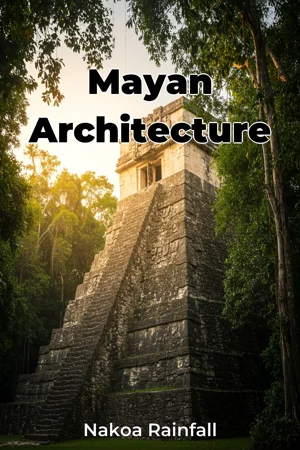
"Mayan Architecture" explores the extraordinary building achievements of the Maya civilization. Without the use of metal tools or the wheel, they constructed massive pyramids, temples, and urban centers across Mesoamerica. The book examines the engineering ingenuity behind these structures, revealing how their designs were deeply intertwined with Mayan cosmology and cultural significance. For instance, the precise alignment of certain buildings with astronomical events highlights their advanced understanding of the cosmos. The book investigates how Mayan urban planning integrated religious beliefs and political power. Through archaeological evidence and epigraphic analysis, it reveals the symbolic meanings embedded within their architectural forms. The study progresses from foundational concepts, like building materials and techniques, to detailed analyses of pyramids, palaces, and observatories, culminating in an exploration of Mayan architecture's lasting legacy and its influence on contemporary design.
Book Details
ISBN
9788235295255
Publisher
Publifye AS
Your Licenses
You don't own any licenses for this book
Purchase a license below to unlock this book and download the EPUB.
Purchase License
Select a tier to unlock this book
Need bulk licensing?
Contact us for enterprise agreements.