
About This Book
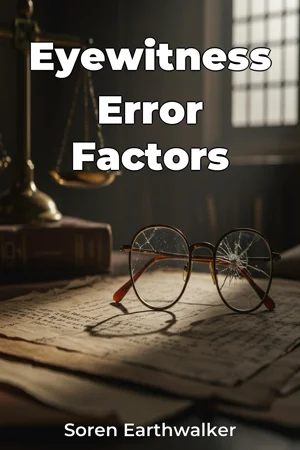
How often does justice hinge on a memory that isn't quite right? "Eyewitness Error Factors" delves into the unsettling reality of eyewitness misidentification, a leading cause of wrongful convictions in the United States and beyond. This book explores the multifaceted legal ramifications of this phenomenon, dissects the methods courts use to assess eyewitness reliability, and advocates for the implementation of improved investigative protocols to minimize errors. It is important because it sheds light on a critical flaw within the justice system that affects countless lives, both of the wrongly accused and the victims of crime. This exploration into the reliability of eyewitness testimony needs historical context. Landmark cases and legal precedents have shaped the way courts handle this type of evidence, often relying on flawed assumptions about human memory. Social science research, particularly in the fields of cognitive psychology, has demonstrated the fallibility of memory and the many ways in which it can be distorted. This book argues that the legal system's reliance on traditional methods of evaluating eyewitness accounts is often misplaced, leading to unjust outcomes. The book's central argument revolves around the need for a paradigm shift in how eyewitness evidence is treated in the courtroom. It posits that eyewitness identification should be viewed not as definitive proof, but as one piece of evidence among many, subject to rigorous scrutiny and evaluation in light of scientific understanding. This argument is vital because it challenges entrenched beliefs and practices, advocating for a more nuanced and evidence-based approach to justice. The book unfolds in a logical sequence, first introducing the core concepts of memory and perception. It then explores key factors that contribute to eyewitness misidentification, such as stress, weapon focus, cross-racial identification, and suggestive questioning. The book examines specific legal cases where eyewitness error played a significant role, analyzing the flaws in the investigative and judicial processes. Finally, it discusses practical reforms, including blind administration of lineups, sequential presentation of suspects, and expert testimony on the science of memory. The arguments presented are grounded in extensive research, drawing on empirical studies from cognitive psychology, legal scholarship, and case law analysis. The book incorporates unique data from legal databases and psychological experiments to illustrate the prevalence and impact of eyewitness misidentification. The book has clear connections to other fields. Criminology, as it directly addresses the causes of wrongful convictions. Psychology, particularly cognitive and social psychology, provides the scientific foundation for understanding memory and perception. Law, it examines the legal standards for admissibility of evidence and the rights of the accused. These interdisciplinary connections enrich the book's analysis and provide a more comprehensive understanding of the issue. "Eyewitness Error Factors" distinguishes itself by providing a practical, solutions-oriented approach to a complex problem. It moves beyond simply identifying the issue to offering concrete recommendations for improving eyewitness identification procedures and reducing the risk of wrongful convictions. Written in a clear and accessible style, this book is intended for a wide audience, including legal professionals, law enforcement officers, students of law and criminology, and anyone interested in the pursuit of justice. It will be valuable to those seeking a deeper understanding of the challenges inherent in eyewitness testimony and the steps that can be taken to mitigate the risk of error. This aligns with the conventions of the 'Politics, True Crime' genres, which focuses on real-world issues and their impact on society. The scope of the book is limited to eyewitness identification in criminal investigations and trials, with a focus on the factors that contribute to misidentification. While it acknowledges the broader issues of police misconduct and systemic bias, it primarily focuses on the science of memory and its implications for the legal system. The book's practical applications are numerous. The recommendations for improving eyewitness identification procedures can be implemented by law enforcement agencies to reduce the risk of misidentification. The information on the fallibility of memory can be used by attorneys to challenge unreliable eyewitness testimony in court. And the insights into the psychological factors that influence eyewitness accuracy can be used by jurors to make more informed decisions in criminal cases. The book addresses ongoing debates about the admissibility of expert testimony on eyewitness memory and the role of judges in evaluating the reliability of eyewitness evidence. By presenting a balanced and evidence-based perspective on these issues, the book aims to contribute to a more informed and productive dialogue about how to improve the accuracy of the justice system.
How often does justice hinge on a memory that isn't quite right? "Eyewitness Error Factors" delves into the unsettling reality of eyewitness misidentification, a leading cause of wrongful convictions in the United States and beyond. This book explores the multifaceted legal ramifications of this phenomenon, dissects the methods courts use to assess eyewitness reliability, and advocates for the implementation of improved investigative protocols to minimize errors. It is important because it sheds light on a critical flaw within the justice system that affects countless lives, both of the wrongly accused and the victims of crime. This exploration into the reliability of eyewitness testimony needs historical context. Landmark cases and legal precedents have shaped the way courts handle this type of evidence, often relying on flawed assumptions about human memory. Social science research, particularly in the fields of cognitive psychology, has demonstrated the fallibility of memory and the many ways in which it can be distorted. This book argues that the legal system's reliance on traditional methods of evaluating eyewitness accounts is often misplaced, leading to unjust outcomes. The book's central argument revolves around the need for a paradigm shift in how eyewitness evidence is treated in the courtroom. It posits that eyewitness identification should be viewed not as definitive proof, but as one piece of evidence among many, subject to rigorous scrutiny and evaluation in light of scientific understanding. This argument is vital because it challenges entrenched beliefs and practices, advocating for a more nuanced and evidence-based approach to justice. The book unfolds in a logical sequence, first introducing the core concepts of memory and perception. It then explores key factors that contribute to eyewitness misidentification, such as stress, weapon focus, cross-racial identification, and suggestive questioning. The book examines specific legal cases where eyewitness error played a significant role, analyzing the flaws in the investigative and judicial processes. Finally, it discusses practical reforms, including blind administration of lineups, sequential presentation of suspects, and expert testimony on the science of memory. The arguments presented are grounded in extensive research, drawing on empirical studies from cognitive psychology, legal scholarship, and case law analysis. The book incorporates unique data from legal databases and psychological experiments to illustrate the prevalence and impact of eyewitness misidentification. The book has clear connections to other fields. Criminology, as it directly addresses the causes of wrongful convictions. Psychology, particularly cognitive and social psychology, provides the scientific foundation for understanding memory and perception. Law, it examines the legal standards for admissibility of evidence and the rights of the accused. These interdisciplinary connections enrich the book's analysis and provide a more comprehensive understanding of the issue. "Eyewitness Error Factors" distinguishes itself by providing a practical, solutions-oriented approach to a complex problem. It moves beyond simply identifying the issue to offering concrete recommendations for improving eyewitness identification procedures and reducing the risk of wrongful convictions. Written in a clear and accessible style, this book is intended for a wide audience, including legal professionals, law enforcement officers, students of law and criminology, and anyone interested in the pursuit of justice. It will be valuable to those seeking a deeper understanding of the challenges inherent in eyewitness testimony and the steps that can be taken to mitigate the risk of error. This aligns with the conventions of the 'Politics, True Crime' genres, which focuses on real-world issues and their impact on society. The scope of the book is limited to eyewitness identification in criminal investigations and trials, with a focus on the factors that contribute to misidentification. While it acknowledges the broader issues of police misconduct and systemic bias, it primarily focuses on the science of memory and its implications for the legal system. The book's practical applications are numerous. The recommendations for improving eyewitness identification procedures can be implemented by law enforcement agencies to reduce the risk of misidentification. The information on the fallibility of memory can be used by attorneys to challenge unreliable eyewitness testimony in court. And the insights into the psychological factors that influence eyewitness accuracy can be used by jurors to make more informed decisions in criminal cases. The book addresses ongoing debates about the admissibility of expert testimony on eyewitness memory and the role of judges in evaluating the reliability of eyewitness evidence. By presenting a balanced and evidence-based perspective on these issues, the book aims to contribute to a more informed and productive dialogue about how to improve the accuracy of the justice system.
"Eyewitness Error Factors" explores the pervasive issue of eyewitness misidentification and its significant role in wrongful convictions, a disturbing reality within the true crime landscape. The book delves into how courts assess witness reliability, often relying on flawed assumptions about human memory that can lead to unjust outcomes. Cognitive psychology reveals memory's fallibility; for instance, "weapon focus," where a witness fixates on a weapon, can impair their ability to accurately recall other details. This book advocates for a paradigm shift, urging the legal system to treat eyewitness accounts as one piece of evidence among many, subject to rigorous scrutiny. It examines how factors like stress and cross-racial identification can contribute to errors. By analyzing specific legal cases and drawing on empirical studies, the book presents a solutions-oriented approach, offering practical reforms like blind administration of lineups and sequential presentation of suspects, ultimately aiming to improve investigative protocols and reduce wrongful convictions.
Book Details
ISBN
9788235294982
Publisher
Publifye AS
Your Licenses
You don't own any licenses for this book
Purchase a license below to unlock this book and download the EPUB.
Purchase License
Select a tier to unlock this book
Need bulk licensing?
Contact us for enterprise agreements.