
About This Book
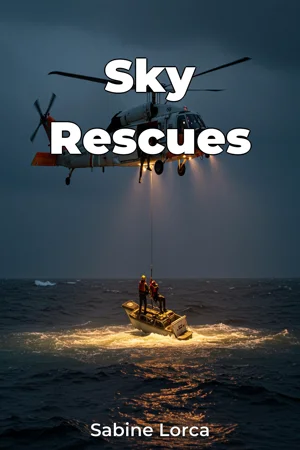
What does it take to fly into the face of a hurricane, navigate treacherous mountain valleys in zero visibility, or pluck survivors from the open ocean? "Sky Rescues" unveils the high-stakes world of helicopter and airplane rescue missions, a relentless battle against time, terrain, and the elements where skilled pilots, paramedics, and crews push the limits of aviation and human endurance to save lives. This book focuses on the evolution, execution, and impact of these daring operations across diverse global environments, from isolated mountaintops to vast maritime expanses, and the disaster zones where every second counts. "Sky Rescues" delves into the crucial topics of advanced aviation techniques, the integration of cutting-edge medical care in airborne environments, and the critical role of military and civilian collaboration in disaster response. These topics are paramount because they highlight the intersection of technological innovation, human skill, and unwavering commitment required to confront life-threatening situations in some of the world's most challenging landscapes. Understanding these elements provides vital insights into the complexities of modern search and rescue (SAR) operations and their impact on survival rates in crisis scenarios. The historical context of aviation rescue dates back to early experiments with helicopters in disaster relief, evolving through the Korean and Vietnam wars, where medical evacuation (MEDEVAC) proved instrumental. "Sky Rescues" explores this history, highlighting the technological advancements and strategic adaptations that have shaped contemporary SAR practices. A basic understanding of aviation principles, emergency medical procedures, and military protocols will enhance the reading experience, though all concepts are explained in detail. The central argument of "Sky Rescues" asserts that the unwavering dedication, advanced training, and technological innovation of airborne rescue teams represent the ultimate lifeline in scenarios where conventional methods fail. This argument is crucial because it underscores the value of investing in specialized resources and personnel capable of delivering life-saving assistance in the most extreme conditions. The book will begin by introducing the core principles of aerial rescue, emphasizing the integration of flight expertise, medical proficiency, and strategic decision-making. It will then develop these ideas through dedicated sections or chapters focusing on: a) Mountain Rescues: Exploring the challenges of high-altitude operations, weather hazards, and specialized equipment such as hoists and rappelling systems. b) Maritime Rescues: Analyzing the complexities of open-ocean rescues, including long-range navigation, at-sea medical treatment, and coordination with naval assets. c) Disaster Response: Investigating the role of airborne teams in large-scale emergencies like earthquakes, hurricanes, and wildfires, emphasizing coordination with ground-based responders and resource allocation. The conclusion will synthesize the key themes, highlighting the practical implications of effective aerial rescue strategies for improving survival rates and enhancing community resilience. The book draws upon a wealth of evidence, including firsthand accounts from pilots and paramedics, official incident reports, technical manuals, and statistical data on rescue outcomes with unique insights from flight recorders and mission debriefs. "Sky Rescues" connects to fields such as: a) Emergency Medicine: Highlighting the adaptation of medical protocols to airborne environments and the challenges of treating patients in transit. b) Aviation Engineering: Examining the design and functionality of specialized aircraft, including modifications for extreme conditions and rescue equipment. c) Disaster Management: Exploring the integration of aerial assets into comprehensive disaster response plans and the coordination of multi-agency operations. What sets this book apart is its comprehensive approach, combining technical analysis with the compelling personal narratives of those who risk their lives to save others. The writing style will be narrative non-fiction, balancing factual accuracy with engaging storytelling to create an immersive reading experience. The target audience includes aviation enthusiasts, military history buffs, emergency medical personnel, and anyone interested in tales of courage and ingenuity. The book is valuable to them as it provides a detailed look into the challenges and triumphs of aerial rescue, offering insights into the strategic, tactical, and human elements of these critical operations. As a work of military history, "Sky Rescues" adheres to the genre's emphasis on factual accuracy, detailed research, and objective analysis, but also incorporates thrilling elements of adventure. The scope is limited to missions where aircraft played a direct role in saving lives, focusing primarily on operations since the mid-20th century. The information in "Sky Rescues" has real-world applications for emergency responders, policymakers, and anyone involved in disaster preparedness. It provides valuable lessons on resource allocation, interagency coordination, and the importance of continuous training. The book addresses ongoing discussions on the need for standardized training protocols and improved funding for aerial rescue services, highlighting both successes and areas for improvement.
What does it take to fly into the face of a hurricane, navigate treacherous mountain valleys in zero visibility, or pluck survivors from the open ocean? "Sky Rescues" unveils the high-stakes world of helicopter and airplane rescue missions, a relentless battle against time, terrain, and the elements where skilled pilots, paramedics, and crews push the limits of aviation and human endurance to save lives. This book focuses on the evolution, execution, and impact of these daring operations across diverse global environments, from isolated mountaintops to vast maritime expanses, and the disaster zones where every second counts. "Sky Rescues" delves into the crucial topics of advanced aviation techniques, the integration of cutting-edge medical care in airborne environments, and the critical role of military and civilian collaboration in disaster response. These topics are paramount because they highlight the intersection of technological innovation, human skill, and unwavering commitment required to confront life-threatening situations in some of the world's most challenging landscapes. Understanding these elements provides vital insights into the complexities of modern search and rescue (SAR) operations and their impact on survival rates in crisis scenarios. The historical context of aviation rescue dates back to early experiments with helicopters in disaster relief, evolving through the Korean and Vietnam wars, where medical evacuation (MEDEVAC) proved instrumental. "Sky Rescues" explores this history, highlighting the technological advancements and strategic adaptations that have shaped contemporary SAR practices. A basic understanding of aviation principles, emergency medical procedures, and military protocols will enhance the reading experience, though all concepts are explained in detail. The central argument of "Sky Rescues" asserts that the unwavering dedication, advanced training, and technological innovation of airborne rescue teams represent the ultimate lifeline in scenarios where conventional methods fail. This argument is crucial because it underscores the value of investing in specialized resources and personnel capable of delivering life-saving assistance in the most extreme conditions. The book will begin by introducing the core principles of aerial rescue, emphasizing the integration of flight expertise, medical proficiency, and strategic decision-making. It will then develop these ideas through dedicated sections or chapters focusing on: a) Mountain Rescues: Exploring the challenges of high-altitude operations, weather hazards, and specialized equipment such as hoists and rappelling systems. b) Maritime Rescues: Analyzing the complexities of open-ocean rescues, including long-range navigation, at-sea medical treatment, and coordination with naval assets. c) Disaster Response: Investigating the role of airborne teams in large-scale emergencies like earthquakes, hurricanes, and wildfires, emphasizing coordination with ground-based responders and resource allocation. The conclusion will synthesize the key themes, highlighting the practical implications of effective aerial rescue strategies for improving survival rates and enhancing community resilience. The book draws upon a wealth of evidence, including firsthand accounts from pilots and paramedics, official incident reports, technical manuals, and statistical data on rescue outcomes with unique insights from flight recorders and mission debriefs. "Sky Rescues" connects to fields such as: a) Emergency Medicine: Highlighting the adaptation of medical protocols to airborne environments and the challenges of treating patients in transit. b) Aviation Engineering: Examining the design and functionality of specialized aircraft, including modifications for extreme conditions and rescue equipment. c) Disaster Management: Exploring the integration of aerial assets into comprehensive disaster response plans and the coordination of multi-agency operations. What sets this book apart is its comprehensive approach, combining technical analysis with the compelling personal narratives of those who risk their lives to save others. The writing style will be narrative non-fiction, balancing factual accuracy with engaging storytelling to create an immersive reading experience. The target audience includes aviation enthusiasts, military history buffs, emergency medical personnel, and anyone interested in tales of courage and ingenuity. The book is valuable to them as it provides a detailed look into the challenges and triumphs of aerial rescue, offering insights into the strategic, tactical, and human elements of these critical operations. As a work of military history, "Sky Rescues" adheres to the genre's emphasis on factual accuracy, detailed research, and objective analysis, but also incorporates thrilling elements of adventure. The scope is limited to missions where aircraft played a direct role in saving lives, focusing primarily on operations since the mid-20th century. The information in "Sky Rescues" has real-world applications for emergency responders, policymakers, and anyone involved in disaster preparedness. It provides valuable lessons on resource allocation, interagency coordination, and the importance of continuous training. The book addresses ongoing discussions on the need for standardized training protocols and improved funding for aerial rescue services, highlighting both successes and areas for improvement.
"Sky Rescues" plunges into the heart-stopping world of aerial rescue missions, where pilots and crews brave extreme conditions to save lives. From navigating treacherous mountain valleys to plucking survivors from vast oceans, these daring operations showcase the relentless battle against time and the elements. The book highlights the evolution of helicopter and airplane rescue, emphasizing advanced aviation techniques and the crucial integration of airborne medical care. This compelling narrative explores the historical context, tracing back to early disaster relief efforts and the pivotal role of medical evacuation during the Korean and Vietnam wars. Intriguing facts include how military collaboration has shaped modern search and rescue practices and how aviation engineering continues to adapt aircraft for extreme conditions. "Sky Rescues" uniquely combines technical analysis with personal narratives, offering a comprehensive look at these critical operations. The book progresses through dedicated sections, examining mountain rescues, maritime rescues, and disaster response scenarios. By drawing upon firsthand accounts, incident reports, and technical data, "Sky Rescues" provides valuable insights into the strategic, tactical, and human elements of aerial rescue, making it a must-read for aviation enthusiasts, military history buffs, and emergency medical personnel alike.
Book Details
ISBN
9788235294746
Publisher
Publifye AS
Your Licenses
You don't own any licenses for this book
Purchase a license below to unlock this book and download the EPUB.
Purchase License
Select a tier to unlock this book
Need bulk licensing?
Contact us for enterprise agreements.