
About This Book
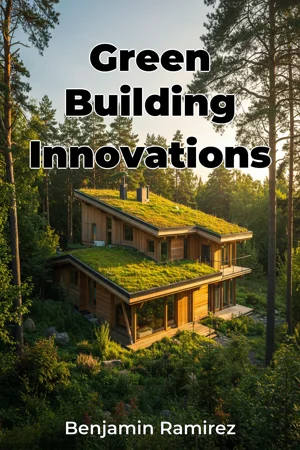
Can buildings be more than just shelter, becoming active contributors to a healthier planet? "Green Building Innovations" explores the burgeoning field of sustainable architecture, offering a comprehensive overview of materials, techniques, and design philosophies that minimize environmental impact while maximizing building performance and human well-being. This book addresses two critical areas: the embodied energy and carbon footprint of building materials, and the operational efficiency of buildings through passive and active design strategies. These topics are vital because the built environment is a major consumer of resources and a significant contributor to greenhouse gas emissions. Embracing sustainable alternatives is not merely an ethical choice, but a necessity for mitigating climate change and promoting resource conservation. We begin by tracing the evolution of green building practices, from vernacular architecture adapted to local climates and resources, to the rise of modern building technologies that prioritized speed and cost over sustainability. The book argues that a paradigm shift is underway, driven by increasing environmental awareness, technological advancements, and policy initiatives that incentivize green building practices. The central thesis is that truly sustainable building requires a holistic approach that considers the entire lifecycle of a building, from material extraction and manufacturing to construction, operation, and eventual deconstruction or reuse. The book is structured to provide a clear and progressive understanding of green building principles. It introduces fundamental concepts such as life cycle assessment, carbon accounting, and the principles of passive solar design. The initial chapters delve into innovative building materials, examining the properties and applications of bamboo, timber, recycled plastics, and bio-based composites. Subsequent sections explore passive design strategies for heating, cooling, and lighting, including building orientation, shading, natural ventilation, and thermal mass. Active systems, such as solar photovoltaic panels, green roofs, and rainwater harvesting, are also examined in detail. The book culminates with case studies of exemplary green buildings around the world, showcasing the practical application of the principles discussed and highlighting the challenges and opportunities in different contexts. Support for the arguments presented comes from a variety of sources, including peer-reviewed scientific research, industry reports, and data from real-world building performance monitoring. The book also incorporates insights from interviews with leading architects, engineers, and sustainability consultants to provide a practical perspective on the challenges and rewards of green building. "Green Building Innovations" draws connections to several other fields, including materials science, environmental engineering, urban planning, and public policy. By integrating these perspectives, the book offers a more comprehensive understanding of the complexities of sustainable building. The approach taken is unique in its focus on both the technical aspects of green building and the broader social, economic, and environmental implications. It aims to equip readers with the knowledge and tools to make informed decisions about sustainable building practices. The tone is informative and accessible, catering to a broad audience of architecture students, design professionals, and anyone interested in learning more about green building. The book maintains the convention of non-fiction architecture publications with detailed descriptions and illustrations. The target audience includes architects, engineers, construction professionals, urban planners, policymakers, and anyone interested in sustainable design and building practices. It offers both a broad overview of the field and in-depth coverage of specific materials and techniques. The scope is limited to building design and construction, with less focus on infrastructure and large-scale urban planning. While it touches on policy and economics, the primary focus is on the technical and design aspects of green building. The information can be applied practically by readers through design choices, material selection, and the implementation of passive and active energy-saving strategies. Case studies provide models for successful green building projects. The book addresses the ongoing debate about the true cost-effectiveness of green building, exploring the initial investment versus long-term savings and benefits. It acknowledges that while some green building technologies may have higher upfront costs, they can provide significant returns in terms of energy savings, reduced maintenance, and improved occupant health and productivity.
Can buildings be more than just shelter, becoming active contributors to a healthier planet? "Green Building Innovations" explores the burgeoning field of sustainable architecture, offering a comprehensive overview of materials, techniques, and design philosophies that minimize environmental impact while maximizing building performance and human well-being. This book addresses two critical areas: the embodied energy and carbon footprint of building materials, and the operational efficiency of buildings through passive and active design strategies. These topics are vital because the built environment is a major consumer of resources and a significant contributor to greenhouse gas emissions. Embracing sustainable alternatives is not merely an ethical choice, but a necessity for mitigating climate change and promoting resource conservation. We begin by tracing the evolution of green building practices, from vernacular architecture adapted to local climates and resources, to the rise of modern building technologies that prioritized speed and cost over sustainability. The book argues that a paradigm shift is underway, driven by increasing environmental awareness, technological advancements, and policy initiatives that incentivize green building practices. The central thesis is that truly sustainable building requires a holistic approach that considers the entire lifecycle of a building, from material extraction and manufacturing to construction, operation, and eventual deconstruction or reuse. The book is structured to provide a clear and progressive understanding of green building principles. It introduces fundamental concepts such as life cycle assessment, carbon accounting, and the principles of passive solar design. The initial chapters delve into innovative building materials, examining the properties and applications of bamboo, timber, recycled plastics, and bio-based composites. Subsequent sections explore passive design strategies for heating, cooling, and lighting, including building orientation, shading, natural ventilation, and thermal mass. Active systems, such as solar photovoltaic panels, green roofs, and rainwater harvesting, are also examined in detail. The book culminates with case studies of exemplary green buildings around the world, showcasing the practical application of the principles discussed and highlighting the challenges and opportunities in different contexts. Support for the arguments presented comes from a variety of sources, including peer-reviewed scientific research, industry reports, and data from real-world building performance monitoring. The book also incorporates insights from interviews with leading architects, engineers, and sustainability consultants to provide a practical perspective on the challenges and rewards of green building. "Green Building Innovations" draws connections to several other fields, including materials science, environmental engineering, urban planning, and public policy. By integrating these perspectives, the book offers a more comprehensive understanding of the complexities of sustainable building. The approach taken is unique in its focus on both the technical aspects of green building and the broader social, economic, and environmental implications. It aims to equip readers with the knowledge and tools to make informed decisions about sustainable building practices. The tone is informative and accessible, catering to a broad audience of architecture students, design professionals, and anyone interested in learning more about green building. The book maintains the convention of non-fiction architecture publications with detailed descriptions and illustrations. The target audience includes architects, engineers, construction professionals, urban planners, policymakers, and anyone interested in sustainable design and building practices. It offers both a broad overview of the field and in-depth coverage of specific materials and techniques. The scope is limited to building design and construction, with less focus on infrastructure and large-scale urban planning. While it touches on policy and economics, the primary focus is on the technical and design aspects of green building. The information can be applied practically by readers through design choices, material selection, and the implementation of passive and active energy-saving strategies. Case studies provide models for successful green building projects. The book addresses the ongoing debate about the true cost-effectiveness of green building, exploring the initial investment versus long-term savings and benefits. It acknowledges that while some green building technologies may have higher upfront costs, they can provide significant returns in terms of energy savings, reduced maintenance, and improved occupant health and productivity.
"Green Building Innovations" explores how architecture and design can contribute to a healthier planet through sustainable building practices. It delves into minimizing environmental impact and maximizing building performance, highlighting the embodied energy of materials and the operational efficiency achieved through passive and active design. The book emphasizes a holistic approach, considering the entire lifecycle of a building, from material extraction to eventual deconstruction. The book traces the evolution of green building, contrasting vernacular architecture with modern technologies, and argues for a paradigm shift driven by environmental awareness and innovation. Readers will discover insights into life cycle assessments, carbon accounting, and the application of innovative materials like bamboo and recycled plastics. Passive strategies, such as building orientation and natural ventilation, are also explored alongside active systems like solar panels and green roofs. The book uniquely balances technical aspects with broader social, economic, and environmental implications. It progresses from fundamental concepts and innovative materials to passive and active design strategies, culminating in global case studies. This approach equips readers with practical knowledge applicable to design choices and sustainable building implementation.
Book Details
ISBN
9788235294401
Publisher
Publifye AS
Your Licenses
You don't own any licenses for this book
Purchase a license below to unlock this book and download the EPUB.
Purchase License
Select a tier to unlock this book
Need bulk licensing?
Contact us for enterprise agreements.