
About This Book
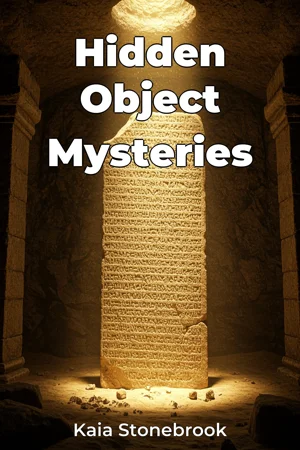
Have you ever wondered about the stories embedded within objects, artifacts, and messages that history has seemingly forgotten? "Hidden Object Mysteries" delves into the captivating world of unexplained phenomena, exploring how science and history intersect to reveal narratives concealed within the mundane and overlooked. This book examines the significance of deciphering these enigmas, not only to understand our past but also to gain new perspectives on the present. We will explore, in depth, two central themes. The first is the study of coded messages and symbols found in ancient texts and artifacts, investigating how cryptography, linguistics, and historical context combine to unlock their meanings. The second focuses on the analysis of anomalous objects discovered in archaeological digs, considering their composition, origin, and purpose to challenge conventional understandings of ancient civilizations. The study of these mysteries requires us to understand the historical periods from which these objects originate and the scientific principles that govern their creation and preservation. A working knowledge of basic scientific methods used in dating artifacts, such as radiocarbon dating, is helpful, as is a general awareness of major historical epochs and cultural movements. This book posits that every object, regardless of its apparent simplicity, holds the potential to rewrite our understanding of history and the evolution of human thought. By applying rigorous scientific analysis and meticulous historical research, we can extract valuable insights from the past that resonate with contemporary issues. The book’s structure includes an introduction to the core principles of historical analysis and scientific investigation applicable to hidden objects. It then proceeds with specific case studies divided into major sections. One section investigates famous ciphers and coded messages, like the Voynich Manuscript, unraveling the science of their construction and exploring historical attempts at decryption. Another section analyzes out-of-place artifacts, such as the Antikythera mechanism, examining their technological sophistication and implications for our understanding of ancient technology. A concluding section synthesizes the lessons learned, offering a framework for interpreting future discoveries and encouraging readers to engage critically with historical narratives. Evidence presented throughout the book is drawn from a variety of sources, including archaeological reports, scientific publications, historical documents, and expert interviews. Unique data includes original analyses of artifact compositions using modern scientific techniques and newly discovered translations of ancient texts. "Hidden Object Mysteries" bridges the gap between history, science, and art. The interdisciplinary nature of the subject matter allows us to create arguments that are more complete. Connections to archaeology provide the factual grounding. Links to art history offer insights into the symbolic meanings embedded in objects. Finally, the application of forensic science techniques to historical artifacts provides a fresh perspective on the physical evidence. A unique aspect of this book is its emphasis on the application of scientific rigor to subjects traditionally considered areas of speculation or pseudo-science. It advocates for a data-driven approach, prioritizing verifiable evidence over conjecture and encouraging readers to adopt a skeptical yet open-minded attitude toward unexplained phenomena. Written in a style that blends scientific accuracy with narrative storytelling, the book aims to make complex concepts accessible to a broad audience. The tone is informative and engaging, presenting historical and scientific information in a way that is both educational and entertaining. The target audience includes history enthusiasts, science buffs, archaeology aficionados, and anyone with a fascination for puzzles and mysteries. It appeals to readers who enjoy intellectual challenges and are curious about exploring the hidden dimensions of our world. Adhering to the conventions of non-fiction, "Hidden Object Mysteries" presents information in a clear, organized, and fact-based manner. It avoids sensationalism and prioritizes accuracy, transparency, and responsible interpretation of evidence. The book's scope encompasses a broad range of historical periods and geographical locations, but it intentionally limits its focus to objects and messages that have a tangible presence. Theoretical concepts and purely speculative interpretations are minimized in favor of evidence-based analysis. The methodologies and insights presented in the book can be applied to a variety of real-world contexts, from historical research and forensic investigations to code-breaking and art authentication. Readers will gain valuable skills in critical thinking, problem-solving, and evidence evaluation. "Hidden Object Mysteries" also addresses ongoing debates surrounding the interpretation of certain artifacts and messages, presenting different viewpoints and encouraging readers to form their own informed opinions. It acknowledges the inherent uncertainties in historical and scientific research, emphasizing the importance of continuous questioning and reevaluation.
Have you ever wondered about the stories embedded within objects, artifacts, and messages that history has seemingly forgotten? "Hidden Object Mysteries" delves into the captivating world of unexplained phenomena, exploring how science and history intersect to reveal narratives concealed within the mundane and overlooked. This book examines the significance of deciphering these enigmas, not only to understand our past but also to gain new perspectives on the present. We will explore, in depth, two central themes. The first is the study of coded messages and symbols found in ancient texts and artifacts, investigating how cryptography, linguistics, and historical context combine to unlock their meanings. The second focuses on the analysis of anomalous objects discovered in archaeological digs, considering their composition, origin, and purpose to challenge conventional understandings of ancient civilizations. The study of these mysteries requires us to understand the historical periods from which these objects originate and the scientific principles that govern their creation and preservation. A working knowledge of basic scientific methods used in dating artifacts, such as radiocarbon dating, is helpful, as is a general awareness of major historical epochs and cultural movements. This book posits that every object, regardless of its apparent simplicity, holds the potential to rewrite our understanding of history and the evolution of human thought. By applying rigorous scientific analysis and meticulous historical research, we can extract valuable insights from the past that resonate with contemporary issues. The book’s structure includes an introduction to the core principles of historical analysis and scientific investigation applicable to hidden objects. It then proceeds with specific case studies divided into major sections. One section investigates famous ciphers and coded messages, like the Voynich Manuscript, unraveling the science of their construction and exploring historical attempts at decryption. Another section analyzes out-of-place artifacts, such as the Antikythera mechanism, examining their technological sophistication and implications for our understanding of ancient technology. A concluding section synthesizes the lessons learned, offering a framework for interpreting future discoveries and encouraging readers to engage critically with historical narratives. Evidence presented throughout the book is drawn from a variety of sources, including archaeological reports, scientific publications, historical documents, and expert interviews. Unique data includes original analyses of artifact compositions using modern scientific techniques and newly discovered translations of ancient texts. "Hidden Object Mysteries" bridges the gap between history, science, and art. The interdisciplinary nature of the subject matter allows us to create arguments that are more complete. Connections to archaeology provide the factual grounding. Links to art history offer insights into the symbolic meanings embedded in objects. Finally, the application of forensic science techniques to historical artifacts provides a fresh perspective on the physical evidence. A unique aspect of this book is its emphasis on the application of scientific rigor to subjects traditionally considered areas of speculation or pseudo-science. It advocates for a data-driven approach, prioritizing verifiable evidence over conjecture and encouraging readers to adopt a skeptical yet open-minded attitude toward unexplained phenomena. Written in a style that blends scientific accuracy with narrative storytelling, the book aims to make complex concepts accessible to a broad audience. The tone is informative and engaging, presenting historical and scientific information in a way that is both educational and entertaining. The target audience includes history enthusiasts, science buffs, archaeology aficionados, and anyone with a fascination for puzzles and mysteries. It appeals to readers who enjoy intellectual challenges and are curious about exploring the hidden dimensions of our world. Adhering to the conventions of non-fiction, "Hidden Object Mysteries" presents information in a clear, organized, and fact-based manner. It avoids sensationalism and prioritizes accuracy, transparency, and responsible interpretation of evidence. The book's scope encompasses a broad range of historical periods and geographical locations, but it intentionally limits its focus to objects and messages that have a tangible presence. Theoretical concepts and purely speculative interpretations are minimized in favor of evidence-based analysis. The methodologies and insights presented in the book can be applied to a variety of real-world contexts, from historical research and forensic investigations to code-breaking and art authentication. Readers will gain valuable skills in critical thinking, problem-solving, and evidence evaluation. "Hidden Object Mysteries" also addresses ongoing debates surrounding the interpretation of certain artifacts and messages, presenting different viewpoints and encouraging readers to form their own informed opinions. It acknowledges the inherent uncertainties in historical and scientific research, emphasizing the importance of continuous questioning and reevaluation.
"Hidden Object Mysteries" explores the intriguing intersection of science and history through the study of unexplained phenomena tied to hidden objects. The book delves into coded messages within ancient texts and the mysteries surrounding anomalous objects unearthed in archaeological digs, revealing how these discoveries challenge our understanding of past civilizations. Readers will discover how seemingly mundane artifacts can rewrite history, offering insights into the evolution of human thought. The book emphasizes a data-driven approach, prioritizing verifiable evidence and scientific investigation over conjecture. By examining the composition of artifacts using modern techniques like radiocarbon dating and analyzing newly discovered translations of ancient texts, the book bridges the gap between history, science, and art. For instance, the analysis of the Antikythera mechanism showcases the technological sophistication of ancient societies. The book's structure progresses from introducing core principles of historical analysis and scientific investigation to exploring specific case studies, such as the Voynich Manuscript. It concludes by synthesizing these lessons into a framework for interpreting future discoveries, encouraging readers to critically engage with historical narratives and apply these methods across various fields, from forensic science to art history.
Book Details
ISBN
9788235294388
Publisher
Publifye AS
Your Licenses
You don't own any licenses for this book
Purchase a license below to unlock this book and download the EPUB.
Purchase License
Select a tier to unlock this book
Need bulk licensing?
Contact us for enterprise agreements.