
About This Book
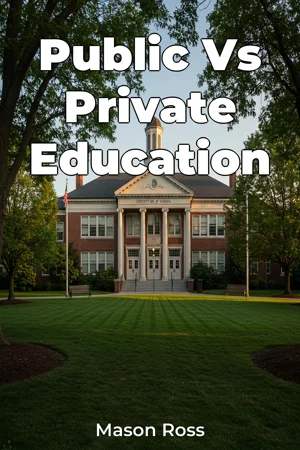
Are you at a crossroads, contemplating the optimal educational path for your child, or perhaps seeking a deeper understanding of the systems that shape our future generations? "Public Vs Private Education" dives into the multifaceted world of schooling, dissecting the core differences between public and private institutions. This book is important because, in an era where education is paramount, understanding the nuances of these different systems empowers parents, educators, and policymakers to make informed decisions that best serve students' needs. This book explores three critical topics: resource allocation, curriculum design, and student outcomes. Resource allocation examines how funding models differ between public and private systems, and how these differences impact class sizes, facilities, and teacher compensation. Curriculum design analyzes the degree of standardization versus customization in academic programs and extracurricular activities. Student outcomes compares the academic performance, college enrollment rates, and broader life success of graduates from each system, while acknowledging the limitations of standardized metrics. Historically, public education in many nations has been rooted in the ideal of universal access, while private education has often catered to specific socioeconomic groups or religious affiliations. Socially, the debate between the two systems often revolves around issues of equity, access, and the role of education in promoting social mobility. A basic knowledge of educational policy and funding mechanisms will aid the reader, though these concepts are explained in the opening chapters. The central argument of this book is that neither public nor private education inherently offers a superior model. Rather, the effectiveness of each system is contingent upon a complex interplay of factors, including community context, parental involvement, and individual student needs. Understanding these factors is crucial for fostering educational environments that maximize student potential and promote equitable outcomes. The book begins by establishing the foundational principles of public and private education. Then, each of the three core topics –resource allocation, curriculum design, and student outcomes – is explored in dedicated sections. The book culminates by synthesizing the evidence and offering practical recommendations for parents, educators, and policymakers seeking to navigate the complexities of the educational landscape. The latter section offers insight into how to best achieve student success, regardless of the chosen educational path. The book utilizes a mixed-methods approach, drawing upon quantitative data from national educational databases and qualitative insights from interviews with educators, administrators, and parents. Statistical analysis illuminates trends in academic performance and resource allocation, while case studies provide nuanced perspectives on the lived experiences of students and educators in different school settings. "Public Vs Private Education" connects to several other fields of study, including economics (examining the economic impact of education), sociology (analyzing the social stratification within educational systems), and political science (exploring the role of government in shaping educational policy). These connections enrich the book's analysis and provide a more holistic understanding of the educational landscape. This book stands out by offering a balanced and objective analysis, moving beyond simplistic comparisons to delve into the underlying factors that contribute to the success or failure of public and private schools. It avoids ideological biases and instead focuses on providing evidence-based insights that can inform practical decision-making. The tone is academic but accessible, aiming to engage a broad audience without sacrificing intellectual rigor. This book is targeted towards parents, educators, policymakers, and anyone interested in understanding the complexities of the educational system. It offers valuable insights for those making decisions about their children's education, those working to improve educational outcomes, and those shaping the future of education through policy and advocacy. As a work of academic non-fiction, the book adheres to rigorous standards of scholarship, with all claims supported by credible evidence and properly cited sources. The book focuses on K-12 education within the United States, acknowledging that educational systems vary significantly across different countries. The book does not delve into higher education, allowing for a more focused and in-depth examination of the public vs private debate within the primary and secondary school context. The information presented can be applied in several real-world contexts. Parents can use the book's findings to inform their decisions about school choice. Educators can use it to advocate for policies that support student success. Policymakers can use it to develop more effective and equitable educational programs. The book addresses ongoing debates regarding the effectiveness of standardized testing, the role of charter schools, and the impact of school choice policies on student outcomes. By exploring these controversies, the book provides readers with a comprehensive understanding of the challenges and opportunities facing the educational system today.
Are you at a crossroads, contemplating the optimal educational path for your child, or perhaps seeking a deeper understanding of the systems that shape our future generations? "Public Vs Private Education" dives into the multifaceted world of schooling, dissecting the core differences between public and private institutions. This book is important because, in an era where education is paramount, understanding the nuances of these different systems empowers parents, educators, and policymakers to make informed decisions that best serve students' needs. This book explores three critical topics: resource allocation, curriculum design, and student outcomes. Resource allocation examines how funding models differ between public and private systems, and how these differences impact class sizes, facilities, and teacher compensation. Curriculum design analyzes the degree of standardization versus customization in academic programs and extracurricular activities. Student outcomes compares the academic performance, college enrollment rates, and broader life success of graduates from each system, while acknowledging the limitations of standardized metrics. Historically, public education in many nations has been rooted in the ideal of universal access, while private education has often catered to specific socioeconomic groups or religious affiliations. Socially, the debate between the two systems often revolves around issues of equity, access, and the role of education in promoting social mobility. A basic knowledge of educational policy and funding mechanisms will aid the reader, though these concepts are explained in the opening chapters. The central argument of this book is that neither public nor private education inherently offers a superior model. Rather, the effectiveness of each system is contingent upon a complex interplay of factors, including community context, parental involvement, and individual student needs. Understanding these factors is crucial for fostering educational environments that maximize student potential and promote equitable outcomes. The book begins by establishing the foundational principles of public and private education. Then, each of the three core topics –resource allocation, curriculum design, and student outcomes – is explored in dedicated sections. The book culminates by synthesizing the evidence and offering practical recommendations for parents, educators, and policymakers seeking to navigate the complexities of the educational landscape. The latter section offers insight into how to best achieve student success, regardless of the chosen educational path. The book utilizes a mixed-methods approach, drawing upon quantitative data from national educational databases and qualitative insights from interviews with educators, administrators, and parents. Statistical analysis illuminates trends in academic performance and resource allocation, while case studies provide nuanced perspectives on the lived experiences of students and educators in different school settings. "Public Vs Private Education" connects to several other fields of study, including economics (examining the economic impact of education), sociology (analyzing the social stratification within educational systems), and political science (exploring the role of government in shaping educational policy). These connections enrich the book's analysis and provide a more holistic understanding of the educational landscape. This book stands out by offering a balanced and objective analysis, moving beyond simplistic comparisons to delve into the underlying factors that contribute to the success or failure of public and private schools. It avoids ideological biases and instead focuses on providing evidence-based insights that can inform practical decision-making. The tone is academic but accessible, aiming to engage a broad audience without sacrificing intellectual rigor. This book is targeted towards parents, educators, policymakers, and anyone interested in understanding the complexities of the educational system. It offers valuable insights for those making decisions about their children's education, those working to improve educational outcomes, and those shaping the future of education through policy and advocacy. As a work of academic non-fiction, the book adheres to rigorous standards of scholarship, with all claims supported by credible evidence and properly cited sources. The book focuses on K-12 education within the United States, acknowledging that educational systems vary significantly across different countries. The book does not delve into higher education, allowing for a more focused and in-depth examination of the public vs private debate within the primary and secondary school context. The information presented can be applied in several real-world contexts. Parents can use the book's findings to inform their decisions about school choice. Educators can use it to advocate for policies that support student success. Policymakers can use it to develop more effective and equitable educational programs. The book addresses ongoing debates regarding the effectiveness of standardized testing, the role of charter schools, and the impact of school choice policies on student outcomes. By exploring these controversies, the book provides readers with a comprehensive understanding of the challenges and opportunities facing the educational system today.
"Public Vs Private Education" explores the intricate dynamics between public and private educational systems, providing an even-handed analysis of their respective strengths and weaknesses. The book focuses on resource allocation, curriculum design, and student outcomes, acknowledging that the effectiveness of each system hinges on factors like community context and parental involvement. It highlights how public education often aims for universal access, while private education may cater to specific groups. The book progresses methodically, beginning with foundational principles before delving into resource allocation, curriculum design, and student outcomes. A mixed-methods approach is used, combining quantitative data with qualitative insights from educators and parents. Did you know that funding models significantly differ between public and private systems, impacting class sizes and facilities? Standardized testing and school choice are explored along with the impact of educational policy. Ultimately, "Public Vs Private Education" argues that neither system is inherently superior. The book offers practical guidance for parents, educators, and policymakers, empowering them to make informed decisions. The book emphasizes the importance of understanding the complexities of K-12 education to foster environments that maximize student potential, promote equitable outcomes, and address ongoing debates within the field of education.
Book Details
ISBN
9788235294258
Publisher
Publifye AS
Your Licenses
You don't own any licenses for this book
Purchase a license below to unlock this book and download the EPUB.
Purchase License
Select a tier to unlock this book
Need bulk licensing?
Contact us for enterprise agreements.