
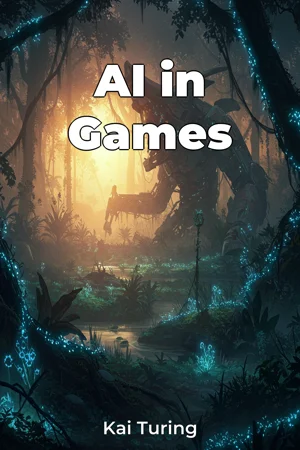
About This Book
Can artificial intelligence truly make games better, or does it risk automating the creative process to the point of homogenization? In "AI in Games," we explore how artificial intelligence is reshaping the landscape of game design, from enhancing non-player character (NPC) behavior to creating self-learning AI opponents that dynamically adapt to player strategies. This book delves into the core concepts and applications of AI in the gaming industry, examining both the opportunities and challenges it presents. We will explore the historical development of AI in games, tracing its evolution from simple scripted behaviors to sophisticated machine learning algorithms. This context is crucial for understanding the current capabilities and future potential of AI in this domain. A basic understanding of programming concepts and game design principles will be beneficial, but the book is designed to be accessible to readers with varying levels of technical expertise. The central argument of "AI in Games" is that AI serves as a powerful tool for augmenting human creativity in game development, enabling the creation of more engaging, realistic, and personalized gaming experiences. It’s not about replacing human designers, but rather empowering them to build richer and more dynamic worlds. The book is structured to provide a comprehensive overview of the field. First, we'll introduce foundational AI concepts relevant to game development, such as pathfinding, finite state machines, and behavior trees. Second, we'll delve into the applications of machine learning, including reinforcement learning for creating adaptive AI opponents and procedural content generation for creating vast and diverse game worlds. Third, we'll examine the ethical considerations surrounding AI in games, such as fairness, accessibility, and the potential for bias. The book culminates with a discussion of future trends and potential applications of AI in the gaming industry. The arguments presented will be supported by case studies of successful AI implementations in popular games, alongside analyses of relevant research papers and industry best practices. We draw on diverse data sources, including game design documents, AI algorithm benchmarks, and player behavior analytics, to provide a comprehensive and evidence-based perspective. "AI in Games" also connects to other fields, such as cognitive science, computer science, and narrative design. Understanding how AI agents can simulate human-like behavior enhances their believability and immersiveness. Sophisticated algorithms used for AI in games often draw from the latest advancements in computer science. AI agents can also dynamically adapt the narrative based on player actions in ways that provide greater agency and emergent storytelling. This book distinguishes itself by offering a balanced perspective on the use of AI in games. Rather than simply showcasing the potential benefits, we critically examine the limitations, challenges, and ethical implications of integrating AI into the game development process. Written in a professional yet accessible style, "AI in Games" is intended for game developers, AI researchers, students in game design and computer science, and anyone interested in understanding the intersection of AI and entertainment. It offers valuable insights into how AI can be used to create more engaging and immersive gaming experiences. This book focuses specifically on the application of AI in game design, excluding other aspects of AI such as AI-driven marketing or business intelligence in the gaming industry. Readers will learn how to practically apply AI techniques to their own game projects, whether they are working on indie games or AAA titles. The book includes practical examples, code snippets, and design patterns that can be readily implemented. The book addresses ongoing debates in the field, such as the trade-offs between rule-based AI and machine learning, as well as the impact of AI on game balance and player experience.
Can artificial intelligence truly make games better, or does it risk automating the creative process to the point of homogenization? In "AI in Games," we explore how artificial intelligence is reshaping the landscape of game design, from enhancing non-player character (NPC) behavior to creating self-learning AI opponents that dynamically adapt to player strategies. This book delves into the core concepts and applications of AI in the gaming industry, examining both the opportunities and challenges it presents. We will explore the historical development of AI in games, tracing its evolution from simple scripted behaviors to sophisticated machine learning algorithms. This context is crucial for understanding the current capabilities and future potential of AI in this domain. A basic understanding of programming concepts and game design principles will be beneficial, but the book is designed to be accessible to readers with varying levels of technical expertise. The central argument of "AI in Games" is that AI serves as a powerful tool for augmenting human creativity in game development, enabling the creation of more engaging, realistic, and personalized gaming experiences. It’s not about replacing human designers, but rather empowering them to build richer and more dynamic worlds. The book is structured to provide a comprehensive overview of the field. First, we'll introduce foundational AI concepts relevant to game development, such as pathfinding, finite state machines, and behavior trees. Second, we'll delve into the applications of machine learning, including reinforcement learning for creating adaptive AI opponents and procedural content generation for creating vast and diverse game worlds. Third, we'll examine the ethical considerations surrounding AI in games, such as fairness, accessibility, and the potential for bias. The book culminates with a discussion of future trends and potential applications of AI in the gaming industry. The arguments presented will be supported by case studies of successful AI implementations in popular games, alongside analyses of relevant research papers and industry best practices. We draw on diverse data sources, including game design documents, AI algorithm benchmarks, and player behavior analytics, to provide a comprehensive and evidence-based perspective. "AI in Games" also connects to other fields, such as cognitive science, computer science, and narrative design. Understanding how AI agents can simulate human-like behavior enhances their believability and immersiveness. Sophisticated algorithms used for AI in games often draw from the latest advancements in computer science. AI agents can also dynamically adapt the narrative based on player actions in ways that provide greater agency and emergent storytelling. This book distinguishes itself by offering a balanced perspective on the use of AI in games. Rather than simply showcasing the potential benefits, we critically examine the limitations, challenges, and ethical implications of integrating AI into the game development process. Written in a professional yet accessible style, "AI in Games" is intended for game developers, AI researchers, students in game design and computer science, and anyone interested in understanding the intersection of AI and entertainment. It offers valuable insights into how AI can be used to create more engaging and immersive gaming experiences. This book focuses specifically on the application of AI in game design, excluding other aspects of AI such as AI-driven marketing or business intelligence in the gaming industry. Readers will learn how to practically apply AI techniques to their own game projects, whether they are working on indie games or AAA titles. The book includes practical examples, code snippets, and design patterns that can be readily implemented. The book addresses ongoing debates in the field, such as the trade-offs between rule-based AI and machine learning, as well as the impact of AI on game balance and player experience.
"AI in Games" explores the transformative role of artificial intelligence in the gaming industry, highlighting its potential to augment creativity and enhance player experiences. The book examines how AI reshapes game design, enabling more engaging non-player character (NPC) behavior and the development of self-learning AI opponents that adapt to player strategies. It traces the evolution of AI in games, from simple scripted behaviors to sophisticated machine learning algorithms, providing context for understanding its current capabilities and future potential. This book delves into the core concepts and applications of AI algorithms within gaming. For instance, reinforcement learning is used to create adaptive AI opponents, while procedural content generation allows for vast and diverse game worlds. The book doesn’t just showcase the benefits; it critically examines the limitations, challenges, and ethical implications of integrating AI into game development. Structured to provide a comprehensive overview, it begins with foundational AI concepts like pathfinding and behavior trees, progresses to machine learning applications, and culminates with a discussion of future trends and ethical considerations. "AI in Games" distinguishes itself by offering a balanced perspective, supported by case studies and analyses of research papers, intended for game developers, AI researchers, and students. Readers will learn practical AI techniques applicable to various game projects, from indie to AAA titles, along with insights into ongoing debates, such as the trade-offs between rule-based AI and machine learning, and the impact of AI on game balance and player experience.
Book Details
ISBN
9788235294241
Publisher
Publifye AS
Your Licenses
You don't own any licenses for this book
Purchase a license below to unlock this book and download the EPUB.
Purchase License
Select a tier to unlock this book
Need bulk licensing?
Contact us for enterprise agreements.