
About This Book
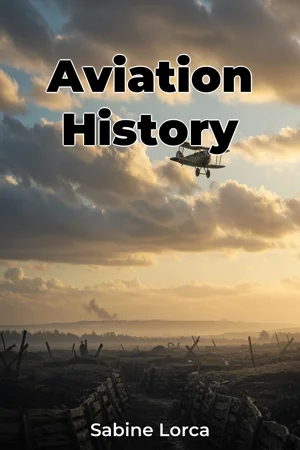
What if the course of history, of both travel and warfare, was irrevocably altered by a technology that began with kites and gliders? Aviation's evolution is a narrative of ingenuity, daring, and transformative impact, a story this book, *Aviation History*, seeks to comprehensively explore. The central topics are the pioneering era of flight, the integration of aviation into military strategy, and its subsequent effect on global interconnectedness. These are pivotal as aviation didn't just shrink distances; it reshaped geopolitical landscapes and redefined the speed of both travel and conflict. This book provides historical, social, and technological context, charting the progression from early experiments to advanced aircraft. It assumes no prior expertise, guiding the reader through essential concepts such as aerodynamics, engine technology, and the strategic theories that drove military aviation's development. The central argument emphasizes that aviation's development is not merely a technological advancement but a critical force that has redefined global power dynamics and sociocultural exchange in the 20th and 21st centuries. This argument's importance lies in understanding how a single technology can fundamentally alter the relationship between nations and people. *Aviation History* begins by chronicling the dreams of flight, highlighting figures like the Wright brothers and their contemporaries, documenting their ground-breaking experiments and early successes. The narrative then proceeds to examine the rapid militarization of aviation during World War I, detailing the evolution of aerial combat tactics and technologies. The interwar period focuses on the growth of commercial aviation, mapping the establishment of international air routes and the development of passenger aircraft. World War II is covered, exploring the strategic use of air power, including bombing campaigns and the role of fighter aircraft in achieving air superiority. Finally, the book addresses the Cold War era and beyond, examining the development of jet aircraft, advanced missile systems, and the continuing impact of aviation on modern warfare and global travel. The book relies on primary source materials, including pilot logs, technical documents, and military records, as well as secondary historical analyses to support its arguments. Unique data sources include recovered aircraft schematics and declassified military reports that cast new light on key events. Interdisciplinary connections are explored. The book touches on aspects of engineering, examining the technical innovations that propelled aviation forward. It also delves into political science, analyzing how aviation influenced international relations and military strategy. Further, it considers sociology, exploring how air travel reshaped cultural exchange and globalization. These connections enrich the book's analysis, providing a holistic understanding of aviation's multifaceted impact. This book provides an in-depth historical analysis, avoiding simplistic narratives of technological progress. This approach offers a nuanced view of the complex forces that shaped aviation and its consequences. Written in a clear and accessible style, *Aviation History* targets readers interested in military history, technology, and the social impact of innovation. It will appeal to history enthusiasts, aviation aficionados, and anyone seeking a deeper understanding of how flight has shaped the modern world. As a work of history, the book adheres to established academic standards, emphasizing factual accuracy and rigorous analysis. It aims to provide a comprehensive account of aviation history. While the book covers major developments across the globe, it focuses primarily on the United States, Great Britain, Germany, and Japan, acknowledging the limitations of a truly exhaustive international scope. The insights offered have practical applications, informing current discussions on defense strategy, transportation policy, and the ongoing evolution of global connectivity. The book addresses debates surrounding the ethical implications of military aviation, including discussions on strategic bombing and the targeting of civilian populations. It also explores controversies related to the environmental impact of air travel and the sustainability of current aviation practices.
What if the course of history, of both travel and warfare, was irrevocably altered by a technology that began with kites and gliders? Aviation's evolution is a narrative of ingenuity, daring, and transformative impact, a story this book, *Aviation History*, seeks to comprehensively explore. The central topics are the pioneering era of flight, the integration of aviation into military strategy, and its subsequent effect on global interconnectedness. These are pivotal as aviation didn't just shrink distances; it reshaped geopolitical landscapes and redefined the speed of both travel and conflict. This book provides historical, social, and technological context, charting the progression from early experiments to advanced aircraft. It assumes no prior expertise, guiding the reader through essential concepts such as aerodynamics, engine technology, and the strategic theories that drove military aviation's development. The central argument emphasizes that aviation's development is not merely a technological advancement but a critical force that has redefined global power dynamics and sociocultural exchange in the 20th and 21st centuries. This argument's importance lies in understanding how a single technology can fundamentally alter the relationship between nations and people. *Aviation History* begins by chronicling the dreams of flight, highlighting figures like the Wright brothers and their contemporaries, documenting their ground-breaking experiments and early successes. The narrative then proceeds to examine the rapid militarization of aviation during World War I, detailing the evolution of aerial combat tactics and technologies. The interwar period focuses on the growth of commercial aviation, mapping the establishment of international air routes and the development of passenger aircraft. World War II is covered, exploring the strategic use of air power, including bombing campaigns and the role of fighter aircraft in achieving air superiority. Finally, the book addresses the Cold War era and beyond, examining the development of jet aircraft, advanced missile systems, and the continuing impact of aviation on modern warfare and global travel. The book relies on primary source materials, including pilot logs, technical documents, and military records, as well as secondary historical analyses to support its arguments. Unique data sources include recovered aircraft schematics and declassified military reports that cast new light on key events. Interdisciplinary connections are explored. The book touches on aspects of engineering, examining the technical innovations that propelled aviation forward. It also delves into political science, analyzing how aviation influenced international relations and military strategy. Further, it considers sociology, exploring how air travel reshaped cultural exchange and globalization. These connections enrich the book's analysis, providing a holistic understanding of aviation's multifaceted impact. This book provides an in-depth historical analysis, avoiding simplistic narratives of technological progress. This approach offers a nuanced view of the complex forces that shaped aviation and its consequences. Written in a clear and accessible style, *Aviation History* targets readers interested in military history, technology, and the social impact of innovation. It will appeal to history enthusiasts, aviation aficionados, and anyone seeking a deeper understanding of how flight has shaped the modern world. As a work of history, the book adheres to established academic standards, emphasizing factual accuracy and rigorous analysis. It aims to provide a comprehensive account of aviation history. While the book covers major developments across the globe, it focuses primarily on the United States, Great Britain, Germany, and Japan, acknowledging the limitations of a truly exhaustive international scope. The insights offered have practical applications, informing current discussions on defense strategy, transportation policy, and the ongoing evolution of global connectivity. The book addresses debates surrounding the ethical implications of military aviation, including discussions on strategic bombing and the targeting of civilian populations. It also explores controversies related to the environmental impact of air travel and the sustainability of current aviation practices.
*Aviation History* explores the profound impact of flight, from kites and gliders to the modern jet age, fundamentally altering travel and warfare. It examines how aviation's evolution reshaped geopolitical landscapes and redefined the speed of global interactions. Consider that early military aviation rapidly advanced during World War I, leading to the development of aerial combat tactics and technologies. Also, the interwar period saw the rise of commercial aviation, establishing international air routes and passenger aircraft, connecting the world in unprecedented ways. This book offers a comprehensive account of aviation, beginning with the pioneering dreams of flight and progressing through its militarization, commercialization, and its role in subsequent conflicts like World War II and the Cold War. It emphasizes that aviation's development isn't just technological advancement but a critical force in global power dynamics and sociocultural exchange. By drawing on pilot logs, technical documents, and military records, the book avoids simplistic narratives, providing a nuanced view of the complex forces shaping aviation. The book’s approach provides historical, social, and technological context, charting the progression from early experiments to advanced aircraft. It explores engineering, political science, and sociology to provide a holistic understanding of aviation's multifaceted impact. This makes it valuable for those interested in military history, technology, and the social impact of aviation innovation.
Book Details
ISBN
9788235294142
Publisher
Publifye AS
Your Licenses
You don't own any licenses for this book
Purchase a license below to unlock this book and download the EPUB.
Purchase License
Select a tier to unlock this book
Need bulk licensing?
Contact us for enterprise agreements.